How Many Days Do You Need In Cordoba For The Free Sights?
A planning answer for Cordoba on a free budget: what fits into one day, what needs a second day or a ticket, and which free walking tours suit a short stay.
In Short
One early-starting day covers the Juderia, the Roman Bridge, the Calleja de las Flores and the Mezquita-Catedral free slot, which runs Monday to Saturday 8:30 to 9:30 for individual visitors only. A second day unlocks the municipal museums' free Thursday window, the Axerquia and Medina Azahara. Anyone relying only on free entry should plan for two days, or three in festival season.
This question sits inside the Cordoba in one day walkthrough guide.
Quick Facts
| Question | Answer |
|---|---|
| What is free with no conditions? | Streets, squares, the Roman Bridge, the riverbank, the Juderia, gardens and the walking tours themselves |
| What is free with conditions? | Mezquita-Catedral early slot Mon to Sat 8:30 to 9:30, individual visitors only; municipal museums' Thursday two-hour window; Junta museums for accredited EU citizens |
| What costs money? | Mezquita bell tower EUR 4, night visit EUR 25, Fernandine route EUR 6, general Mezquita admission EUR 15, Torre de la Calahorra EUR 4.50, Palacio de Viana patios EUR 8.50 |
| Closing days to plan around | Municipal museums closed Mondays; Medina Azahara closed Mondays outside holiday eves |
| Nearest free walk platform | GuruWalk, plus freetour.com for its listed historic-centre walks |
How Many Days Do You Need In Cordoba For The Free Sights?
Two days is the honest answer for a visitor working the free angles: one early morning for the Mezquita-Catedral free slot plus the Juderia and the Roman Bridge, and a second day for the museum windows, the Axerquia and a trip out to Medina Azahara. A determined traveller can compress the core old town into a single day, because most of it is public space. Three days starts to feel generous outside the May festival window.
The reason the answer is not simply "one day, it is compact" is that Cordoba's free sights arrive on three separate schedules. The streets and squares are free around the clock, so they bend to any itinerary. The Mezquita-Catedral free slot runs Monday to Saturday from 8:30 to 9:30, with access stopping at 9:20, for individual visitors only, and not on days of extraordinary celebration. The municipal museums open free to everyone on non-holiday Thursdays for the last two hours of public access: 18:00 to 20:15 in winter, from 16 September to 15 June, and 12:00 to 14:15 in summer. A one-day visitor who arrives on a Tuesday has already missed the Thursday window for that stay.
There is a nationality layer too, and it matters for readers booking from the UK or the US. The Junta de Andalucia museums, which include Medina Azahara, the Museo Arqueologico, the Museo de Bellas Artes and the Sinagoga, are free every open day for accredited EU citizens only. Everyone else pays a small fee, from EUR 0.30 at the Sinagoga to EUR 1.50 at Medina Azahara. That is still cheap, but it is not free, and any day-count built on "all the museums cost nothing" needs that correction built in.
For orientation on day one, a free walking tour does the job faster than any map. This directory ships 26 free walks across the city, every one of them pay what you want. The cardable walks below are the ones that run in English and carry enough reviews to judge; the rest are described in the free walking tours overview and on their own pages.
What Fits Into One Free Day?
One day comfortably holds the Mezquita-Catedral free slot, the Juderia, the Calleja de las Flores, the Roman Bridge, the riverbank viewpoint and most of the old town's open squares, because all of it except the Mezquita slot is public space with no ticket and no closing time. The constraint is the clock, not the distance: the free slot ends at 9:30. Add a free walking tour in the late morning and the day is full.
Start with the slot, since it is the only timed free event of the day. The Mezquita-Catedral free visit runs Monday to Saturday 8:30 to 9:30, last entry 9:20, individual visitors only, no groups, and not on days of extraordinary celebration. It is a 60-minute window, not a free visit of the whole building: the bell tower at EUR 4, the night visit El Alma de Cordoba at EUR 25 and the Fernandine churches route at EUR 6 are separate tickets the slot does not cover. Outside the slot, general admission is EUR 15. Sunday is not part of the free slot at all, so a one-day visitor arriving on a Sunday either pays admission or skips the interior.
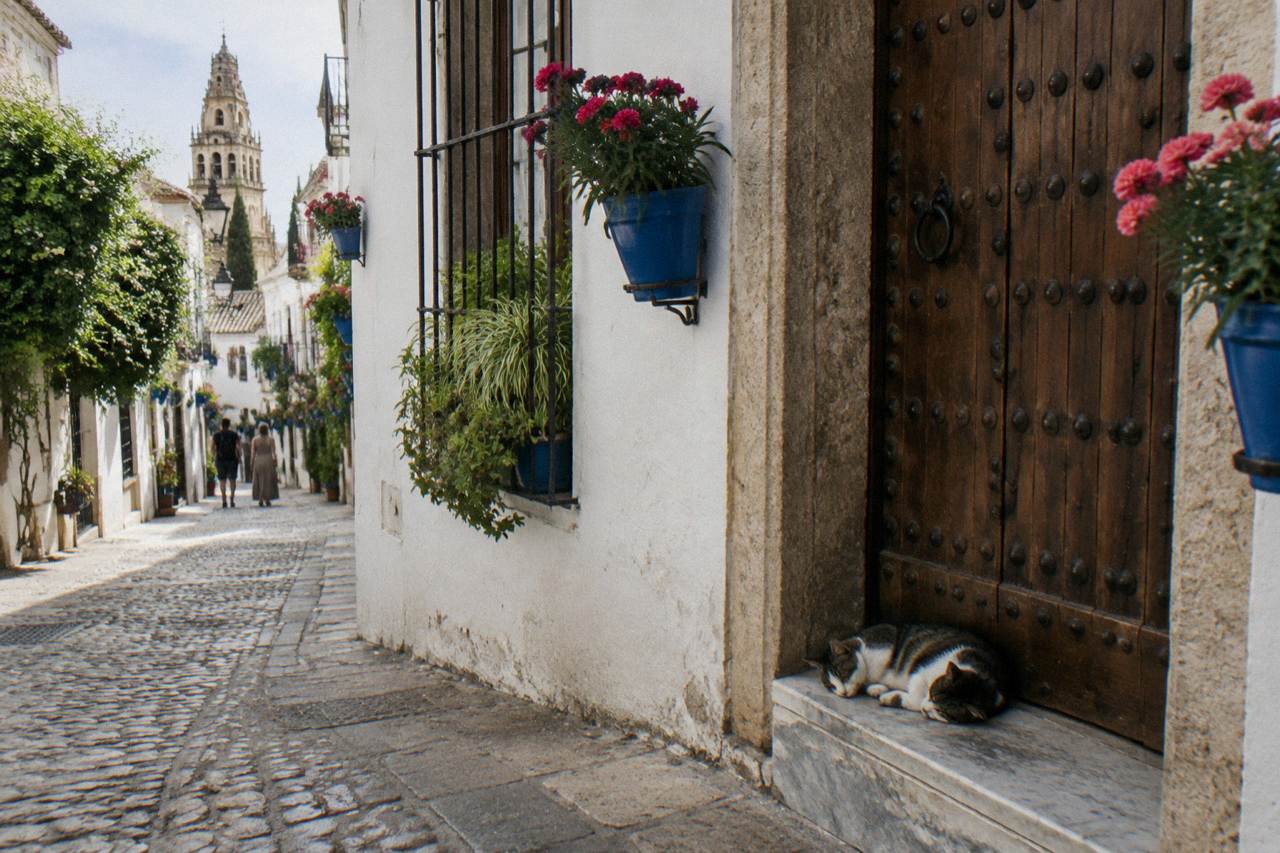
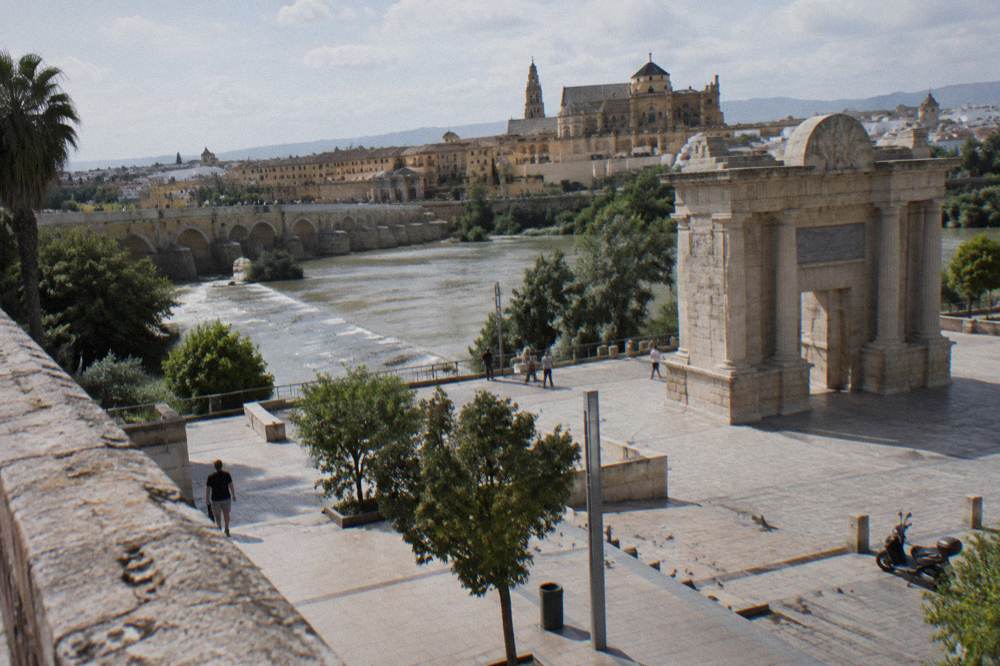
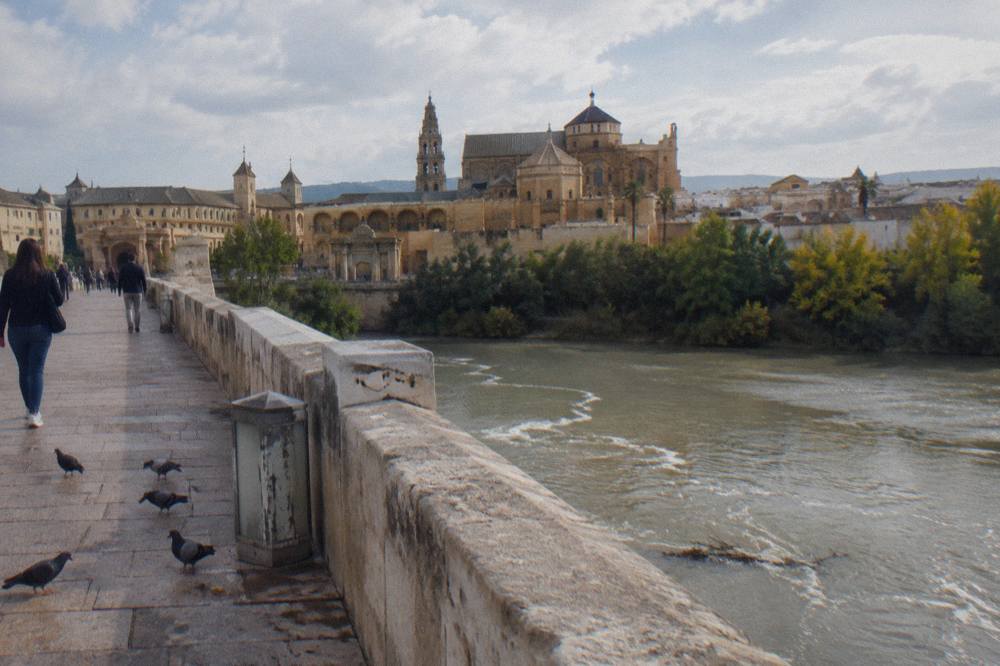
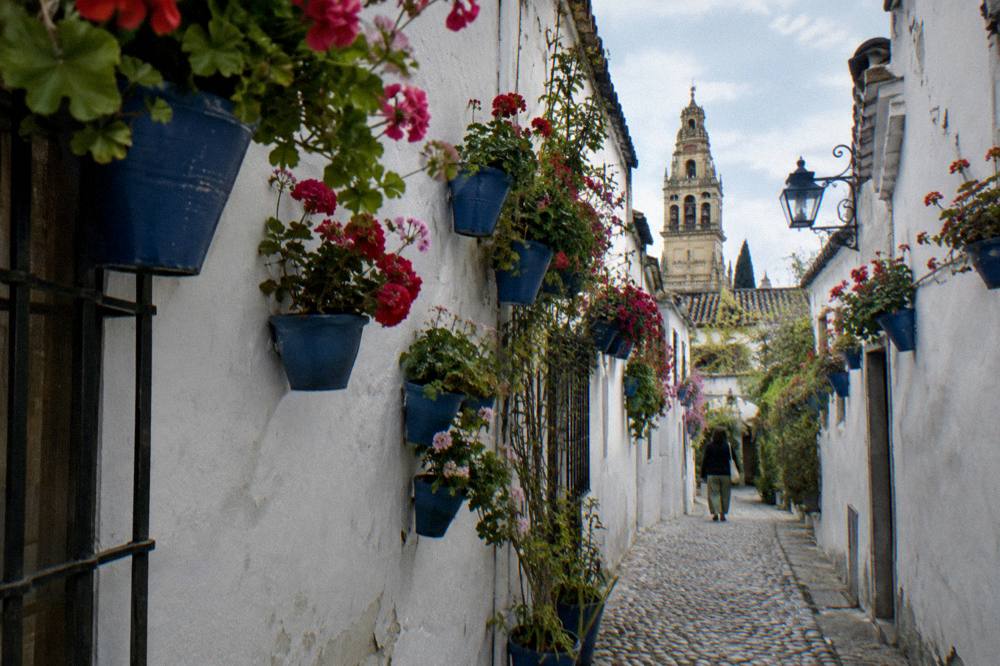
Once the hour is spent, the rest of the day unspools on foot through space that costs nothing. The Juderia's lanes, the Calleja de las Flores, Plaza de Maimonides and Plaza de Judios, the walls and the Puerta de Almodovar are all free public space. Cross the Puente Romano to the Mirador de la Calahorra on the south bank for the classic view back across the Guadalquivir. The bridge and the riverbank are free around the clock; the Torre de la Calahorra at its far end is not, and costs EUR 4.50 to enter.
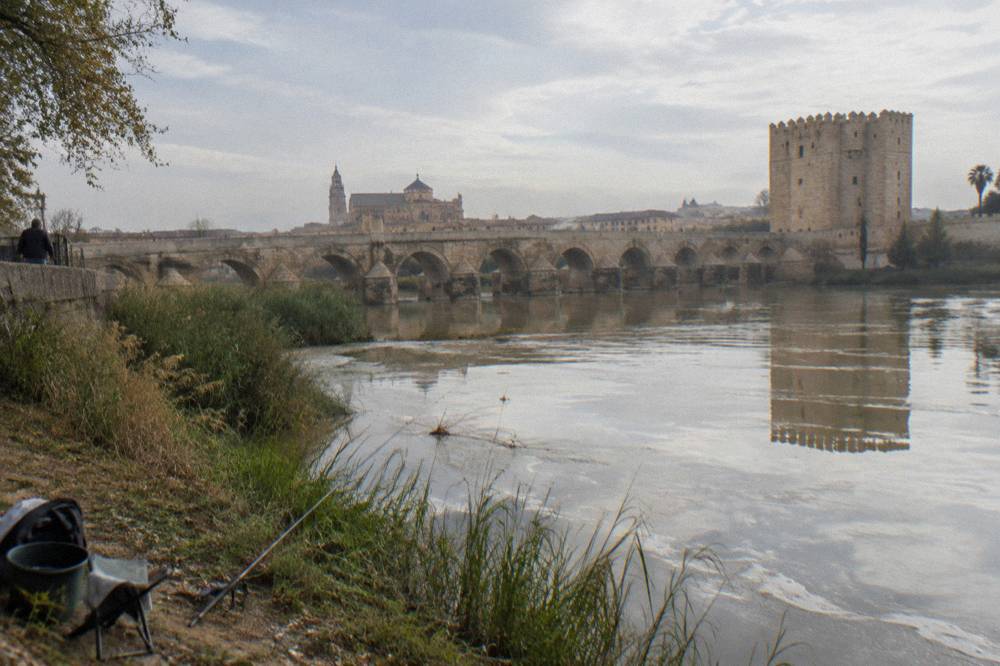
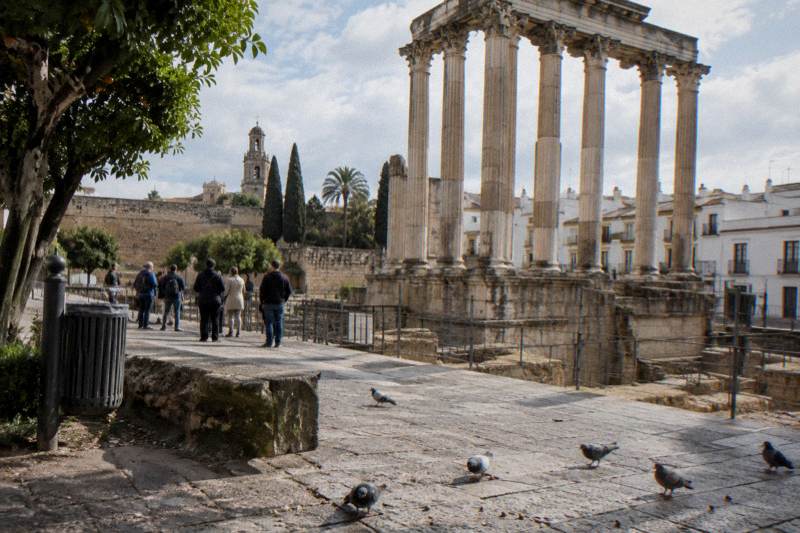
A late-morning free tour slots in neatly here, and the Best Of Free Tour, run by Andaloo Tours on GuruWalk, is the natural pick: 1 hour 45 minutes, English and Spanish, rated 4.94 out of 5 across 3,732 reviews, meeting at the Roman Temple on Calle Capitulares. The Templo Romano's columns stand in public space, so the meeting point itself is already a free sight.
The afternoon belongs to the open squares. Plaza de las Tendillas, Plaza de la Corredera, Plaza del Potro and Plaza de Capuchinos with its Cristo de los Faroles are all free, all the time. The Calleja de las Flores is the one street that draws a crowd, and it is still just a street: no ticket, no hours. If the day is a Thursday, the municipal museums' free two-hour window opens in the evening in winter or at midday in summer, and a one-day visitor whose Thursday this is can squeeze in the Alcazar de los Reyes Cristianos gardens or the Julio Romero de Torres museum for nothing, until capacity.
Here is how the free and paid parts of the one-day core split out:
| Sight | Free status | Condition |
|---|---|---|
| Mezquita-Catedral interior | Free 8:30 to 9:30, Mon to Sat | Individual visitors only, no groups, not on extraordinary celebration days; EUR 15 otherwise |
| Mezquita bell tower | Paid | EUR 4, separate ticket, not covered by the free slot |
| Juderia and Calleja de las Flores | Free | Public space |
| Puente Romano and riverbank | Free | Public space, 24 hours |
| Torre de la Calahorra | Paid | EUR 4.50 to enter; the bridge and viewpoint are free |
| Old town squares | Free | Public space |
| Free walking tours | Free | Pay what you want at the end |
What Needs A Second Day Or A Ticket?
A second day covers what one early morning cannot: Medina Azahara on its own site, whose 2 hour 45 minute Spanish-language free tour alone absorbs half a day, the Axerquia quarter east of the centre, the municipal museums if you missed the Thursday window, and paid interiors like Palacio de Viana or the Mezquita bell tower if your budget stretches, while the Juderia's patio houses are only free during the May festival.
Medina Azahara is the clearest second-day item, and the one with a nationality catch. The archaeological site, run by the Junta de Andalucia, is free every open day for accredited EU citizens; everyone else pays EUR 1.50. Its free tour, run by Paseando Por Europa on GuruWalk, lasts 2 hours 45 minutes and is listed in Spanish only, with the site's own entry bought separately from the guiding, which is pay what you want. There is also a shorter Medina Azahara guided tour on the same platform with the same separate-entry condition. The site is closed on Mondays outside holiday eves, and the visitor centre shuttle fare is not something this site will state while the official figure is unclear.
The Axerquia, the older quarter across from the Mezquita, is free street-walking territory that one-day itineraries routinely skip. Plaza de la Corredera sits at its heart, and several of the directory's walks meet there or nearby. The Centro Flamenco Fosforito in the Posada del Potro follows the municipal free rules: free on non-holiday Thursdays for the last two hours, until capacity. The Museo Arqueologico in the Axerquia, with Roman theatre remains in its basement, follows the Junta EU-citizens rule instead.
Paid interiors that a second day makes room for: the Mezquita bell tower at EUR 4, the Fernandine churches route at EUR 6, Palacio de Viana's patios at EUR 8.50, the night visit El Alma de Cordoba at EUR 25, and the Torre de la Calahorra at EUR 4.50. The Alcazar de los Reyes Cristianos charges a small fee outside its free windows, and this site deliberately prints no figure for it while official pages disagree. From 1 January 2027 the Cabildo also starts optional official guided visits of the Mezquita at an increase over the normal ticket, with the price still unpublished.
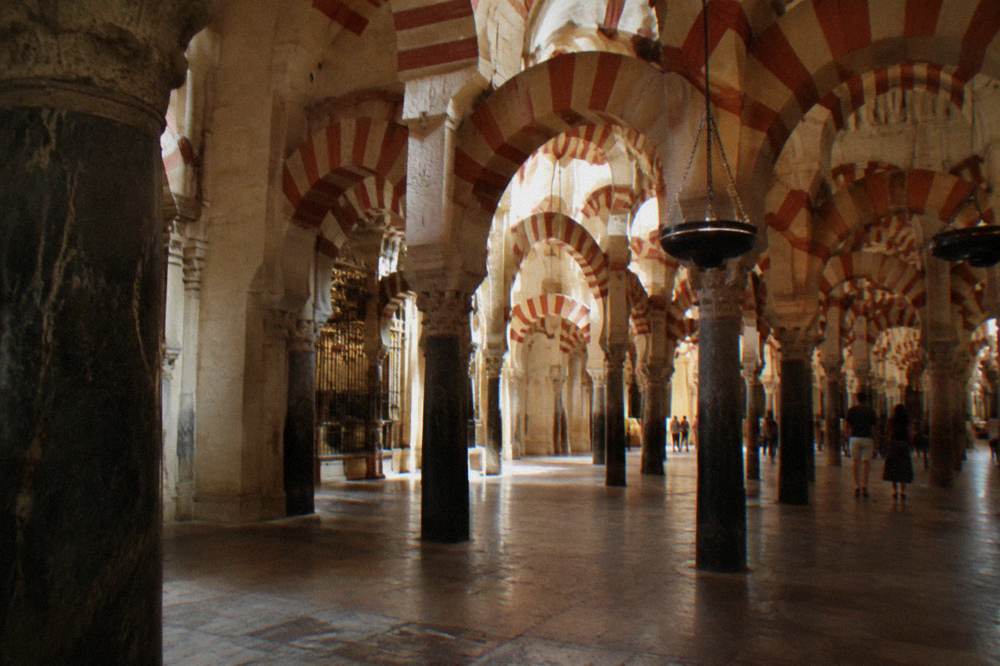
When Do The Free Windows Open Across A Weekend?
Across a weekend the free Mezquita slot exists on Saturday morning only, 8:30 to 9:30, and not on Sunday at all. The municipal museums' free Thursday window never falls on a weekend, so Saturday and Sunday visitors pay the small fees or stick to public space. Junta museums follow their EU-citizens rule every open day. A weekend visitor's best free structure is Saturday: the early slot, the Juderia, the bridge, and a pay-what-you-want walk.
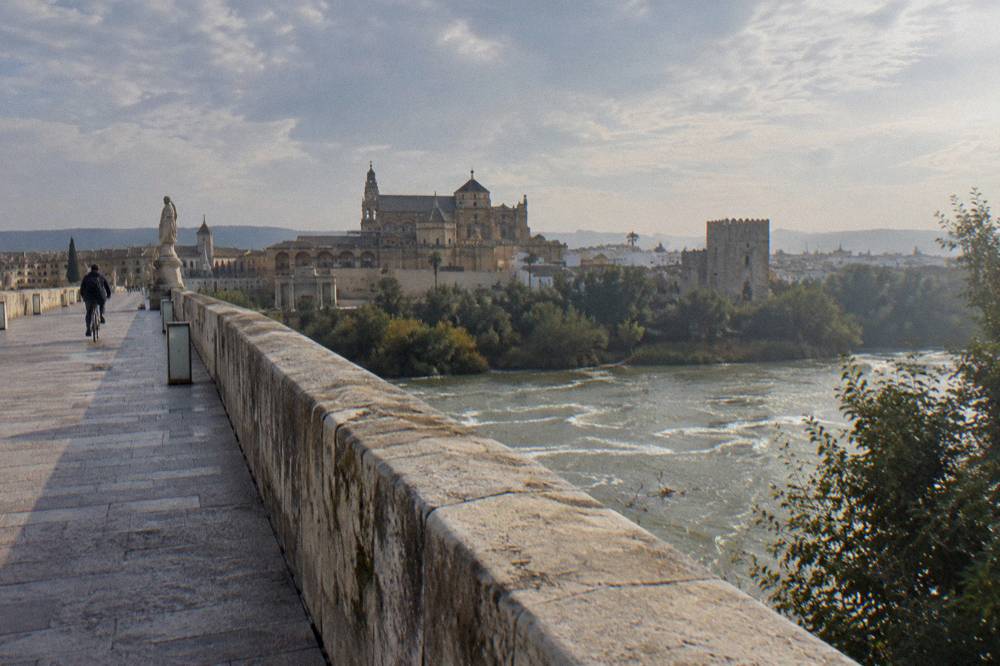
Saturday works because the two biggest free mechanisms both touch it. The Mezquita slot runs Monday to Saturday, so Saturday at 8:30 is a real option, though it is worth checking the Cabildo's own schedule for the date in case of an extraordinary celebration. The walking tours also run across the weekend, including the English-language ones. Sunday is the thin day: no Mezquita slot, and the municipal museums' Sunday hours are paid hours. The Sinagoga, the Museo Arqueologico, the Museo de Bellas Artes and Medina Azahara are all open on Sundays under their normal EU-citizens rule, which for most readers of this site means the small fee rather than free entry. The wider set of guides lives on Free Things To Do In Cordoba.
| Free mechanism | Mon | Tue | Wed | Thu | Fri | Sat | Sun |
|---|---|---|---|---|---|---|---|
| Mezquita free slot 8:30 to 9:30 | Yes | Yes | Yes | Yes | Yes | Yes | No |
| Municipal museums free window | No | No | No | Yes | No | No | No |
| Junta museums free for EU citizens | Open day | Open day | Open day | Open day | Open day | Open day | Open day |
| Public space, bridge, Juderia | Yes | Yes | Yes | Yes | Yes | Yes | Yes |
Public holidays shift this grid. The municipal museums are also free on 28 February, 8 September, 27 September, 17 December and the Noche del Patrimonio, whatever day those fall on; 28 February 2027 is a Sunday, which hands weekend visitors a rare free Sunday at the municipal sites. The museums close on Mondays, on 1 January and on 25 December. Festival dates are their own answer to the days question: the Festival de los Patios runs 3 to 16 May 2027 with free entry and no appointment, Semana Santa fills 21 to 28 March 2027, and the Noche Blanca del Flamenco lands on 19 June 2027. Anyone whose stay overlaps the patios festival should treat that as the reason for the trip, and whether the patios festival is free has its own answer.
Where Should A Free Day Start?
Start at the Mezquita-Catedral's door by 8:30, the only free, timed, first-come slot in the entire itinerary, because the Juderia, the bridge and the old town squares all fan out from there on foot. If that slot is unavailable, begin instead where a free walking tour meets: the Roman Temple on Calle Capitulares, Plaza de las Tendillas or Plaza del Triunfo.
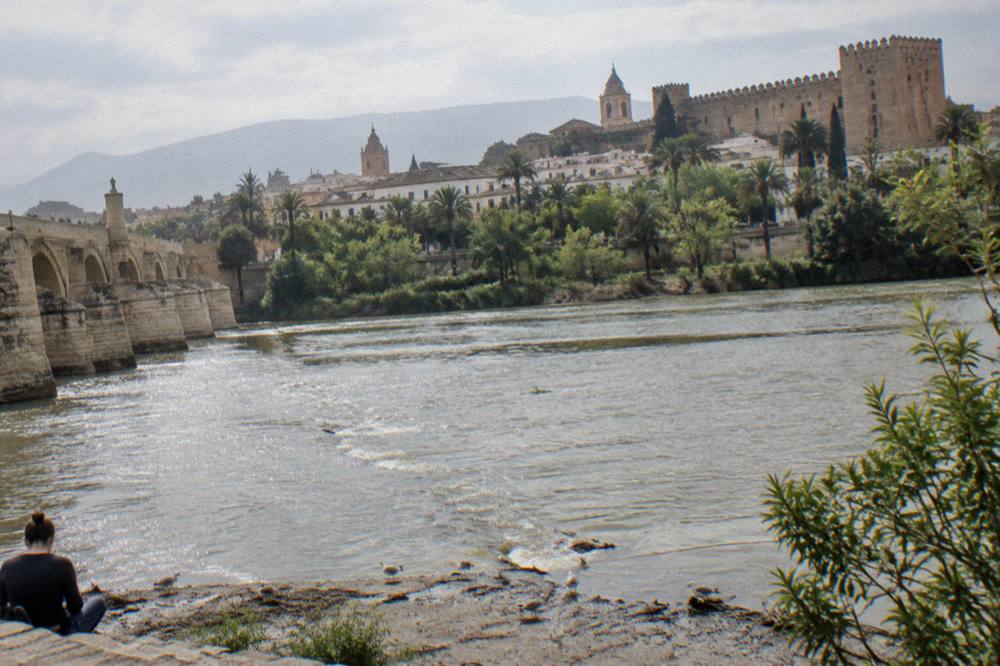
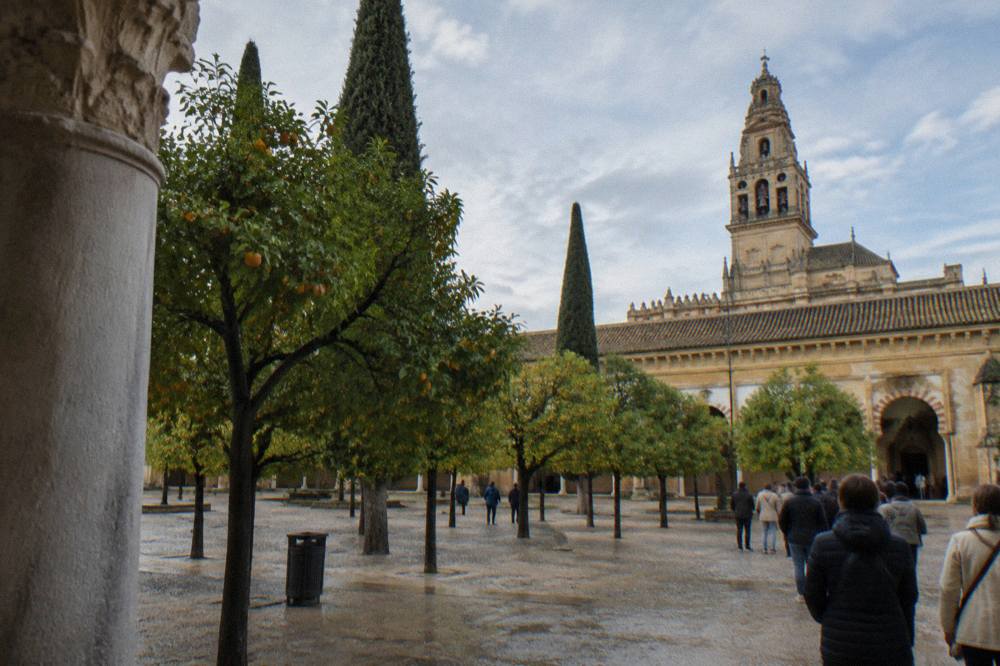
The geography makes the Mezquita the anchor. The free slot's entrance sits beside the Patio de los Naranjos, the Juderia begins a few lanes west, and the Puente Romano lies immediately south. Finishing the slot at 9:30 leaves the entire rest of the day for a horseshoe through the Juderia, down to the bridge and back up through the Axerquia. That shape is why one day feels sufficient to so many visitors: the timed item and the walking items are neighbours.
For tour-first starters, the Heritage Free Tour run by WeTour on GuruWalk meets at Plaza de las Tendillas, lasts 1 hour 30 minutes in English and Spanish, and carries a 4.77 out of 5 rating across 752 reviews. Tendillas is also free public space and the city's de facto main square, so waiting there costs nothing and sees something.
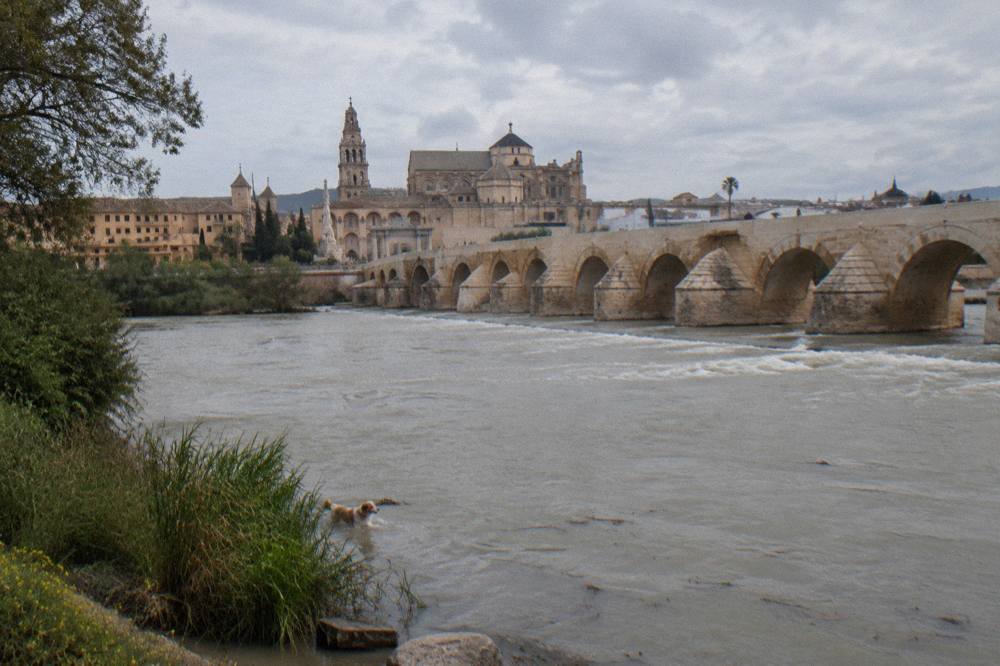
The other cardable English-language walks meet at points that are themselves free sights: the 2 Hour Small-Group English Tour run by Jose Manuel meets at the Statue of Averroes by the Puerta de Almodovar on the city walls; the English Heritage Free Tour run by Enrique meets at Plaza del Triunfo beside the Mezquita-Catedral. Where a walk meets is the one location fact this site can state for certain, and meeting points double as a free-sight checklist in themselves: the Roman Temple columns, the walls at Almodovar, the triumphal arch by the river.
Which Free Walking Tours Fit Short Stays?
For a short stay, book one free walking tour for your first day and, if you have a second day, add a walk in a different neighbourhood; every tour on this platform is pay what you want and free to join. English-language options concentrate on the old town and the Jewish quarter, and The Best Of Free Tour's 1 hour 45 minutes slots neatly into a one-day plan alongside the free Mezquita visit.
The English-language walks divide by neighbourhood and group size rather than by price, since all of them are pay what you want. The Best Of Free Tour, 1 hour 45 minutes from the Roman Temple, is the largest with 3,732 reviews at 4.94 out of 5 on GuruWalk. The 2 Hour Small-Group English Tour, 4.88 out of 5 from 354 reviews, trades duration for a smaller group, meeting at the Statue of Averroes. Enrique's English Heritage Free Tour, 4.63 out of 5 from 630 reviews, starts at Plaza del Triunfo. The Jewish Quarter Tour in English, 4.46 out of 5 from 28 reviews, meets at Puerta de Almodovar. The Hidden Gems and Hidden Corners walks, from Plaza de las Tendillas and Plaza del Doctor Emilio Luque respectively, have review pools under 20, so no score is shown for them here.
Two conditions to carry into any choice. The night walks on the roster, including the Free Night Tour Of Cordoba and Enrique's Luminosa tour, run in Spanish only, so no English night walk should be assumed. And the Medina Azahara walks carry additional costs on their listings, since site entry is bought separately from the pay-what-you-want guiding; the same applies to the patio walks listed with extras, and none of those should be called fully free.
| Walk | Language | Duration | Meeting point |
|---|---|---|---|
| Best Of Free Tour | English, Spanish | 1 hour 45 minutes | Roman Temple, Calle Capitulares |
| Heritage Free Tour | English, Spanish | 1 hour 30 minutes | Plaza de las Tendillas |
| English Heritage Free Tour | English | 1 hour 30 minutes | Plaza del Triunfo, Mezquita-Catedral |
| 2 Hour Small-Group English Tour | English | 2 hours | Statue of Averroes, Puerta de Almodovar |
| Jewish Quarter Tour in English | English | 1 hour 30 minutes | Puerta de Almodovar |
| World Heritage Free Tour | English, Spanish | 1 hour 30 minutes | Plaza de las Tendillas |
A one-day visitor can pair the early Mezquita slot with a late-morning or early-evening walk and still keep the afternoon for the bridge and the squares. A two-day visitor can spread walks across the old town and the Axerquía. Every walk on this page is an independent guide's listing on GuruWalk or, for its historic-centre walks, on freetour.com; this site runs no walk and is owned by neither platform, but earns a referral commission when you book through its links. What a fair tip looks like at the end of a pay-what-you-want walk is answered separately in how much to tip a free tour.
Mistakes That Trip People Up At Planning Days In Cordoba
The commonest planning mistakes are assuming the Mezquita is free all day, assuming the Thursday museum window applies to every museum, assuming EU-citizen free entry applies to everyone, and assuming the patios are open year-round. Each of those four errors can quietly delete a half-day from an itinerary or add surprise fees. Two days, planned around the slot and the Thursday window, avoids all of them.
The first mistake is treating the free slot as a free building. The Mezquita-Catedral's free visit is a 60-minute slot, Monday to Saturday 8:30 to 9:30, for individual visitors only, with no groups, and it does not run on days of extraordinary celebration. It does not cover the bell tower, the night visit or the Fernandine route, and general admission outside it is EUR 15. A visitor who plans a leisurely 11:00 arrival expecting free entry has planned a EUR 15 visit. The full rules, including who never pays at all, are laid out in who does not pay at the Mezquita.
The second mistake is merging the museum regimes. The municipal museums' free Thursday window belongs to the Alcazar de los Reyes Cristianos, the Banos del Alcázar Califal, the Julio Romero de Torres museum, the Museo Taurino and the Centro Flamenco Fosforito. The Junta museums, Medina Azahara, the Museo Arqueologico, the Museo de Bellas Artes and the Sinagoga, are on the EU-citizens rule instead and are not part of any Thursday scheme. Three different operators, three different rules, never interchangeable.
The third mistake is the patios. Private patios are free to enter only during the Festival de los Patios, 3 to 16 May 2027, with no appointment; the rest of the year they are people's homes. Palacio de Viana's patios cost EUR 8.50 even in May, though its Patio de la Cancela is a free out-of-competition patio during the festival. The fourth mistake is forgetting Mondays: the municipal museums close, and Medina Azahara closes outside holiday eves, so a Monday-heavy stay loses museum days before it begins. Free Things To Do In Cordoba exists to keep exactly these tripwires visible while you plan.
Common Questions About Days In Cordoba
How Many Days Do You Need In Cordoba For The Free Sights?
Two days for most visitors: day one for the Mezquita-Catedral free slot, the Juderia and the Roman Bridge, day two for the museum windows, the Axerquia and Medina Azahara. One day works if it starts by 8:30 and skips the museums. Three days or more is only needed for the May patios festival or a slow pace.
Is one day enough for Cordoba?
One day covers the old town core well: the free Mezquita slot from 8:30 to 9:30, the Juderia, the Calleja de las Flores, the Roman Bridge and the main squares, plus a pay-what-you-want walking tour. It does not cover the municipal museums' Thursday window, Medina Azahara or the Axerquia in any depth.
Can you see the Mezquita for free?
Yes, in the free visit slot Monday to Saturday 8:30 to 9:30, last entry 9:20, for individual visitors only and not on days of extraordinary celebration. It is a 60-minute slot and excludes groups. Outside it, general admission is EUR 15, and the bell tower, night visit and Fernandine route are separate paid tickets.
What day of the week is best for free museums in Cordoba?
Thursday. The municipal museums, including the Alcazar de los Reyes Cristianos and the Julio Romero de Torres museum, open free to everyone for the last two hours of access on non-holiday Thursdays: 18:00 to 20:15 in winter, 12:00 to 14:15 in summer, until capacity. Junta museums are a different rule, free only for accredited EU citizens.
Do you need a second day for Medina Azahara?
Yes, treat it as a half-day trip of its own. The site sits outside the centre, closes on Mondays outside holiday eves, and its free tour runs 2 hours 45 minutes in Spanish, with entry bought separately from the pay-what-you-want guiding. Entry is free for accredited EU citizens and EUR 1.50 for everyone else.
Are free walking tours enough to see Cordoba?
They cover the orientation and the street-level sights well, and all of them are pay what you want. They do not replace the Mezquita free slot, since no free walk includes the interior, and they do not open private patios outside the May festival. Pair one walk with the free slot and the public spaces and the core of a visit is done.