The Cordoba Synagogue: Free For EU Citizens, Small Fee For Everyone Else.
The Cordoba Synagogue sits in the heart of the Judería, and its entry rule trips up almost everyone: free for accredited EU citizens, EUR 0.30 for the rest. Here is exactly who pays, when it is open, what is free around it, and which free walking tours meet a few streets away.
In Short
The Cordoba Synagogue is free to visit for accredited EU citizens on every open day, and everyone else pays EUR 0.30. It opens Tuesday to Sunday from 9:00 to 15:00 and closes on Mondays. It is run by the Junta de Andalucía, so the municipal Thursday free window does not apply here. The Judería streets and plazas around it are free public space at any hour.
Part of the Free Things To Do In Cordoba guides series, this page covers one building and everything free around it.
Quick Facts
| Question | Answer |
|---|---|
| Is the synagogue free? | Free for accredited EU citizens on every open day; EUR 0.30 for everyone else |
| Who runs it | The Junta de Andalucía (a regional museum, not a municipal one) |
| Opening hours | Tuesday to Sunday, 9:00 to 15:00; closed Mondays |
| Does the Thursday free window apply? | No, that scheme covers municipal museums only |
| What is free around it | The Judería streets, Plaza de Maimónides, Plaza de Judios and Calleja de las Flores, all public space |
| Nearest free walk platform | GuruWalk, with walks meeting at Puerta de Almodovar and the Roman Temple |
The Cordoba Synagogue is one of the smallest paid sights in the city and one of the most misunderstood. Visitors assume it is free because it sits in a district full of free streets, or assume it is covered by the municipal museums' Thursday window. Neither is true. The synagogue belongs to a different operator with a different rule, and once you know that rule the rest of the visit falls into place. This guide sets out the entry terms, the hours, the free public space on its doorstep, and the pay-what-you-want walking tours that meet within a few streets.
Is The Cordoba Synagogue Free To Visit?
The Cordoba Synagogue is free for accredited EU citizens on every open day, and it costs EUR 0.30 for everyone else. This is a nationality rule, not a day rule: there is no free-afternoon window, no free Sunday and no municipal Thursday scheme here. Non-EU visitors, which includes UK and US travellers, pay the EUR 0.30 fee at all times. A free walk meets in this neighbourhood: 2 Hour Small-Group English Tour.
The synagogue is run by the Junta de Andalucía, the regional government of Andalusia, and it follows the same entry policy as the other Junta-managed monuments in the city: Medina Azahara, the Museo Arqueológico and the Museo de Bellas Artes. Under that policy, entry is free to accredited citizens of European Union member states on every day the site is open. Accredited means carrying proof, so an EU passport or national ID card is what gets you through the door at no charge.
Everyone else pays, and the amounts are small but real. The synagogue charges EUR 0.30, the lowest of the group. Medina Azahara charges EUR 1.50 for non-EU visitors. These are not waivers or suggestions; they are the standard tariffs for visitors who cannot show EU citizenship, and they apply regardless of the day of the week or the season.
Why does this split exist? Andalusian regional policy treats cultural heritage as a public good for European residents first, funded in part by a symbolic charge for everyone else. The word symbolic matters here: EUR 0.30 is close to nothing, but the rule is applied consistently. A traveller who arrives without a passport, expecting a free municipal-style entry, will be asked for the fee. A traveller with an EU ID walks in free on a Tuesday morning, a Saturday afternoon or any other opening day.
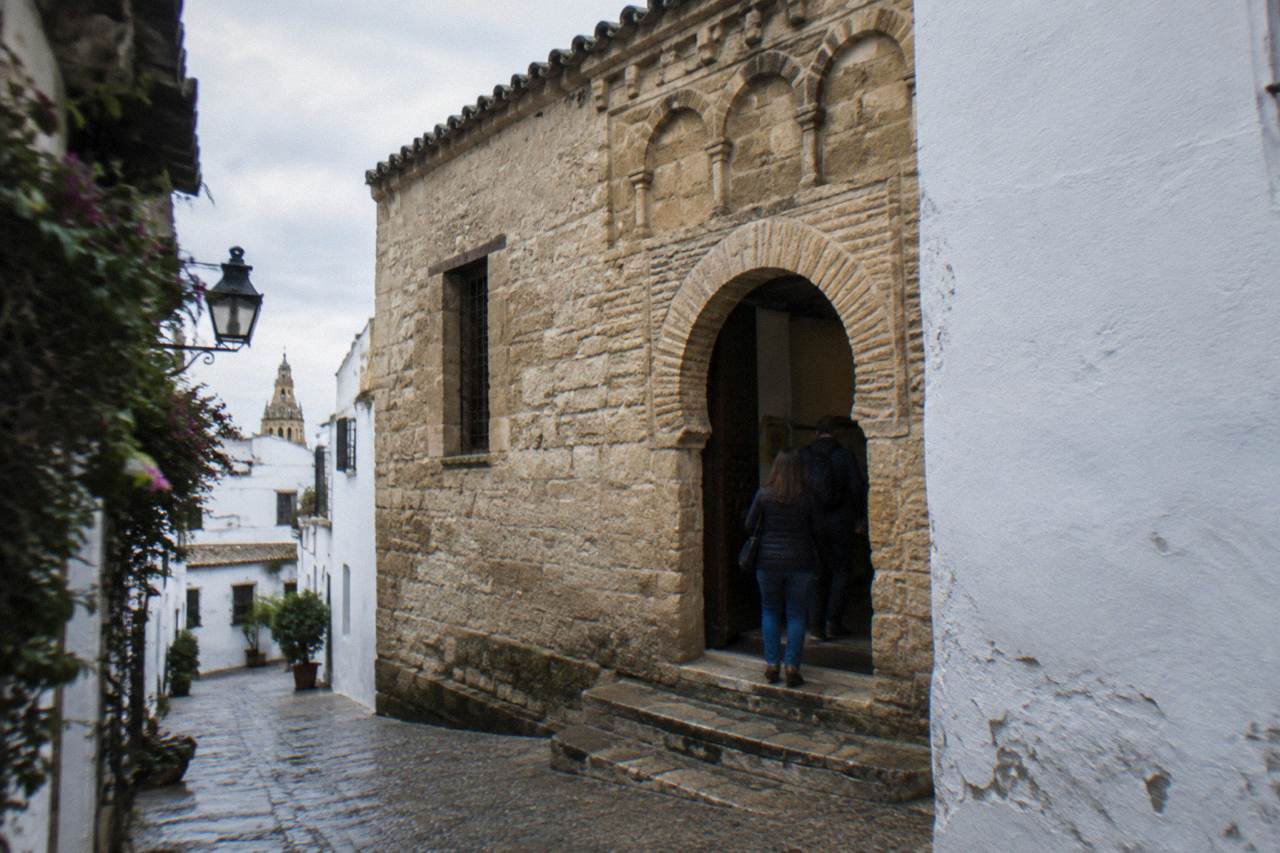
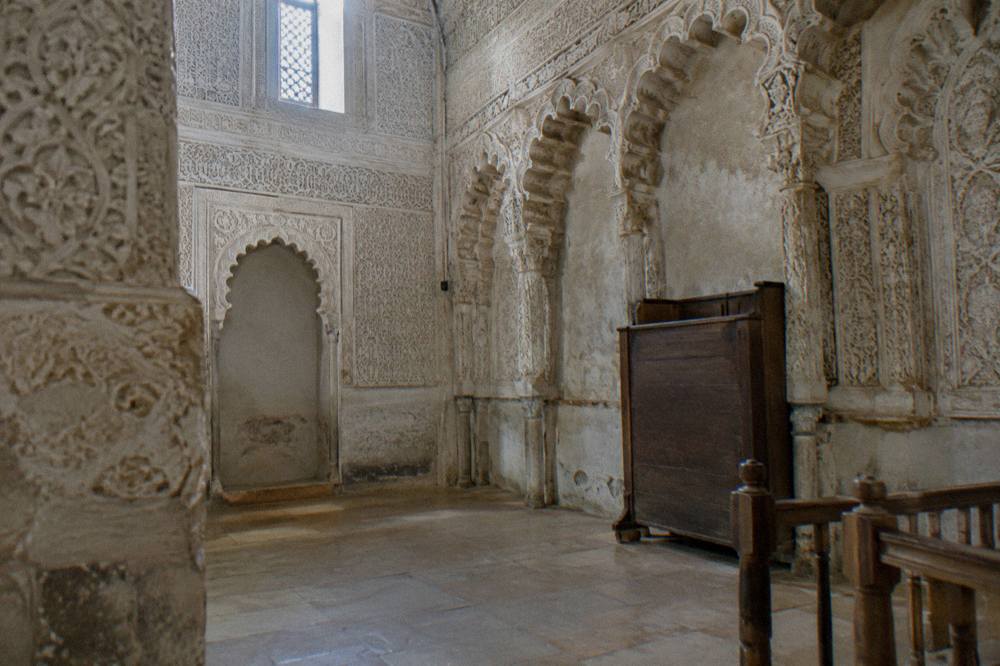
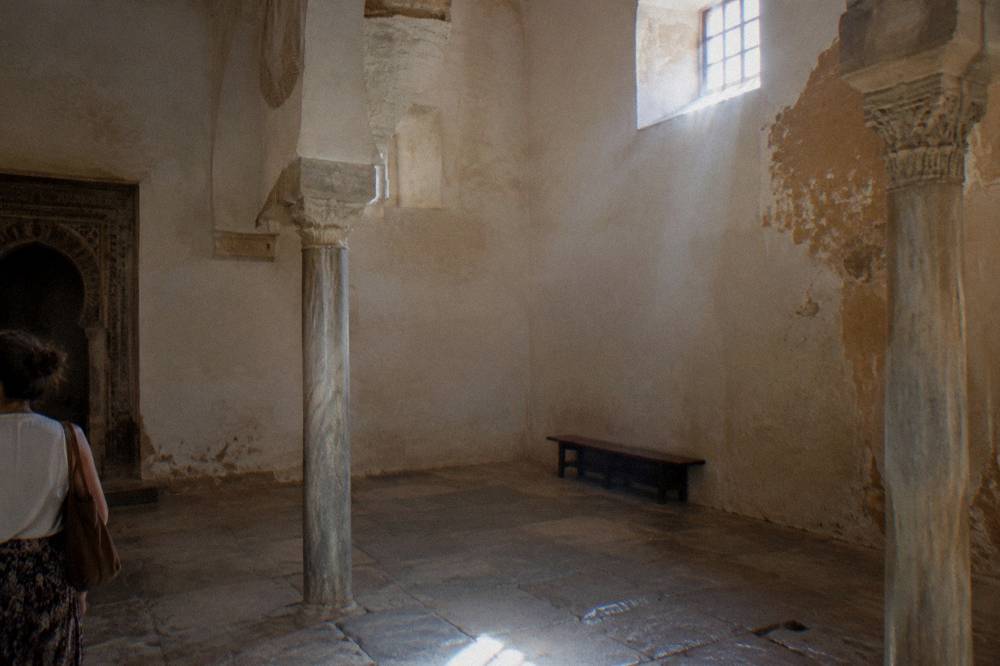
The building itself rewards the visit. It is the only medieval synagogue surviving in Andalusia and one of very few in Spain, standing since before the expulsion of the Jews from Castile. The interior is compact, a single room with Mudejar plasterwork on the walls and a small women's gallery above, and visits are short because the space is short. That compactness is why the EUR 0.30 fee feels almost ceremonial, but it is still the rule that applies.
| Junta de Andalucía site | EU citizens | Everyone else |
|---|---|---|
| Cordoba Synagogue | Free, every open day | EUR 0.30 |
| Medina Azahara | Free, every open day | EUR 1.50 |
| Museo Arqueológico y Etnológico | Free, every open day | Small fee, check at the desk |
| Museo de Bellas Artes | Free, every open day | Small fee, check at the desk |
One practical note: the synagogue was closed for restoration from 13 to 24 July 2026, a short planned closure inside the summer season. That episode is a reminder that a small single-room monument can shut for conservation work without much notice, so if you are making a special trip, it is worth checking the Junta's cultural agenda for the days around your visit.
If the entry-rule detail interests you, the deeper question of who does not pay at the Mezquita shows how a different operator, the Cathedral chapter, draws its own list of exempt categories.
What Is Free Around The Cordoba Synagogue?
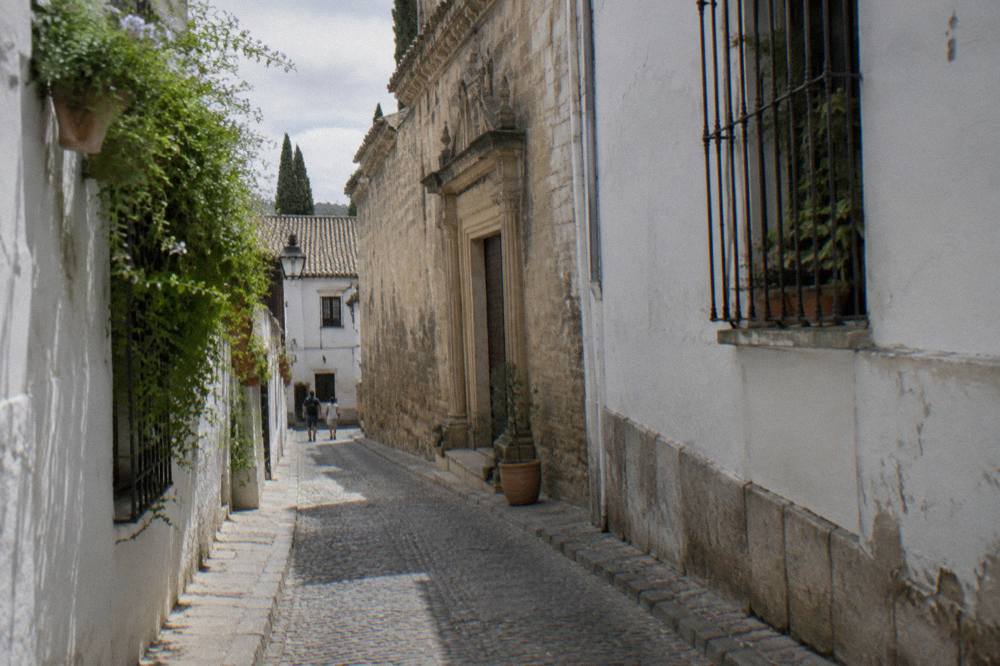
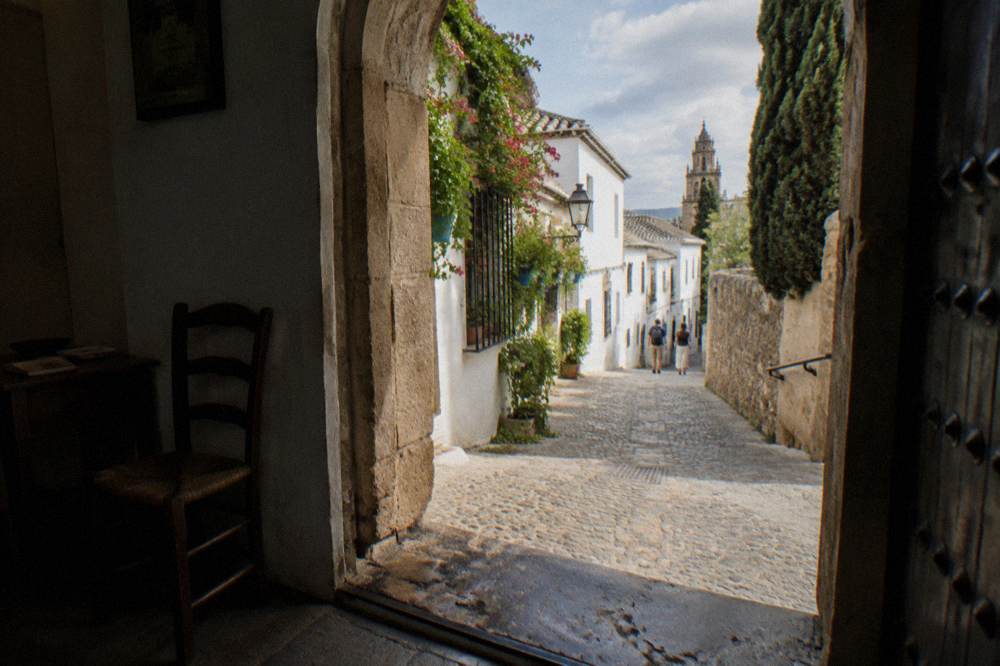
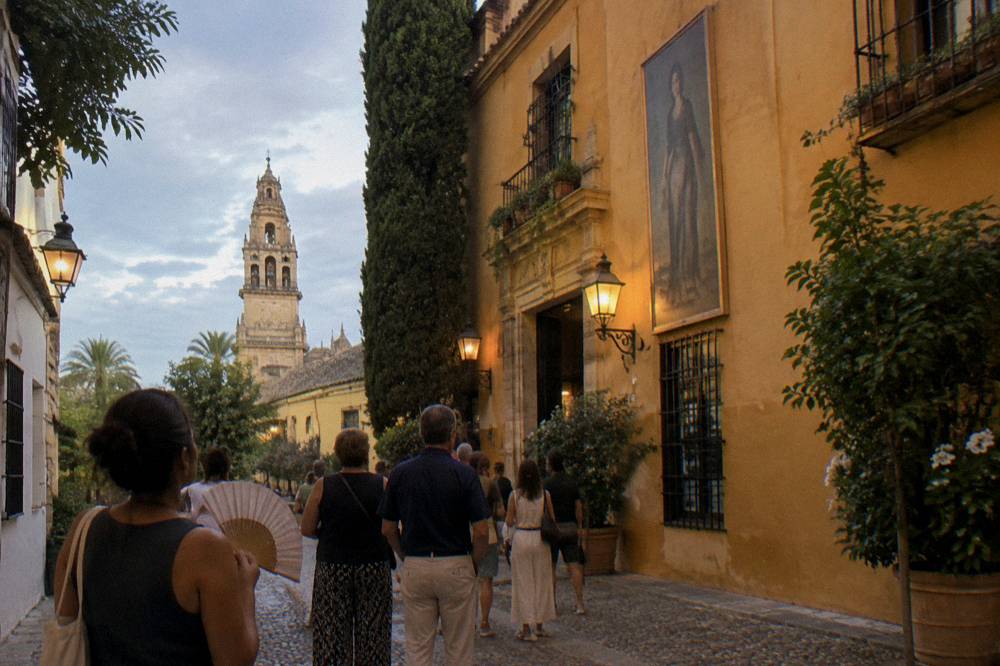
Everything outside the synagogue door is free. The Judería's streets and alleys, Plaza de Maimónides, Plaza de Judios, the Calleja de las Flores, the city walls and Puerta de Almodóvar are all public space, open at any hour and costing nothing. The synagogue is one paid room inside a district that is otherwise entirely free to walk.
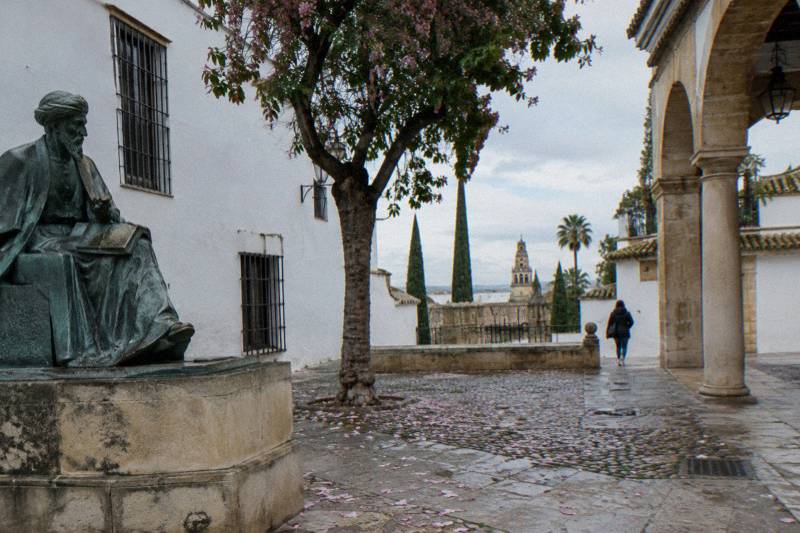
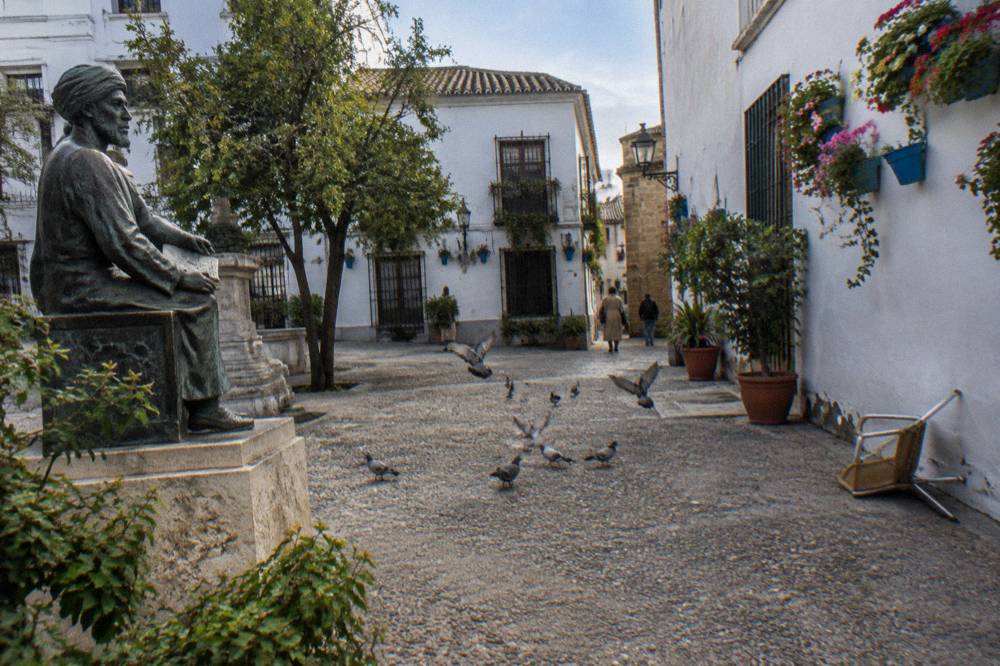
This is the real draw of the area. The Judería de Cordoba is a network of narrow whitewashed streets in the old Jewish quarter, and as public space it carries no ticket, no gate and no opening time. The callejas, the tiny lanes that give the district its character, can be wandered at midnight or at dawn. The Plazas de Maimónides and Judios sit a few steps from the synagogue and function as the district's open-air sitting rooms, with the statue of Maimónides, the Cordoba-born philosopher, at their edge.
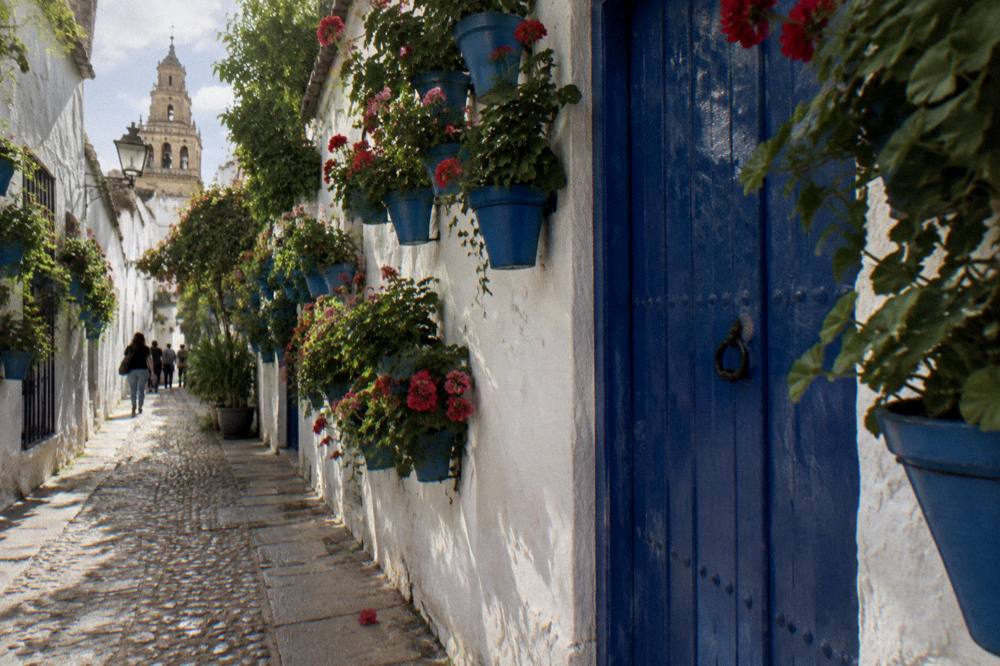
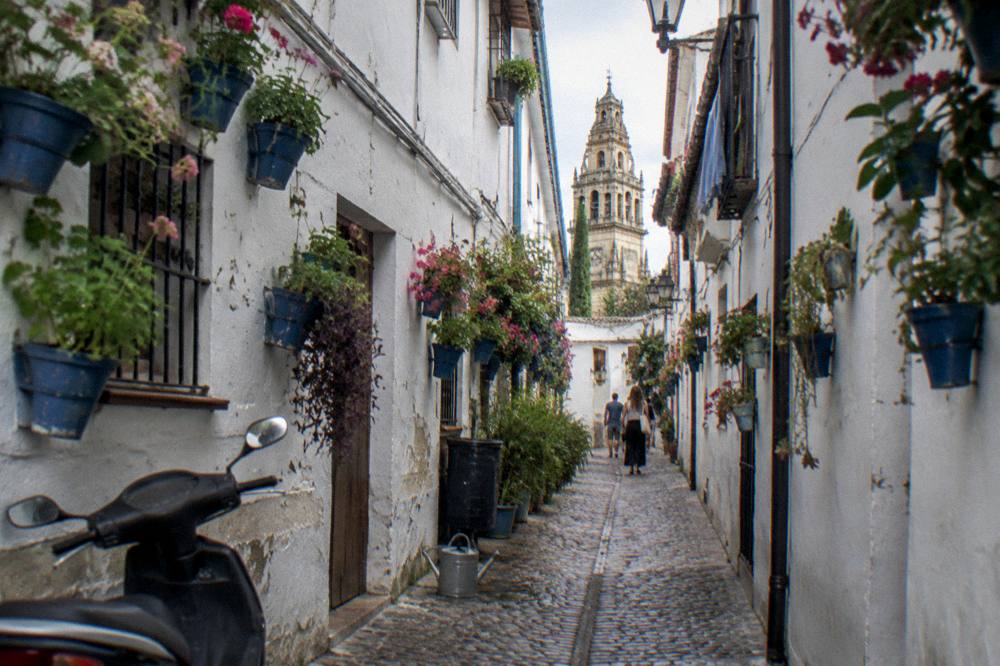
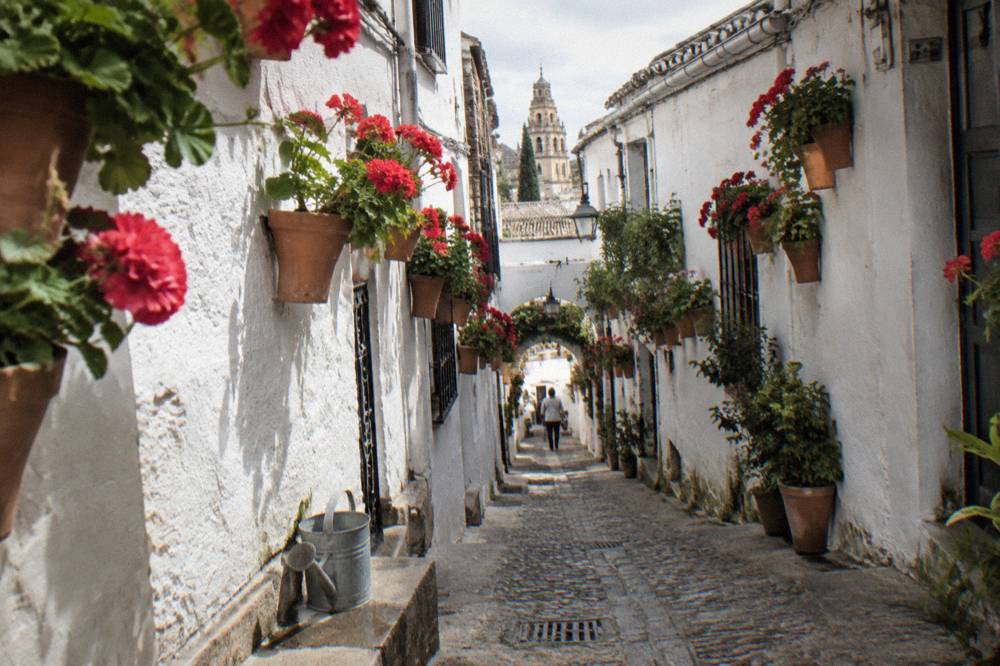
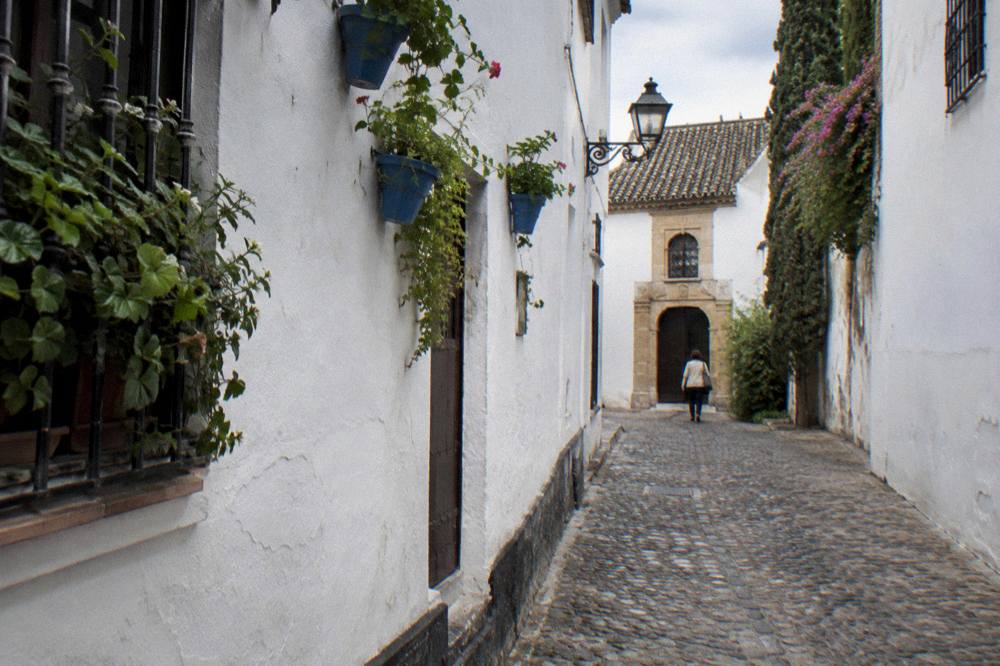
The Calleja de las Flores is the most photographed of these free spaces: a short alley of whitewashed walls, blue flower pots and hanging geraniums that frames a view of the Mezquita-Catedral's tower at its end. It is public space, free at all hours, and it lies inside the same block-and-a-half radius as the synagogue. Further east, the Murallas de Cordoba and Puerta de Almodóvar, the great arched gate of the old walls, are also free public space, with the gate's gardens open to walk through. A free walk meets in this neighbourhood: Jewish Quarter Tour in English.
The street of the synagogue itself, Calle de los Judíos, is part of this free fabric. The paid room is one address on the street; the street belongs to everyone. That distinction is the single most useful thing to understand about visiting this corner of Cordoba, and it is why a visit here can cost nothing at all if you treat the exterior and the district as the attraction and the interior as an optional EUR 0.30 add-on for non-EU visitors.
The Jewish Quarter Tour in English, run by the operator CÓRDOBA on GuruWalk, meets at Puerta de Almodovar and covers this neighbourhood in English. It is a pay-what-you-want walk: no fixed price, you tip the guide at the end. It carries a 4.46 rating from 28 reviews on its GuruWalk listing, a small pool so far, and its guide's own page gives the meeting point and the days it runs.
A Spanish-language alternative in the same district is the Patios Free Tour, 1H30 by Paseando Por Europa, which meets on the Alcazar of the Christian Monarchs esplanade; guiding is pay what you want while patio entries during the walk are bought separately, and it runs in Spanish only. For a full breakdown of the district's lanes and the flower alley, the Judería and Calleja de las Flores guide goes street by street.
If you would rather have the wider old town explained in English while you are here, these pay-what-you-want walks all run on GuruWalk and meet at points inside or beside the historic centre:
What Costs Money At The Cordoba Synagogue?
For non-EU visitors the synagogue itself costs EUR 0.30, the only charge at the building. Around it, the paid sights of the Judería are separate: Palacio de Viana charges EUR 8.50 for its patios, the Torre de la Calahorra charges EUR 4.50, and the Mezquita-Catedral charges EUR 15 outside its early free slot. None of these is bundled with the synagogue.

The EUR 0.30 fee buys the interior only. There is no combined ticket with anything else in the district, no pass that sweeps up the synagogue and its neighbours, and no discount for holding a ticket to another monument. Each paid sight in the Judería sells its own entry, and the sums add up faster than visitors expect in a district that feels free.
The nearest substantial charge is Palacio de Viana, the palace museum of courtyard gardens a short walk north of the synagogue's street. Its patios cost EUR 8.50, the largest fee in the immediate area, and there is no free slot found at any time of year. During the Festival de los Patios in May its Patio de la Cancela is a free out-of-competition patio, but the palace's own courtyards remain a paid visit even then.
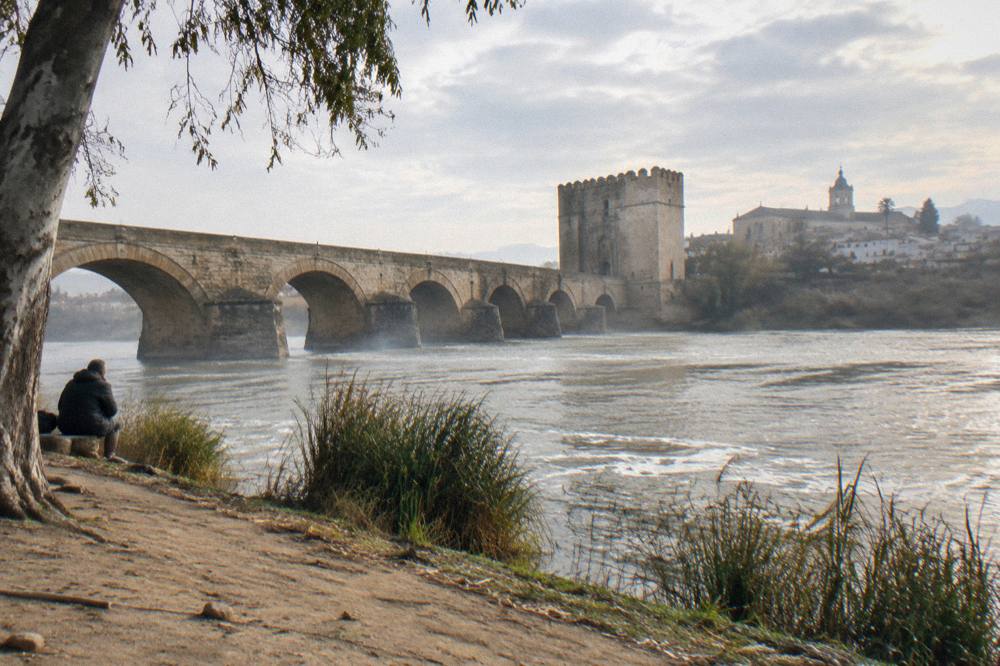
South of the district, across the Roman Bridge, the Torre de la Calahorra charges EUR 4.50 to go inside, while the bridge itself and the riverbank viewpoint beside it are free public space. The split is exact and worth remembering: the crossing and the view cost nothing, the museum inside the tower at the far end does.
The Mezquita-Catedral, the district's giant neighbour, charges EUR 15 for general admission. Its free visit is an early slot only: Monday to Saturday from 8:30 to 9:30, with access stopping at 9:20, for individual visitors only, with no groups and none of the separate tickets included. The bell tower at EUR 4, the night visit El Alma de Cordoba at EUR 25 and the Fernandine route at EUR 6 are all separate tickets that the free slot does not cover, and free entry outside the slot applies only to the categories the Cathedral chapter lists, such as people born or resident in the Diocese of Cordoba and children under 10.
| Sight near the synagogue | Cost | Note |
|---|---|---|
| Cordoba Synagogue | Free for EU citizens; EUR 0.30 otherwise | Nationality rule, applies every open day |
| Palacio de Viana patios | EUR 8.50 | No free slot found |
| Torre de la Calahorra | EUR 4.50 | The bridge and viewpoint beside it are free |
| Mezquita-Catedral | EUR 15 general | Free slot Mon to Sat 8:30 to 9:30, individuals only, no groups |
| Judería streets and plazas | Free | Public space, no hours |
For the straight answer on the district's most-asked entry question, whether the synagogue is free is covered in its own short post, and the Mezquita-Catedral guide handles the cathedral's separate tariff world in full.
When Can You Visit The Cordoba Synagogue For Free?
EU citizens can visit free on every opening day: Tuesday to Sunday from 9:00 to 15:00, with the synagogue closed on Mondays. Non-EU visitors pay EUR 0.30 at any hour on any of those days. There is no free-first-Sunday scheme here and no municipal Thursday window; the Junta's nationality rule is the only free path.
The hours matter as much as the fee. The synagogue opens at 9:00 and stops admitting at 15:00, an early cutoff compared with the municipal museums, which stay open into the evening for most of the year. An afternoon visitor who has already walked the Judería at 16:00 will find the synagogue closed regardless of citizenship. The morning is the window, and Tuesday through Saturday plus Sunday mornings are the days. A free walk meets in this neighbourhood: Jewish Quarter Tour in English.
The July 2026 restoration closure mentioned earlier shows the other pattern to watch: short, targeted conservation closures announced by the Junta rather than by the city. When a monument consists of one room, a plasterwork repair closes the whole site. Checking the Junta's cultural agenda before a dedicated trip costs a minute and prevents a wasted walk across the old town.
The three free regimes of Cordoba are confused constantly, and the synagogue sits at the centre of that confusion because it looks like a small municipal museum but is not one. The table below separates them. The Mezquita's slot is a time rule for individuals; the municipal window is a day rule for everyone; the Junta's scheme, which covers the synagogue, is a nationality rule. Mixing any two of them produces wrong advice, which is why this site keeps them apart.
| Regime | Sites | Who gets in free | When |
|---|---|---|---|
| Cabildo (Cathedral chapter) | Mezquita-Catedral | Individual visitors, no groups | Mon to Sat 8:30 to 9:30, last entry 9:20 |
| Ayuntamiento (municipal) | Alcazar, Banos Califales, Julio Romero de Torres, Taurino, Fosforito | Everyone, until capacity | Last two hours on non-holiday Thursdays, plus listed free days |
| Junta de Andalucía | Synagogue, Medina Azahara, Arqueologico, Bellas Artes | Accredited EU citizens only | Every open day |
The municipal free days are worth knowing even though they do not touch the synagogue: 28 February, 8 September, 27 September, 17 December and the Noche del Patrimonio open the municipal museums to everyone, and 18 May does so for the Julio Romero de Torres and Taurino museums. None of those dates changes the synagogue's terms.
How Do You Combine The Cordoba Synagogue With Other Free Sights?
A natural free route strings the synagogue together with the Judería lanes, the Calleja de las Flores, Plaza de Maimónides, the Roman Temple exterior, Plaza de la Corredera and the Roman Bridge, all of them public space with no ticket. The order is flexible because nothing on the list has an entry desk; only the synagogue's 15:00 cutoff forces timing on the day. One of the free walks starts in this part of the city: 2 Hour Small-Group English Tour.
Work the morning around the synagogue's hours. Its 9:00 opening matches the start of the Mezquita's free early slot, so an EU-citizen itinerary can pair the two in one morning and still have the afternoon for the free plazas. A non-EU itinerary does the same at EUR 15 plus EUR 0.30, or skips the Mezquita interior and keeps the whole day free by staying in public space.
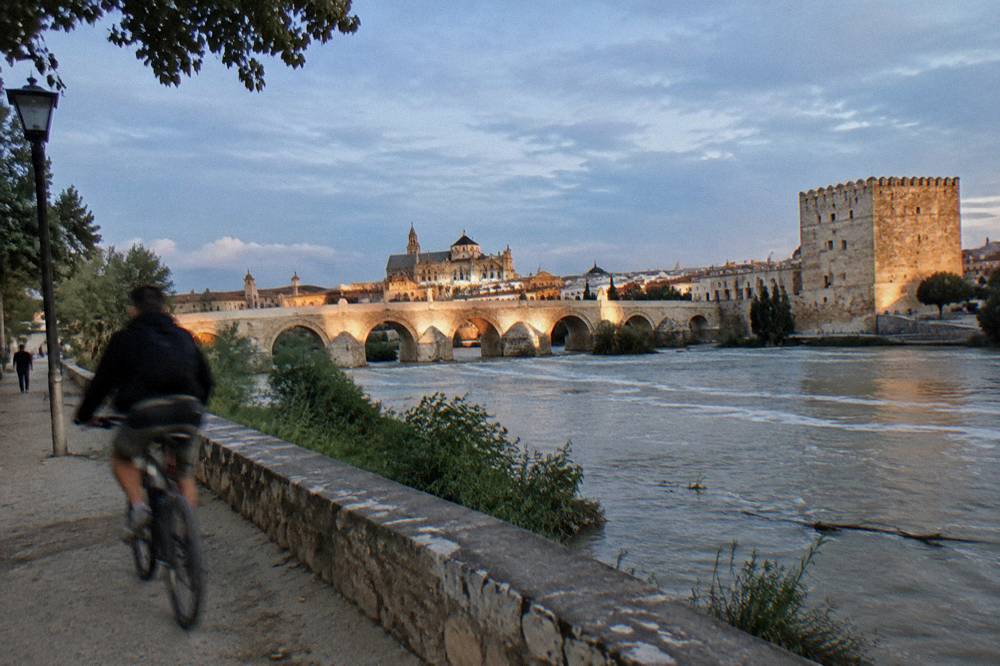
West and north of the Judería, the free list runs long. The Templo Romano's columns stand in the open on Calle Capitulares, free to view from the street, with the Mausoleo Romano de la Puerta de Gallegos also visible from outside. Plaza de la Corredera, the great arcaded square of the Axerquía, is free public space, as are the Plaza del Potro, the Plaza de Capuchinos with the Cristo de los Faroles, and the gardens of the Victoria and Agricultura. Across the river the Roman Bridge and the Mirador de la Calahorra viewpoint cost nothing.
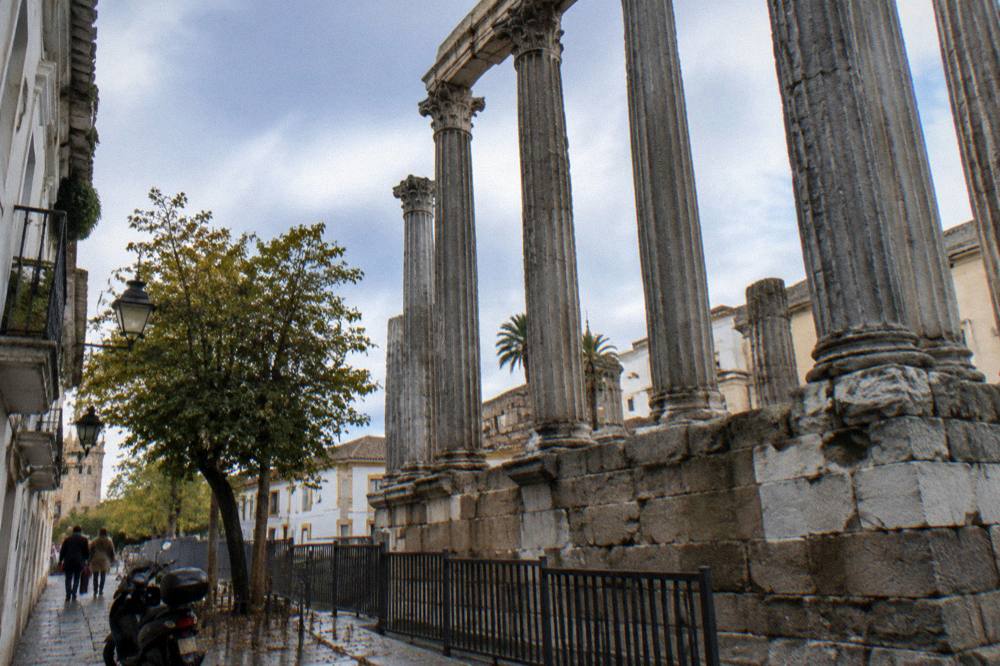
The Best Of Free Tour, 1H45 by Andaloo Tours meets at the Roman Temple, Calle Capitulares, and is the most-reviewed pay-what-you-want walk in this directory, rated 4.94 out of 5 across 3,732 reviews on GuruWalk, running in English and Spanish. Its meeting point places it at the northern edge of the free-sight cluster described above, which makes it a practical first stop for orienting yourself before a self-guided free afternoon.
For depth on the individual free pieces, the Roman Temple and mausoleum guide and the free plazas and markets guide each take one cluster further, and the question of how many days you need in Cordoba helps you decide how much of this list fits your trip. If patios are the reason you are coming, the patios are free only during the festival in May, a rule the Cordoba patios festival guide explains in full.
Which Free Walking Tours Meet Near The Cordoba Synagogue?
The walks that meet closest to the synagogue are the Jewish Quarter Tour in English at Puerta de Almodovar and the 2 Hour Small-Group English Tour at the Statue of Averroes, Puerta de Almodovar, both on GuruWalk and both pay what you want. More walks meet at the Roman Temple and Plaza de las Tendillas, a short walk north. This directory lists 26 free walking tours in total.
The useful fact is that several meeting points cluster around the Judería's edges. Puerta de Almodovar, the eastern gate of the old Jewish quarter, hosts walks focused on this district; the Roman Temple hosts old-town walks; Plaza de las Tendillas, the city's central square, hosts heritage walks. All of these sit within the same walkable historic core, so a morning walk can be followed by a synagogue visit before the 15:00 cutoff.
The 2 Hour Small-Group English Tour by Jose Manuel meets at the Statue of Averroes, Puerta de Almodovar, literally at the gate of the synagogue's district. It runs in English, lasts 2 hours, and holds a 4.88 rating from 354 reviews on GuruWalk, with the small-group format as its distinguishing feature.
The Jewish Quarter Tour in English, which this site links as its featured walk for the synagogue, meets at the same gate and is the natural companion visit: the walk gives the district its story, the synagogue gives the story a room. Its tour page carries the meeting point, days and the operator's own listing. For how the pay-what-you-want model works before you book one, how free walking tours work in Cordoba walks through the mechanics, and how much to tip a free tour in Cordoba covers the end-of-walk question.
| Walk | Platform | Guide | Meets at | Language |
|---|---|---|---|---|
| Jewish Quarter Tour in English | GuruWalk | CÓRDOBA | Puerta de Almodovar | English |
| 2 Hour Small-Group English Tour | GuruWalk | Jose Manuel | Statue of Averroes, Puerta de Almodovar | English |
| Best Of Free Tour, 1H45 | GuruWalk | Andaloo Tours | Roman Temple, Calle Capitulares | English, Spanish |
| English Heritage Free Tour, 1H30 | GuruWalk | Enrique | Plaza del Triunfo, Mezquita-Catedral | English |
Spanish-speaking visitors have further options in and around the district, including patio walks and night walks, all listed in the free walking tours overview. The night walks on the roster run in Spanish only, so no English-language night walk should be assumed here.
Mistakes That Trip People Up At The Cordoba Synagogue
The mistakes are predictable: assuming the municipal Thursday window applies, arriving without EU ID and being charged the fee, turning up after 15:00 or on a Monday, confusing the synagogue with the patios of the festival, and believing a free walking tour includes the synagogue interior. Each one comes from merging rules that belong to different operators. A free walk meets in this neighbourhood: 2 Hour Small-Group English Tour.
The first mistake is importing the Thursday window. That scheme belongs to the city's municipal museums and opens them free to everyone for their last two hours on non-holiday Thursdays. The synagogue is a Junta site, so Thursday changes nothing: EU citizens were already free, and everyone else still pays EUR 0.30.
The second is documentation. "EU citizen" means accredited, and the desk applies it literally. A UK or US visitor without a passport on them pays the fee; an EU citizen with an ID card does not. The rule is nationality, not residency claims or student cards from elsewhere.
Third, the clock and the calendar. The synagogue's day ends at 15:00 and its week ends on Sunday, with Mondays closed. Visitors who tour the Judería after lunch and drift toward the synagogue at 16:00 find a shut door. Plan it as a morning sight.
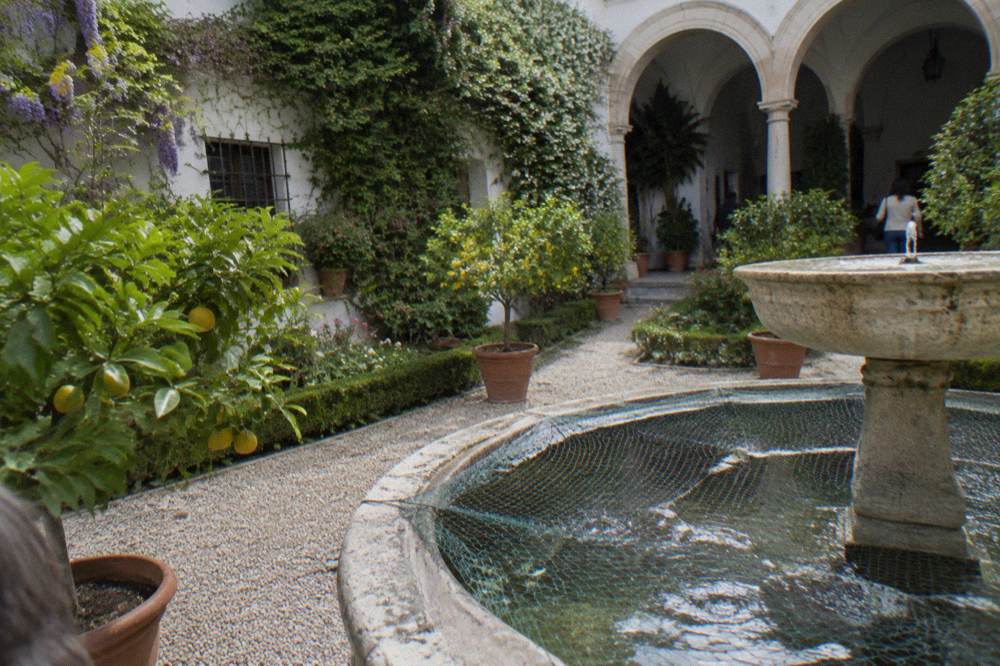
Fourth, patio confusion. In May, the Festival de los Patios opens private courtyards across the San Basilio and Alcazar Viejo districts, free with no appointment, but only during the festival, 3 to 16 May 2027. That free access does not extend to Palacio de Viana's patios, which stay at EUR 8.50, and it does not exist at all outside the festival window.
Fifth, tour expectations. The pay-what-you-want walks of the Judería are guided by independent local guides on GuruWalk; none of them is stated to enter the synagogue, and from 1 January 2027 the rules around guided visits inside the Mezquita change without affecting this building. Treat the walk and the interior as two separate experiences, and this site, Free Things To Do In Cordoba, keeps the two facts apart in every guide.
Common Questions About The Cordoba Synagogue
Is the Cordoba Synagogue free to visit?
Only for accredited EU citizens, who enter free on every open day. Everyone else, including UK and US visitors, pays EUR 0.30 at all times. This is a nationality rule set by the Junta de Andalucía, not a time-of-day or day-of-week rule, so no free window exists for non-EU visitors.
How much does the Cordoba Synagogue cost for non-EU visitors?
EUR 0.30, the smallest admission fee among the Junta's Cordoba sites. For comparison, Medina Azahara charges EUR 1.50 for non-EU visitors under the same policy. The fee applies on every opening day and at every hour, with no discount days announced.
What are the Cordoba Synagogue opening hours?
Tuesday to Sunday from 9:00 to 15:00, closed on Mondays. The afternoon cutoff is early compared with the municipal museums, so it works best as a morning sight. The synagogue was closed for restoration from 13 to 24 July 2026, a reminder that short conservation closures happen here.
Does the Thursday free museum window cover the synagogue?
No. The Thursday window is a municipal scheme covering the Alcazar de los Reyes Cristianos, the Banos del Alcázar Califal, the Julio Romero de Torres and the Taurino museums among others. The synagogue belongs to the Junta de Andalucía and follows its own EU-citizen rule instead.
What is free around the Cordoba Synagogue?
The entire surrounding district. The Judería's streets, Plaza de Maimónides, Plaza de Judios, the Calleja de las Flores, the city walls and Puerta de Almodóvar are all free public space with no hours. The synagogue's EUR 0.30 interior is the only charge on its own street.
Do any free walking tours visit the Cordoba Synagogue?
Pay-what-you-want walks meet at the district's edges, including the Jewish Quarter Tour in English at Puerta de Almodovar, but none of them is stated to enter the synagogue. The walk and the building interior are separate: the tour costs whatever you tip, the interior follows the EU-citizen entry rule.