Is The Roman Bridge In Cordoba Free?
Yes, the Roman Bridge in Cordoba is free to walk at any hour. This guide covers what the free part includes, what still costs money nearby, and which free walking tours meet at its ends.
In Short
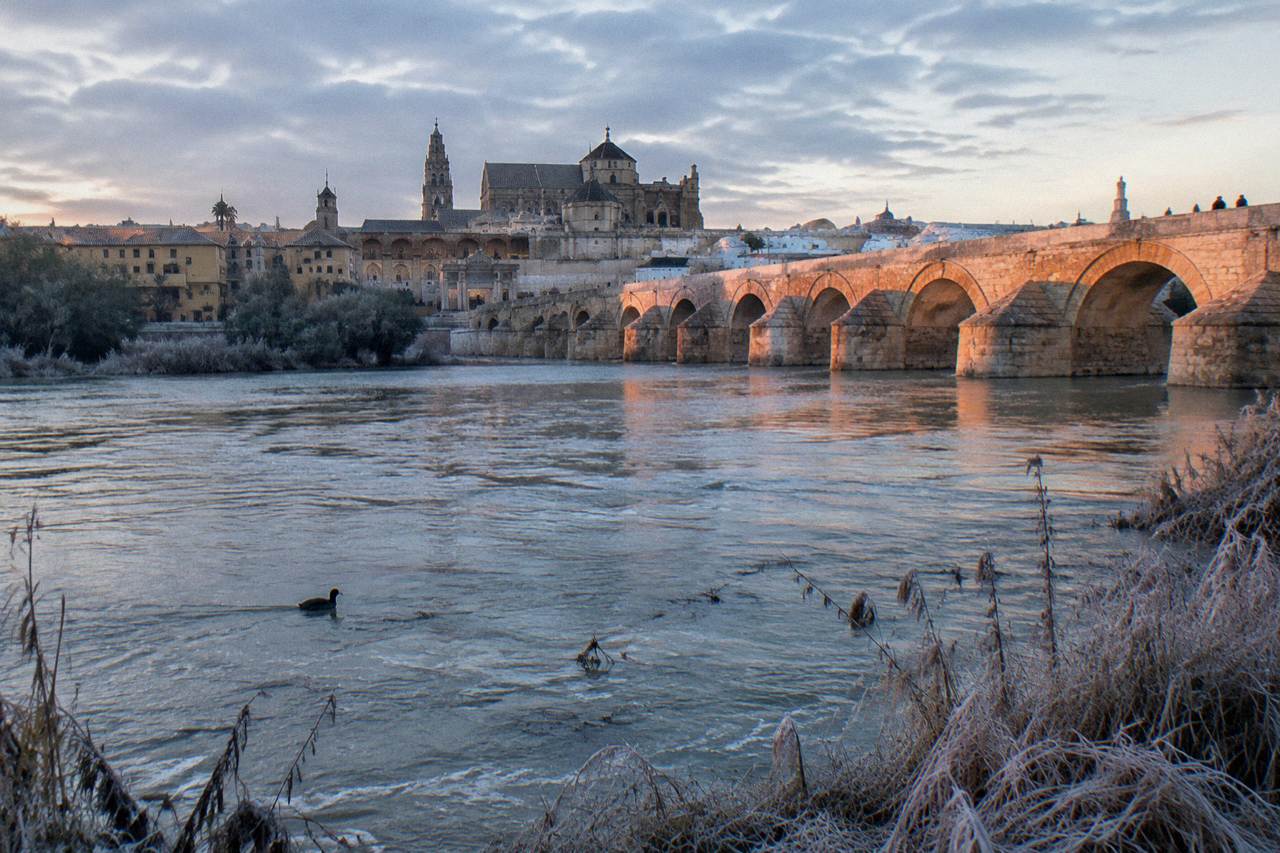
Yes. The Roman Bridge in Cordoba is free public space, open around the clock, and you never need a ticket to cross it. The riverbank on both sides and the Mirador de la Calahorra viewpoint on the south bank are free too. The only paid element at the bridge is inside the Torre de la Calahorra, which charges EUR 4.50 for its museum.
This question sits inside the Roman Bridge and Calahorra viewpoint guide. This page answers the single question of what is free, and the guide covers the whole riverside area in depth.
Quick Facts
| Question | Answer |
|---|---|
| Is the bridge free? | Yes, free public space, 24 hours |
| Do I need a ticket? | No, no ticket or booking for the bridge |
| What is free beside it? | Riverbank paths, south bank viewpoint, Puerta del Puente exterior |
| What costs money? | Torre de la Calahorra inside, EUR 4.50 |
| Nearest paid attraction | Mezquita-Catedral, EUR 15 outside its free morning slot |
| Free walks meeting at the bridge ends | Runs on GuruWalk, meeting at Puerta del Puente, Plaza del Triunfo |
Is The Roman Bridge In Cordoba Free?
Yes, completely. The Roman Bridge in Cordoba is free public space, open 24 hours a day, with no ticket, no gate and no booking of any kind. You can cross it on foot at any hour, in any direction, as many times as you like. The stone crossing over the Guadalquivir is treated by the city exactly like a street, and it costs nothing.
That answer surprises some visitors because so much of Cordoba's riverside looks like a monument, and monuments in this city usually come with a tariff. The Mezquita-Catedral charges EUR 15 outside its early free slot. The bell tower is EUR 4 and the night visit EUR 25, both separate tickets. Against that backdrop, a bridge this prominent being free feels almost suspicious, so the question is worth answering precisely rather than with a shrug.
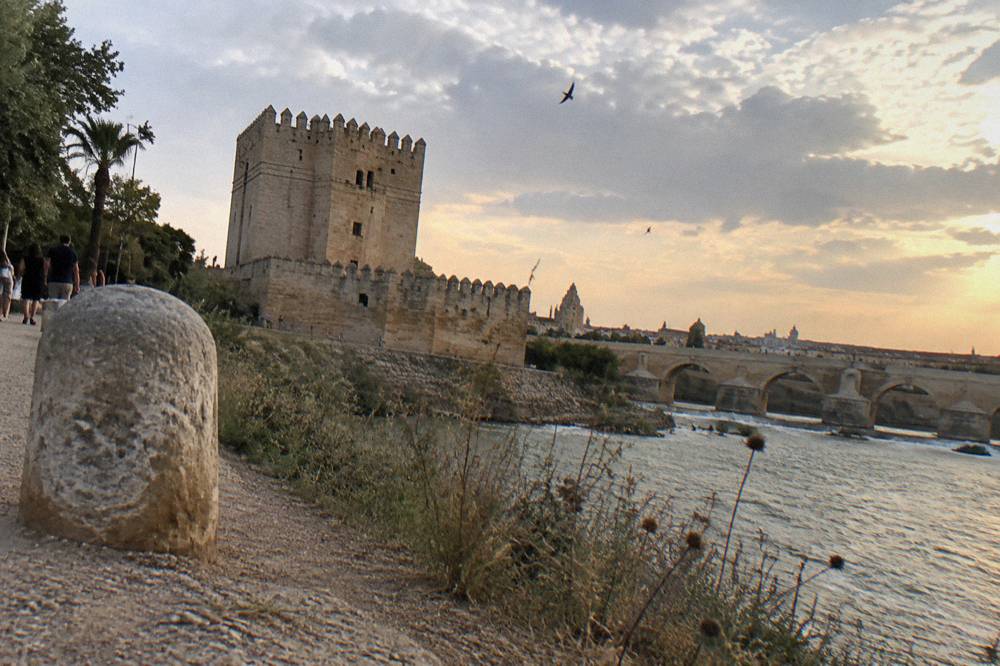
The distinction that matters is between the bridge as infrastructure and the attractions attached to it. The bridge deck, its arches and its approaches are public space. The Torre de la Calahorra, the fortified tower standing at the southern end, is a museum with an entry fee of EUR 4.50. Walking to the tower is free; going inside it is not. Everything else around the crossing, the riverbank paths, the Puerta del Puente at the northern end and the viewpoints, sits in the free column. One of the free walks starts in this part of the city: English Heritage Free Tour, 1H30.
This site's own guide to the bridge and the Calahorra viewpoint covers the whole riverside in depth. The short version for this question is simple: budget nothing for the bridge itself, and decide separately whether the tower museum is worth EUR 4.50 to you. For many visitors the free viewpoint on the south bank gives the panorama they came for without spending anything.
If you want the crossing explained rather than just walked, free walking tours are the natural companion, and several of the 26 walks listed on this site start within a few minutes of the bridge ends. The selection below gathers English-language options on GuruWalk, all pay what you want.
What Does The Free Part Include?
The free part includes the full bridge crossing in both directions, the Puerta del Puente and the Triumphal Arch of San Rafael at the northern end, the riverbank paths along the Guadalquivir on both sides, and the Mirador de la Calahorra viewpoint on the south bank. All of it is public space, accessible at any hour, with no ticket, no gate and no capacity limit.
Start with the crossing itself. The bridge deck carries pedestrians over the Guadalquivir between the historic centre on the north bank and the Campo de la Verdad district on the south. Because it is public space, there is no opening time and no closing time, no entry check and nothing to book. You can cross at dawn, at midday or at midnight, and plenty of visitors do all three, since the view changes with the light on the water and the skyline behind.
At the northern end you step off the bridge into one of the most photographed corners of the city. The Puerta del Puente and the neighbouring Triunfo de San Rafael stand right at the bridgehead, beside Plaza del Triunfo, and both are free to see from the public square around them. From that square you are also a short walk from the Mezquita-Catedral, whose own entry rules are a separate matter entirely; the question of whether the Mezquita is free has its own answer, and its free slot is a narrow one.
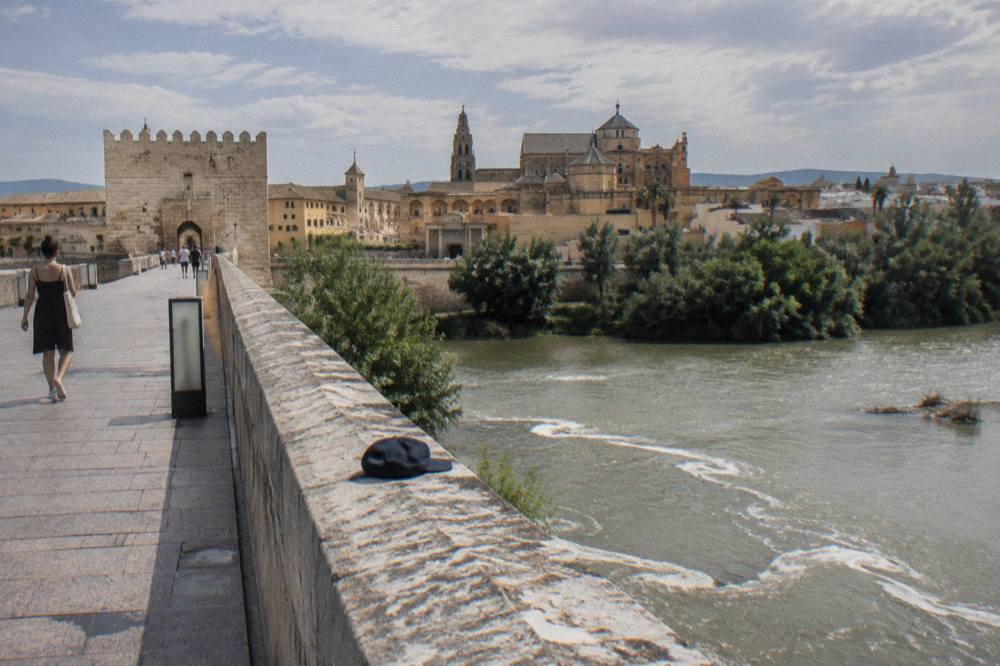
On the south bank, the free territory continues. The Mirador de la Calahorra viewpoint looks back across the river at the old city, and it is public space like the bridge. The riverbank paths along the Guadalquivir, the Paseo de la Ribera and the opposite banks, are free to walk as well. The Molino de la Albolafia, the old waterwheel structure visible from the bridge, is another free sight you take in from public ground.
Put together, the free experience around the bridge is not a token glimpse but a full circuit: cross the bridge, stand under the Puerta del Puente, walk the south bank to the viewpoint, and take in the river landscape from both sides. None of that requires a ticket. The free gardens and riverside guide extends the same logic to the green spaces further along the water.
What Do You Still Have To Pay For?
The one paid element at the bridge is the Torre de la Calahorra, the tower museum at the southern end, which charges EUR 4.50 to enter. Everything else in the immediate bridge area is free. Further afield, the Mezquita-Catedral charges EUR 15 outside its free 8:30 to 9:30 morning slot, and its bell tower is a separate EUR 4 ticket.
The tower is the item to get straight, because it sits right on the free route and looks like part of it. The Torre de la Calahorra houses a museum, and the museum charges EUR 4.50. If you walk the bridge to the south end and continue to the viewpoint, you will pass the tower without ever needing to enter it. The exterior, like the bridge, costs nothing to see. The decision to pay is entirely about whether the museum inside interests you.
The Mezquita-Catedral a few minutes north of the bridgehead is the other paid item visitors bump into on this route. Its general ticket is EUR 15. Its free visit is a 60-minute early slot, Monday to Saturday from 8:30 to 9:30 with last entry at 9:20, for individual visitors only, with no groups and none of the extras included. The bell tower at EUR 4, the night visit El Alma de Cordoba at EUR 25 and the Fernandine route at EUR 6 are all separate tickets that the free slot does not cover. From 1 January 2027 the Cabildo also starts optional official guided visits, sold above the normal ticket price, which has not been published.
A useful way to hold all this in your head is a simple two-column split: what the crossing and its surroundings cost, and what the enclosed attractions cost. The table below keeps the paid items apart from the free ground they sit on.
| Item | Free or paid | Price |
|---|---|---|
| Roman Bridge crossing | Free public space | Nothing |
| Puerta del Puente and Triunfo de San Rafael | Free public space | Nothing |
| Mirador de la Calahorra viewpoint | Free public space | Nothing |
| Guadalquivir riverbank paths | Free public space | Nothing |
| Torre de la Calahorra museum | Paid | EUR 4.50 |
| Mezquita-Catedral, outside the free slot | Paid | EUR 15 |
| Mezquita bell tower | Paid, separate ticket | EUR 4 |
One caution for the Alcazar further west along the river: this site does not print its entry price at all, because official sources disagree, and you should treat it as a small fee outside its free Thursday window rather than trusting any figure you see elsewhere. The two-hour Thursday window at the municipal museums, winter 18:00 to 20:15 and summer 12:00 to 14:15, is free for everyone until capacity, and it is the city's most reliable free museum scheme.
When Is The Free Option Available?
The bridge is available at every hour of every day, because it is public space with no gate, no schedule and no seasonal closure. There is no free window to catch and no day to avoid. The only timing that matters is for the paid attractions around it: the Mezquita free slot runs 8:30 to 9:30 Monday to Saturday, and the municipal Thursday window runs the last two opening hours.
This is the point worth dwelling on, because almost everything else free in Cordoba comes with a clock attached. The Mezquita's free visit exists only inside one early hour, and only for individuals, and not on days of extraordinary celebration. The municipal museums open their doors free for the final two hours of public access on non-holiday Thursdays, and on a handful of fixed dates such as 28 February, 8 September, 27 September and 17 December. The Junta museums, Medina Azahara among them, are free only for accredited EU citizens, with everyone else paying up to EUR 1.50.
The bridge stands outside all of that machinery. There is no weekday rule, no season, no capacity limit and no excluded holiday. A visitor who arrives at noon on a Sunday, or at ten at night, crosses exactly as freely as one who arrives at nine on a Tuesday morning. That reliability makes it the one free sight in the city you can plan around without checking anything in advance.
The timing question does become real if you want to combine the crossing with paid or conditional sights. The Mezquita free slot demands an early start, and the walk from the bridgehead to its gates takes only minutes, so the two pair naturally if you are up at 8:30. The municipal Thursday window rewards the opposite approach, an evening visit, and the Alcazar and its gardens sit close enough to the river to fold into the same day. In between those clocks, the bridge itself absorbs whatever time you have.
Where Does The Free Visit Start?
The free visit starts wherever you step onto public ground, but the natural entry point is the north end at Puerta del Puente and Plaza del Triunfo, where the bridge meets the historic centre. The southern end lands in Campo de la Verdad beside the Torre de la Calahorra. Both approaches are open public space with no ticket desk between them.
The north end is where most visitors arrive, because it sits at the edge of the Juderia and the monumental heart of the city. Plaza del Triunfo is the open square at the bridgehead, and from it you can see the Puerta del Puente, the Triunfo de San Rafael and, a little beyond, the walls of the Mezquita-Catedral. None of that standing and looking costs anything. The square is also a meeting point for walks: the English Heritage Free Tour, 1H30, guided by Enrique and rated 4.63 out of 5 from 630 reviews on GuruWalk, meets at Plaza del Triunfo by the Mezquita-Catedral, and the freetour.com Historic Center Free Tour lists Puerta del Puente, Plaza del Triunfo as its own meeting point.
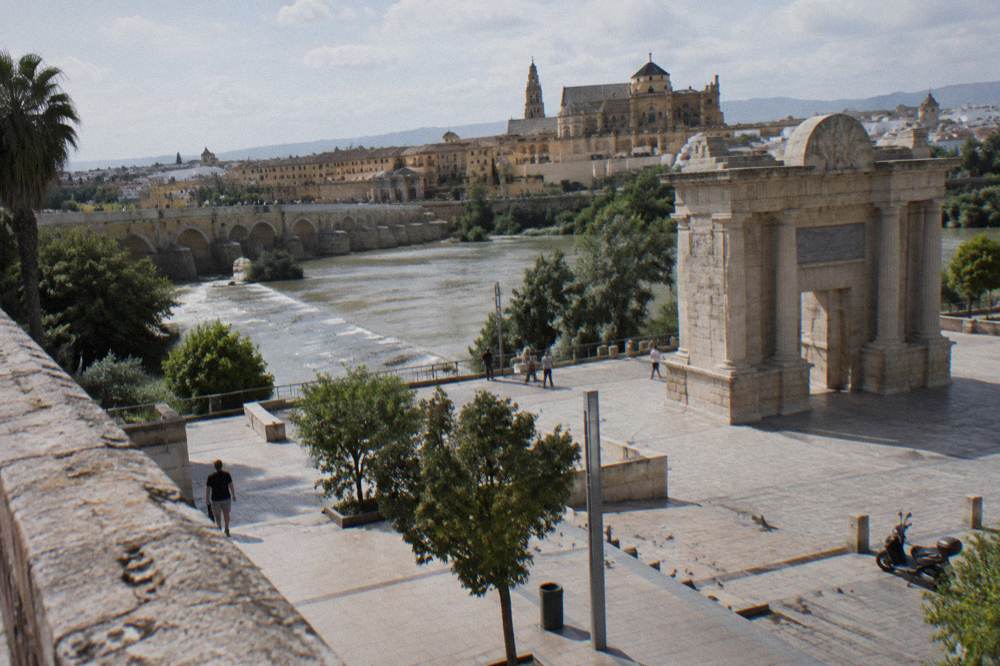
Because that tour starts where the bridge starts, it is the featured walk on this page: the English Heritage Free Tour is a pay-what-you-want walk in English, an hour and a half long, run by an independent guide on GuruWalk. Its rating comes from a substantial pool, 630 reviews, which is worth noting on a site where some walks carry far fewer.
The south end is quieter in character. You come off the bridge into Campo de la Verdad, with the Torre de la Calahorra to one side and the viewpoint path along the river. From there the free circuit completes itself: viewpoint, riverbank, and back over the bridge. Visitors who want the whole loop without a guide can simply walk it; visitors who want it narrated have walks starting at both ends and at points in between.
Which Free Walking Tours Meet Nearby?
Several free walking tours listed on this site meet within a short distance of the bridge, and the busiest meeting points are Puerta del Puente, Plaza del Triunfo and the Roman Temple. All are pay-what-you-want walks run by independent guides on GuruWalk, plus freetour.com listings for some bilingual options. Meeting points are written exactly as each listing gives them.
On GuruWalk, the English Heritage Free Tour, 1H30 meets at Plaza del Triunfo, Mezquita-Catedral, at the bridge's north end, and runs in English. The 2 Hour Night Tour lists Puerta del Puente, Plaza del Triunfo as its meeting point, though it runs in Spanish only, and this site never promises an English night walk. The Best Of Free Tour, 1H45, guided by Andaloo Tours and the most reviewed walk here at 4.94 out of 5 from 3,732 reviews on GuruWalk, meets up the hill at the Roman Temple, Calle Capitulares, a point you can reach from the bridge through the old town.
The freetour.com listings add bilingual options: the Historic Center Free Tour, 2 Hours, rated 8.9 out of 10 from 1,849 reviews shown on its freetour.com listing, meets at Puerta del Puente, Plaza del Triunfo, right at the bridgehead. The table below gathers the meeting points exactly as the listings state them, so you can see at a glance which walks start closest to the crossing.
| Walk | Platform | Language | Meeting point |
|---|---|---|---|
| English Heritage Free Tour, 1H30 | GuruWalk | English | Plaza del Triunfo, Mezquita-Catedral |
| Historic Center Free Tour, 2 Hours | freetour.com | English, Spanish | Puerta del Puente, Plaza del Triunfo |
| 2 Hour Night Tour | GuruWalk | Spanish | Puerta del Puente, Plaza del Triunfo |
| Best Of Free Tour, 1H45 | GuruWalk | English, Spanish | Roman Temple, Calle Capitulares |
| World Heritage Free Tour, 1H30 | GuruWalk | English, Spanish | Plaza de las Tendillas |
| English Hidden Gems Free Tour | GuruWalk | English | Plaza de las Tendillas |
Every walk here is genuinely free in the pay-what-you-want sense: you book a place, you walk, and you tip the guide at the end what you think the walk was worth. If you are unsure what that means in practice, the site's explanation of how free walking tours work in Cordoba covers the mechanics, and there is separate advice on how much to tip a free tour in Cordoba. None of these walks requires a purchase, and none of them includes paid entry anywhere; where a walk involves a site with a separate ticket, the listing says so.
Mistakes That Trip People Up At The Roman Bridge
The common mistakes are assuming the tower is part of the free bridge, expecting a free window that does not exist, conflating the bridge with the Mezquita's complicated ticket rules, and paying for a viewpoint that is already free. The bridge has no schedule, so every timing mistake around it comes from the attractions beside it, not the crossing itself. Each trap below is backed by the city's own published rules.
The first mistake is walking into the Torre de la Calahorra expecting it to be free because the bridge is. It is not. The tower is a museum charging EUR 4.50, and nothing about crossing the bridge obliges you to enter it. The second is the mirror image: standing outside the tower and assuming the whole south end is ticketed. The viewpoint and the riverbank are public space, free at any hour.
The third mistake is merging the bridge's freedom with the Mezquita's rules. The Mezquita-Catedral is free only in a 60-minute early slot, Monday to Saturday 8:30 to 9:30, last entry 9:20, individuals only, no groups, and never on days of extraordinary celebration. Outside that slot it is EUR 15. The bridge being free tells you nothing about the building beside it, and Sunday is not in the Mezquita's free slot at all.
The fourth mistake is planning around clocks that do not apply. There is no Thursday window at the bridge, no EU-citizen rule, no capacity limit. Those regimes belong to the municipal museums and the Junta museums respectively, and the free attractions covered on Free Things To Do In Cordoba each carry their own conditions. The bridge carries none.
The fifth mistake is paying for direction. No walk needs to be bought: the pay-what-you-want walks on GuruWalk and the freetour.com listings are booked without payment, and self-guiding the crossing costs nothing. If a reseller offers a paid bridge tour, that is a choice, not a requirement.
Common Questions About The Roman Bridge
Is The Roman Bridge In Cordoba Free?
Yes. The bridge is free public space, open 24 hours, with no ticket, gate or booking. You can cross it on foot at any hour in either direction. The only paid element at the bridge is the Torre de la Calahorra museum at the south end, EUR 4.50 inside.
Do You Need A Ticket For The Roman Bridge?
No. There is no ticket desk, no scanner and no reservation system for the bridge itself. The crossing, the riverbank paths and the south bank viewpoint are all public space. Tickets exist only for the tower museum and, separately, for the Mezquita-Catedral further north.
Is The Torre De La Calahorra Free If The Bridge Is Free?
No. The tower is a museum and charges EUR 4.50 to enter. The bridge being free public space does not extend inside the buildings on it. You can walk right up to the tower and past it to the viewpoint without paying anything; entering the museum is the only paid choice.
When Can You Walk The Roman Bridge?
At any hour, any day. The bridge has no opening times, no closed days and no seasonal breaks, because it is public space. Timing only matters for the paid sights nearby, such as the Mezquita-Catedral's free 8:30 to 9:30 morning slot, which runs Monday to Saturday for individual visitors only.
Which Free Tours Meet At The Roman Bridge?
The English Heritage Free Tour, 1H30 on GuruWalk meets at Plaza del Triunfo, Mezquita-Catedral, and the Historic Center Free Tour, 2 Hours, listed on freetour.com, meets at Puerta del Puente, Plaza del Triunfo. All are pay what you want, with no upfront payment and no obligation beyond tipping the guide.
Is The Viewpoint On The South Bank Also Free?
Yes. The Mirador de la Calahorra on the south bank is public space, free at any hour, as are the riverbank paths along the Guadalquivir on both sides. The paid item on that bank is only the tower museum interior at EUR 4.50. The classic view back across the river costs nothing.
Before you go, the English-language walks below all start from points around the old town within easy reach of the crossing, on GuruWalk and pay what you want.