Is Cordoba Worth Visiting On A Free Budget?
Yes: Cordoba rewards a free-budget trip better than almost any city in Andalusia. Here is what is genuinely free, what still costs money, and how the free walking tours fit in.
In Short
Yes, and comfortably. The Roman Bridge, the Judería, the plazas and the riverbank cost nothing at all, and the Mezquita-Catedral has a free early-morning slot Monday to Saturday from 8:30 to 9:30 for individual visitors. The municipal museums open free to everyone on non-holiday Thursdays for their last two hours. A free day in Cordoba is not a compromise, it is the normal way to see the city.
This question sits inside the Cordoba on a budget guide, which breaks down a full low-spend itinerary day by day.
Quick Facts
| Question | Answer |
|---|---|
| What is genuinely free? | Roman Bridge, riverbank, Judería, Calleja de las Flores, plazas, city walls, gardens, Festival de los Patios during 3 to 16 May 2027 |
| What is conditionally free? | Mezquita-Catedral 8:30 to 9:30 slot Monday to Saturday, individuals only; municipal museums on non-holiday Thursdays, last two hours |
| What still costs money? | Mezquita bell tower EUR 4, night visit EUR 25, Fernandine route EUR 6, general Mezquita admission EUR 15, Torre de la Calahorra EUR 4.50, Palacio de Viana patios EUR 8.50 |
| Closing days to know | Municipal museums closed Mondays; Medina Azahara closed Mondays outside holiday eves |
| Free walking tour platform | GuruWalk for most English walks; freetour.com for the Historic Center Free Tour |
Is Cordoba Worth Visiting On A Free Budget?
Yes, unambiguously: the parts of Cordoba that cost nothing are the same parts people cross Andalusia to see. A traveler on a free budget is not settling for leftovers but meeting the city at its most essential, which is exactly what makes the answer so easy. The World Heritage old town is a dense, walkable network of streets where the sights are the streets themselves: the Judería, the Calleja de las Flores, Plaza de la Corredera, the walls at Puerta de Almodóvar and the Roman Bridge with its riverbank views are all public space, open around the clock and free by definition. The single greatest monument, the Mezquita-Catedral, runs a free early-morning slot on almost every day of the week. That combination, a free roof over the headline attraction plus an entire free district around it, is rare among major European city-break destinations.
The honest version of this answer needs one caveat attached. The free slot at the Mezquita-Catedral runs Monday to Saturday from 8:30 to 9:30, with access stopping at 9:20, and it is for individual visitors only: no groups, and it does not run on days of extraordinary celebration. It is a 60-minute window rather than a free visit of the whole building, and it covers none of the separate tickets, so the bell tower at EUR 4, the night visit El Alma de Cordoba at EUR 25 and the Fernandine route at EUR 6 are all still paid even on a morning when you walk in free. General admission outside the slot is EUR 15. The details, including who gets in free all day, are laid out in the guide to the Mezquita-Catedral.
Beyond the monument, the free layer keeps going. The Festival de los Patios, running 3 to 16 May 2027, opens private courtyards to the public at no charge and with no appointment needed, which is the one time of year the patio tradition can be seen from the inside without paying anyone anything. Semana Santa processions from 21 to 28 March 2027, Cruces de Mayo from 28 April to 2 May 2027, the Noche Blanca del Flamenco on 19 June 2027 and the Christmas programme from 1 December 2026 to 6 January 2027 are all free to watch from public space. A traveller who times a visit to any of those dates gets festival spectacle that other cities sell tickets for.
Then there is the free walking tour layer, which in Cordoba is unusually deep. This directory lists 26 free walks across the city, most of them on GuruWalk and one of the longest-running options on freetour.com, all of them pay what you want. That means the orientation, the history and the neighbourhood context, the things a guidebook has to compress into paragraphs, can be had for nothing up front, with payment decided afterwards at whatever the walk felt worth. The question underneath this whole article, whether the city rewards a zero-spend approach, is really a question about whether those free layers connect into full days. They do.
What Free Sights Make The Trip Worthwhile?
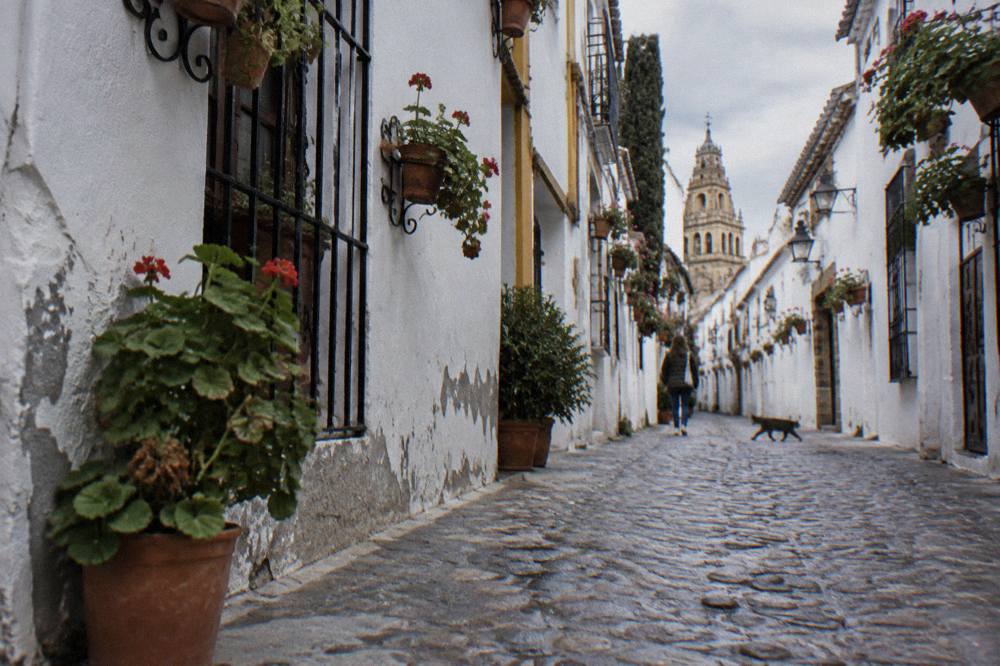
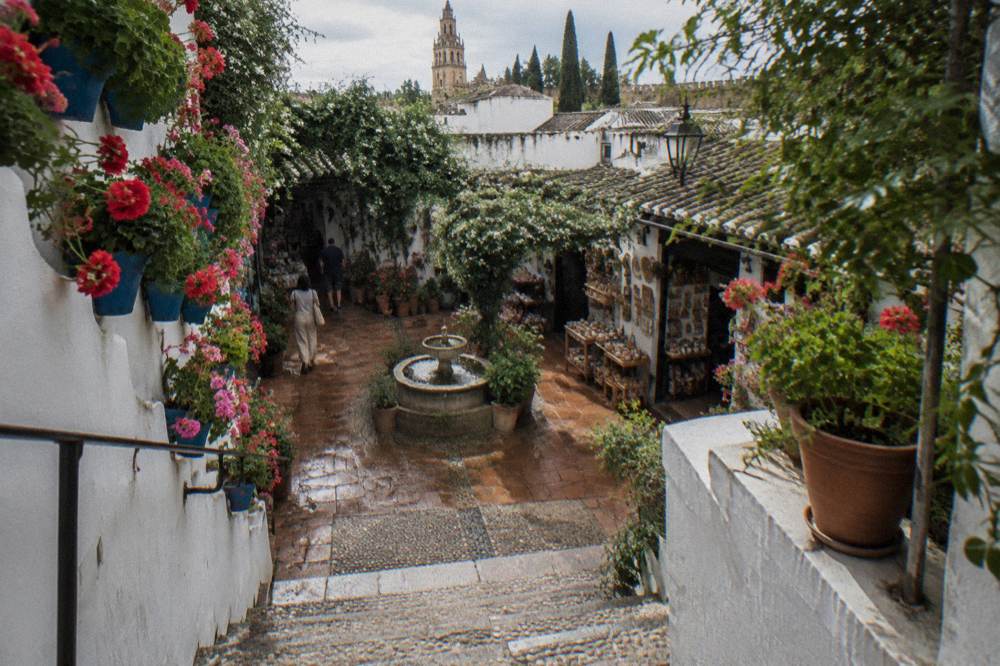
The best free sights in Cordoba are the old town itself: its streets, its bridge and its gardens cost nothing and are precisely why the centre holds World Heritage status, so skipping paid attractions is no consolation prize. Wandering this open-air core is the whole point of the visit, not a budget fallback. Start with the geometry of the place. The Judería, the old Jewish quarter, is a tangle of whitewashed lanes where the Calleja de las Flores, one of the most photographed streets in Andalusia, sits entirely in public space. Plaza de Maimónides and Plaza de Judíos, the squares around the Synagoga's neighbourhood, are free to wander. None of it has a gate, a ticket desk or an opening hour, because all of it is simply the city.
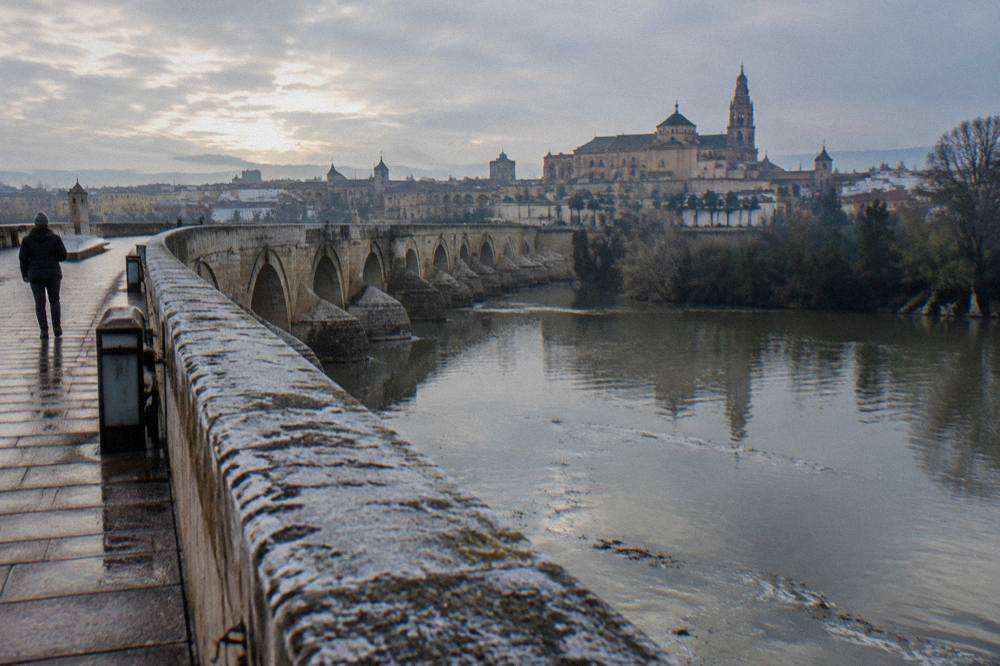
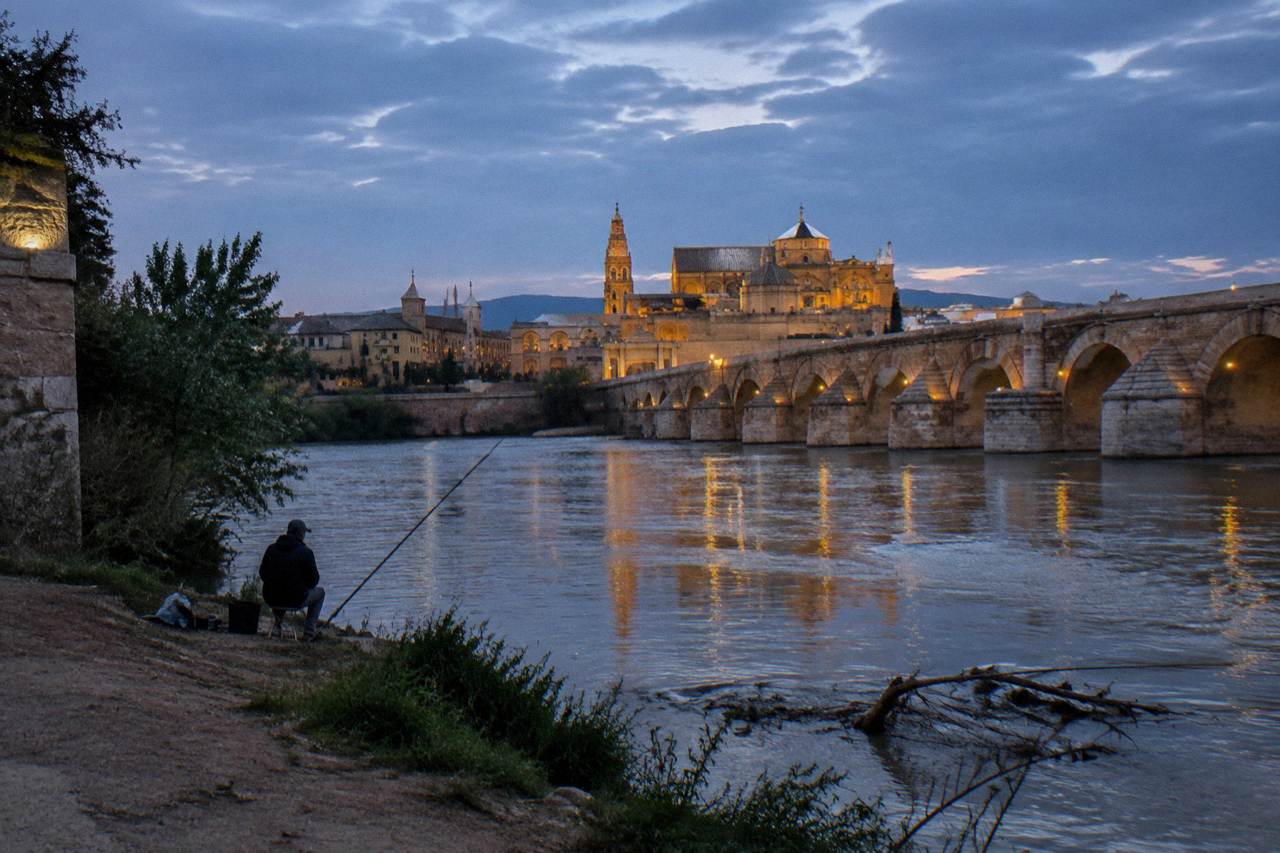
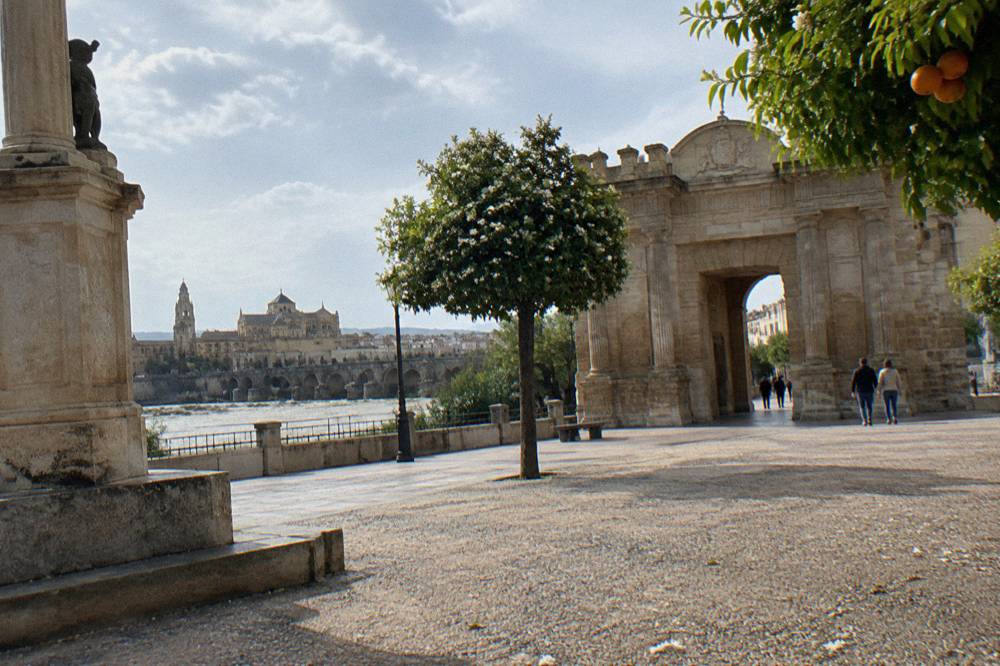
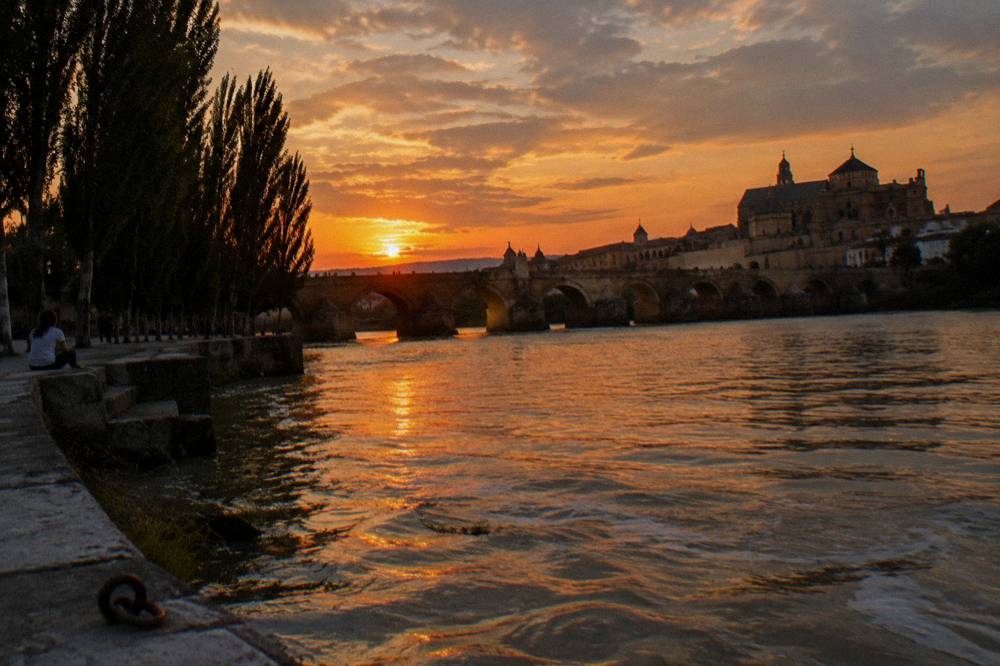
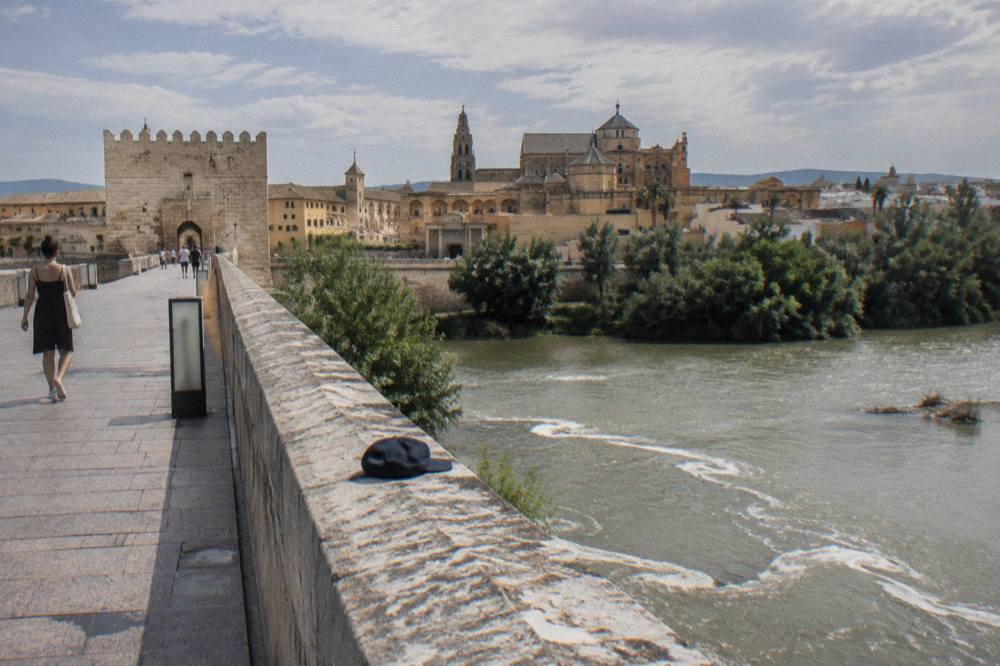
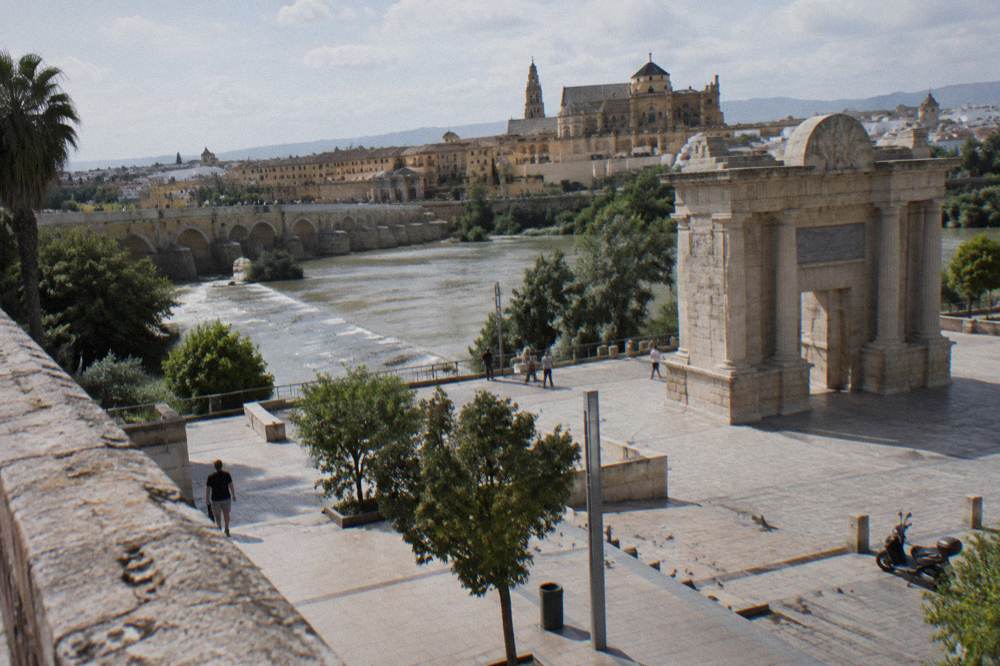
The riverside stretches the free map further south. The Puente Romano, the Roman Bridge, crosses the Guadalquivir as open public space, and the Mirador de la Calahorra on the south bank gives the classic view back across the water toward the Mezquita's bell tower. The Paseo de la Ribera and the riverbanks along both sides are free public space as well. The one paid piece inside this free picture is the Torre de la Calahorra itself, the museum tower at the bridge's south end, which charges EUR 4.50 to enter: crossing the bridge and standing at the viewpoint costs nothing, going inside the tower does not. The split is covered in the Roman Bridge and Calahorra viewpoint guide.
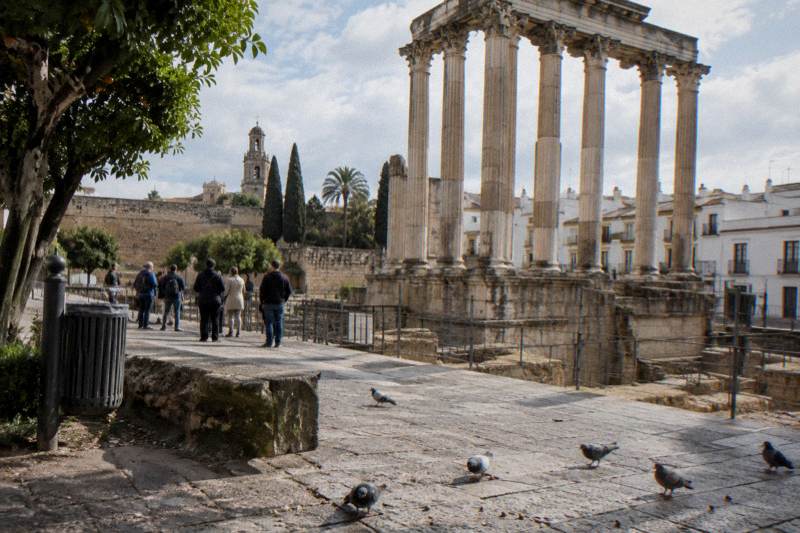
North and east of the river, the free list keeps compounding. The Templo Romano's columns stand in the open on Calle Capitulares, free to see from the street, with the Mausoleo Romano by the Puerta de Gallegos also visible from outside. Plaza de las Tendillas, the city's main square, Plaza del Potro with its fountain and the Posada del Potro, Plaza de Capuchinos with the Cristo de los Faroles, Plaza de la Corredera's broad arcaded expanse, the city walls and Puerta de Almodóvar, the Torre de la Malmuerta: all public space, all free, all within a walk of each other. The gardens, Jardines de la Victoria and Jardines de la Agricultura, extend the same deal. The full inventory, including the free markets and craft centre, is in the guide to free plazas and markets.
Layer the free-entry institutions on top and the picture completes. The municipal museums, the Alcázar de los Reyes Cristianos, the Baños del Alcázar Califal, the Museo Julio Romero de Torres, the Museo Taurino and the Centro Flamenco Fosforito, are free on non-holiday Thursdays for the last two hours of public access, winter 18:00 to 20:15, summer 12:00 to 14:15, for everyone until capacity. The Junta de Andalucía museums, Medina Azahara, the Museo Arqueológico, the Museo de Bellas Artes and the Sinagoga, are free every open day but only for accredited EU citizens; everyone else pays from EUR 0.30 at the Sinagoga to EUR 1.50 at Medina Azahara, a nationality rule rather than a day rule, and one that matters for UK and US readers. Neither scheme is the Mezquita slot; the regimes are separate and should never be merged in planning.
What Still Costs Money In Cordoba?
In Cordoba, the things that still cost money form a real but narrow paid layer: essentially just the interior tickets of the big monuments. Outside those ticketed interiors, you can still take in the city properly, since it is entirely possible to see Cordoba well without buying any of them. The headline numbers sit at the Mezquita-Catedral. General admission is EUR 15 outside the free slot, the bell tower is EUR 4 as a separate ticket, the night visit El Alma de Cordoba is EUR 25, and the Fernandine churches route is EUR 6. None of those is covered by the free 8:30 to 9:30 slot. From 1 January 2027 the Cabildo also starts optional official guided visits, sold at an increase over the normal ticket, with the price not yet published, so nothing can be stated for that figure until the Cabildo prints it.
The Alcázar de los Reyes Cristianos is paid outside its free windows, and its price is deliberately not stated here: the municipal tariff says one figure and secondary sites still print another, so the honest instruction is to expect a small fee at the gate and plan around the free Thursday window instead. The Torre de la Calahorra at EUR 4.50, the Palacio de Viana patios at EUR 8.50, the botanical garden, the zoo and Las Ermitas all carry fees with no free slot found. The Madinat al-Zahra shuttle from the visitor centre to the site is a paid connection whose official fare is not published, and the private site medinaazahara.org is a tour operator rather than the official source, so its figures should not be trusted for planning.
| Site | Free route in | Paid part |
|---|---|---|
| Mezquita-Catedral | 8:30 to 9:30 slot, Monday to Saturday, individuals only | EUR 15 general; bell tower EUR 4; night visit EUR 25; Fernandine route EUR 6 |
| Torre de la Calahorra | Bridge and south-bank viewpoint are public space | EUR 4.50 to enter the tower museum |
| Municipal museums | Non-holiday Thursdays, last two hours, everyone | A small fee outside the windows, until re-read at the gate |
| Medina Azahara and Sinagoga | Free every open day for accredited EU citizens | EUR 1.50 and EUR 0.30 for everyone else |
| Palacio de Viana | Patio de la Cancela free during the patios festival | EUR 8.50 for the patios the rest of the year |
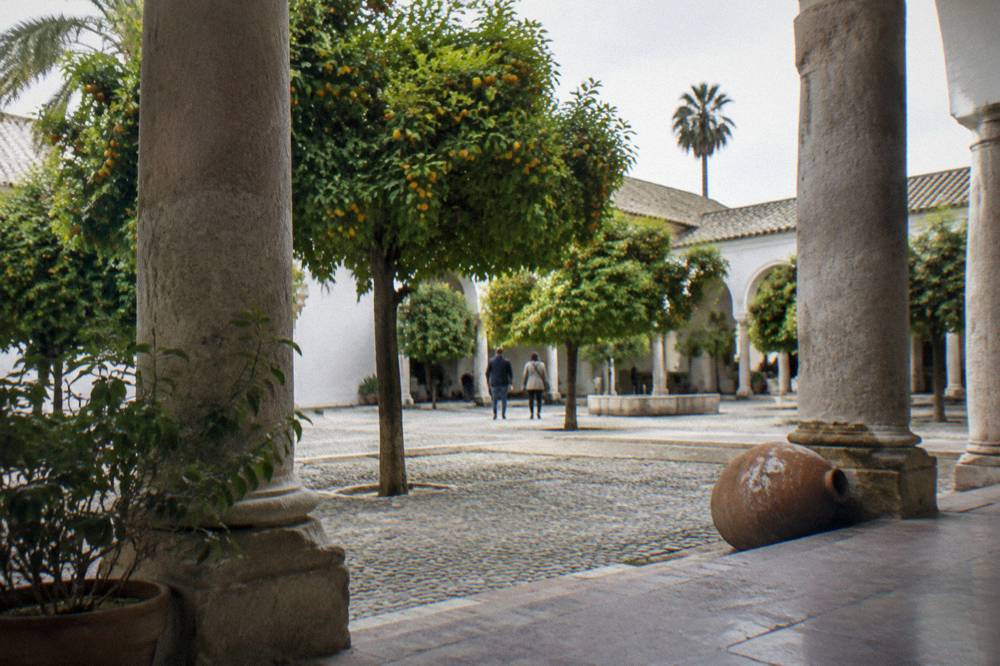
| Private patios | Festival de los Patios, 3 to 16 May 2027, no appointment | Not open free outside the festival |
The budget logic falls out of that table. A free-budget visitor does not need to skip the Mezquita, they need to be at its door at 8:30 in the morning. They do not need to skip the Alcázar, they need a Thursday. They do not need a ticket for the patios, they need early May. Every paid item on the list either has a free counterpart or sits beside one, which is the structural reason the answer to this article's question is yes rather than a qualified maybe. The one trap is the Naturaleza Encendida night show in the Alcázar gardens: it is a paid event, and its winter schedule and price are both unresolved, so treat it as a paid night show with no published details rather than a free garden visit.
When Do The Free Events Happen?
The free events run right through Cordoba's festival year, so timing matters less than you might expect: nearly all of it plays out in public space, and none of the street-side spectacle requires a ticket. Free entertainment is essentially the default, unfolding in the open air whenever the city celebrates. The anchor date is the Festival de los Patios, 3 to 16 May 2027, when private courtyard owners open their patios for the competition and entry is free with no appointment, as the festival's own site at patios.cordoba.es states. The 2027 opening hours are not yet published, so no times can be given here. The same fortnight carries the Concurso de Rejas y Balcones, the railings and balconies competition, which is free to look at by definition, since it decorates the streets themselves.
The spring run around it is dense. Cruces de Mayo runs 28 April to 2 May 2027, the Batalla de las Flores falls on 25 April 2027, and Semana Santa runs 21 to 28 March 2027, all free to watch from public space. The Feria de Nuestra Señora de la Salud, 22 to 29 May 2027, is the one with a caveat attached: walking the fairground is free, but most casetas are members-only, so a free-budget visitor experiences the fair as a spectacle from the outside rather than as a guest inside the tents. The Cata del Vino Montilla-Moriles, 22 to 25 April 2027, is unresolved as to entry, with tastings sold either way, so no free claim should be made for it.
Summer and winter each carry a headline free night. The Noche Blanca del Flamenco on 19 June 2027 turns the city into a free flamenco venue, and the Festival de la Guitarra in the first half of July is the paid counterpoint to it. The Christmas programme, 1 December 2026 to 6 January 2027, with the Cabalgata de Reyes on 5 January, is free to watch in the streets, and Carnaval en la calle runs 6 to 14 February 2027. The city's official calendar at cordoba.es carries the confirmed dates as they are approved. A free-budget trip timed to any of these windows gets a second layer of value stacked on top of the permanent free sights, and the timing question, more than the spending question, is what separates a good cheap Cordoba trip from a great one.
Where Does A Free Day Start?
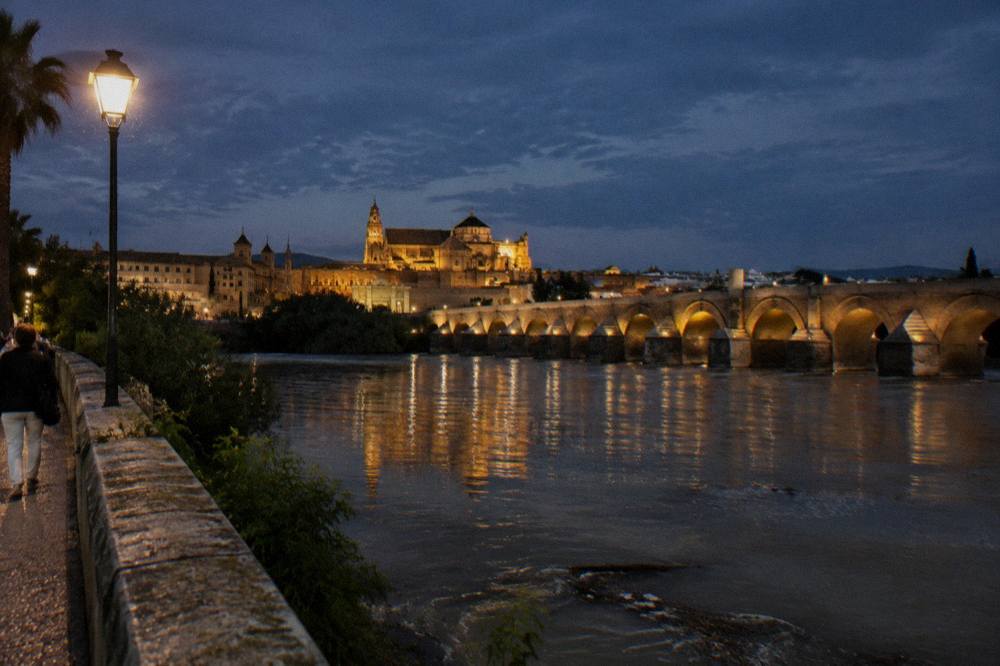
A free day starts on the river, because the Puente Romano and the Mirador de la Calahorra cost nothing and sit beside the Mezquita's free slot. Standing there, you get oriented to the whole city in one view, which makes the riverbank the natural first stop before you spend anything at all. The logic of the route is simple: the south-bank viewpoint and the bridge are public space available at any hour, the Mezquita free slot runs 8:30 to 9:30 Monday to Saturday for individuals, and the Judería's lanes, the Calleja de las Flores among them, spill out from the monument's north side. A morning built in that order, bridge first, Mezquita at 8:30, Judería after, covers the city's three most famous free experiences before most ticket-buying visitors have finished breakfast.
The afternoon belongs to the plazas and the museums, and the day of the week decides which. On a non-holiday Thursday, the municipal museums open free for their last two hours, winter 18:00 to 20:15, summer 12:00 to 14:15, until capacity, which pairs naturally with a plaza circuit through Plaza de la Corredera, Plaza del Potro and Plaza de Capuchinos earlier in the day. On any other day, the plaza circuit, the Templo Romano columns on Calle Capitulares, the walls at Puerta de Almodóvar and the gardens carry the afternoon on their own. The free gardens and riverside guide maps the green layer, and the Cordoba in one day guide sequences it for a single visit.
One warning belongs here rather than later, because it shapes the whole day: the old town is a restricted traffic zone, a low-emission area active around the clock, so a visitor driving in should park outside the centre rather than gamble on a label check. Beyond that, the free day in Cordoba asks for very little planning. No reservations are needed for the patios festival, no booking system exists for the plazas, and the only genuinely time-boxed free item, the Mezquita slot, rewards nothing more complicated than an alarm clock. The city's free infrastructure is dense enough that a wasted hour anywhere in the centre is usually within sight of something worth looking at.
Which Free Walking Tours Help You Decide?
The English-language free walking tours on GuruWalk are the ones that help you decide, because they cover every major neighbourhood a first-time visitor cares about while remaining the cheapest possible way to explore. Sampling each district on foot turns a strange city into a familiar one, so you can judge which areas deserve a return visit before committing time or money elsewhere. The standout is the Best Of Free Tour, 1H45, run by Andaloo Tours: it meets at the Roman Temple on Calle Capitulares, runs in English and Spanish, and carries a 4.94 out of 5 from 3,732 reviews on its GuruWalk listing, which makes it the most-reviewed walk in this directory by a wide margin. For a visitor asking whether Cordoba is worth the trip, it functions as a decision engine: pay what you want at the end, and the answer to this article's question becomes personal rather than theoretical.
The next tier down in review depth still holds up well. The Heritage Free Tour, 1H30, run by WeTour from Plaza de las Tendillas, is bilingual and sits at 4.77 out of 5 across 752 reviews on GuruWalk. The English Heritage Free Tour, 1H30, guided by Enrique from Plaza del Triunfo beside the Mezquita-Catedral, is English-only at 4.63 out of 5 from 630 reviews. The 2 Hour Small-Group English Tour, led by Jose Manuel from the Statue of Averroes at Puerta de Almodóvar, runs at 4.88 out of 5 from 354 reviews. None of these walks has a verified route on file beyond its meeting point and neighbourhood, so the honest introduction is exactly that: platform, guide, meeting point, neighbourhood and numbers, with no promised landmark list.
For Spanish speakers the roster goes deeper, and for English speakers the bench includes the Hidden Gems Free Tour from Plaza de las Tendillas at 4.56 out of 5 from 98 reviews, the Jewish Quarter Tour in English from Puerta de Almodóvar at 4.46 out of 5 from 28 reviews, and the World Heritage Free Tour at 4.44 out of 5 from 25 reviews. One important correction to common assumptions: the night walks on this roster, including the Free Night Tour and the Mysteries and Legends Free Tour, run in Spanish only, so no English night walk should be promised or planned. The freetour.com side contributes the Historic Center Free Tour, 2 Hours, which meets at Puerta del Puente and carries 8.9 out of 10 across 1,849 reviews shown on its freetour.com listing. How the pay-what-you-want model actually works, and what a fair tip looks like, is covered in the free walking tours overview.
Mistakes That Trip People Up At Free-Budget Cordoba
The mistakes that cost money on a free-budget trip to Cordoba are almost all mistakes of assumption: assuming something is free when it is not, assuming free access applies at any hour, or assuming a small detail will take care of itself. The good news is that each of these errors is avoidable, and every one of them can be prevented with a single fact known before you go. The first and most common is treating the Mezquita free slot as a free day: it is 60 minutes, Monday to Saturday only, individuals only, and it covers none of the separate tickets, so a visitor who plans a full free morning there and arrives at 9:20 finds the door closing. The second is assuming Sunday works the same way: Sunday is not in the free slot at all, a trap examined in the blog post on whether the Mezquita is free on Sundays.
The third mistake is merging the museum regimes. The municipal Thursday window is for everyone; the Junta museums' free entry is for accredited EU citizens only, with everyone else paying EUR 0.30 to EUR 1.50; the Mezquita slot is its own rule entirely. A UK or US visitor who hears "museums are free in Cordoba" and walks to the Sinagoga on a Tuesday pays at the desk. The fourth is the patios assumption: private patios are free only during the festival, 3 to 16 May 2027, and Palacio de Viana charges EUR 8.50 for its patios the rest of the year. The fifth is the tower trap, paying EUR 4.50 for the Torre de la Calahorra under the impression it is the bridge experience, when the bridge and the viewpoint beside it are the free part. Each of those five is a single sentence of planning, and each saves the price of a ticket.
Common Questions About Visiting Cordoba Free
Is Cordoba Worth Visiting On A Free Budget?
Yes. The old town's streets, plazas, city walls, gardens and the Roman Bridge are all free public space, the Mezquita-Catedral has a free 8:30 to 9:30 slot Monday to Saturday for individual visitors, and the municipal museums open free to everyone on non-holiday Thursdays for their last two hours. With 26 free pay-what-you-want walks on the roster, the free layer covers orientation, history and the headline sights.
Can you see the Mezquita-Catedral without paying?
Yes, within limits. The free visit runs Monday to Saturday from 8:30 to 9:30, with access stopping at 9:20, for individual visitors only and not on days of extraordinary celebration. It is a 60-minute slot rather than a full free visit, and the bell tower at EUR 4, the night visit at EUR 25 and the Fernandine route at EUR 6 are separate tickets the slot does not cover.
Which Cordoba museums are free for non-EU visitors?
The municipal ones: the Alcázar de los Reyes Cristianos, Baños del Alcázar Califal, Museo Julio Romero de Torres, Museo Taurino and Centro Flamenco Fosforito are free on non-holiday Thursdays for the last two hours of access, winter 18:00 to 20:15, summer 12:00 to 14:15, for everyone until capacity. The Junta museums, including Medina Azahara and the Sinagoga, are free only for accredited EU citizens; others pay EUR 0.30 to EUR 1.50.
Are the patios free to visit outside the festival?
No. Private patios open free only during the Festival de los Patios, 3 to 16 May 2027, with no appointment needed and no reservation system announced. Outside those dates Palacio de Viana charges EUR 8.50 for its patios, and private courtyard owners are not open to walk-in visitors.
Do the free walking tours in Cordoba really cost nothing?
The walks listed on GuruWalk and freetour.com are pay what you want: no upfront price, with the tip decided at the end. The exceptions to know are the Medina Azahara and patios walks, where guiding is pay what you want but entry to the site or courtyards is bought separately, as their listings state. The full mechanics are in the guide to how free walking tours work in Cordoba.
Is one day enough for a free visit to Cordoba?
A single well-sequenced day covers the free core: the bridge and viewpoint, the Mezquita's 8:30 slot, the Judería and the plaza circuit. A Thursday adds the free municipal museum window, and early May adds the patios festival, so the ideal free-budget visit is timed to the calendar as much as to the length of stay.
The through-line of all of this, from the morning slot to the Thursday window to the pay-what-you-want walks, is that Free Things To Do In Cordoba is not a thin list scraped around a paid headline attraction: it is the city's default setting. The traveller who arrives asking whether Cordoba is worth it without spending much usually leaves having spent very little and missed almost nothing that mattered.