Cordoba On A Budget: A Free Plan And The Costs Around It
Cordoba gives away more of itself than almost any city in Andalusia, but each free thing carries a condition: a 60 minute slot, a Thursday window, an EU passport. Here is the honest split between free, conditional and paid.
In Short
Cordoba on a budget works because the streets, squares, Roman Bridge and riverbank are free public space, and the Mezquita-Catedral has a free early slot Monday to Saturday 8:30 to 9:30 for individual visitors. Municipal museums open free on non-holiday Thursdays for the last two hours. General Mezquita admission outside the slot is EUR 15, and the bell tower, night visit and Medina Azahara are always separate tickets.
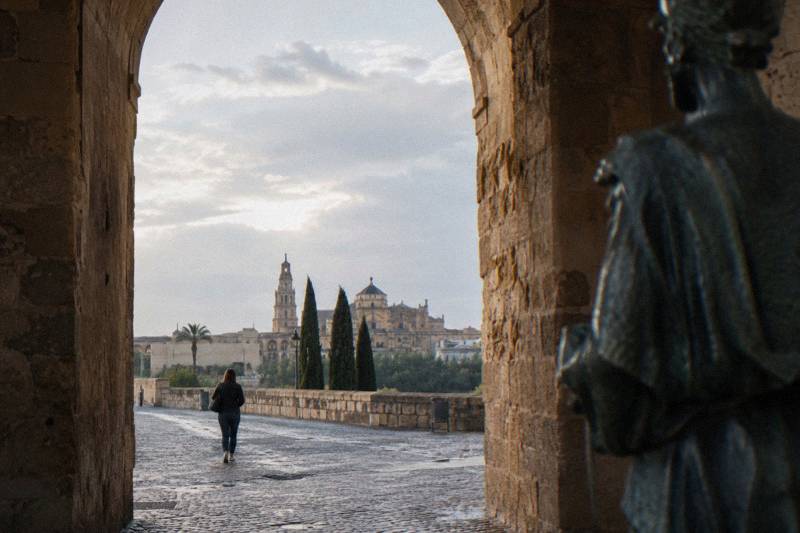
Cordoba on a budget is not a compromise plan, it is the plan most of the city was built for. The old town is a dense knot of free public space: the Judería's lanes, the Calleja de las Flores, Plaza de la Corredera, Plaza de las Tendillas, the Roman Bridge and the whole Guadalquivir riverbank cost nothing and never close. Around that free core sit a handful of conditional openings, the Mezquita-Catedral's early slot above all, and a short list of things that will always cost money. This guide splits the three honestly, because the budget traps in Cordoba are not scams, they are conditions people read too quickly. Part of the Free Things To Do In Cordoba guides series, this page builds a full free day and prices everything around it.
Quick Facts
| Question | Answer |
|---|---|
| What is genuinely free, no conditions? | Streets and squares of the old town, Roman Bridge, riverbank, Judería, Plaza de la Corredera, Plaza de las Tendillas, gardens |
| What is free with a condition? | Mezquita-Catedral 8:30 to 9:30 slot, Monday to Saturday, individual visitors only; municipal museums on non-holiday Thursdays; Junta museums for accredited EU citizens |
| What always costs money? | Mezquita bell tower EUR 4, night visit EUR 25, Fernandine route EUR 6, Torre de la Calahorra EUR 4.50, Palacio de Viana patios EUR 8.50, botanical garden, zoo, Las Ermitas |
| Mezquita general admission | EUR 15 outside the free slot |
| Municipal museum closing day | Monday, plus 1 January and 25 December |
| Free walk platforms | GuruWalk for most walks, freetour.com for a few listings; all pay what you want |
How Much Of Cordoba Can You See For Free?
Most of the historic centre and the entire riverbank cost nothing, since the Judería's lanes, the Calleja de las Flores, Plaza de la Corredera, Plaza de las Tendillas, Plaza del Potro, the Roman Bridge and the south bank viewpoint are public spaces open around the clock. Only the Mezquita-Catedral's interior outside its early slot, the Alcázar outside the Thursday window, and paid courtyards and towers require a ticket or a condition.
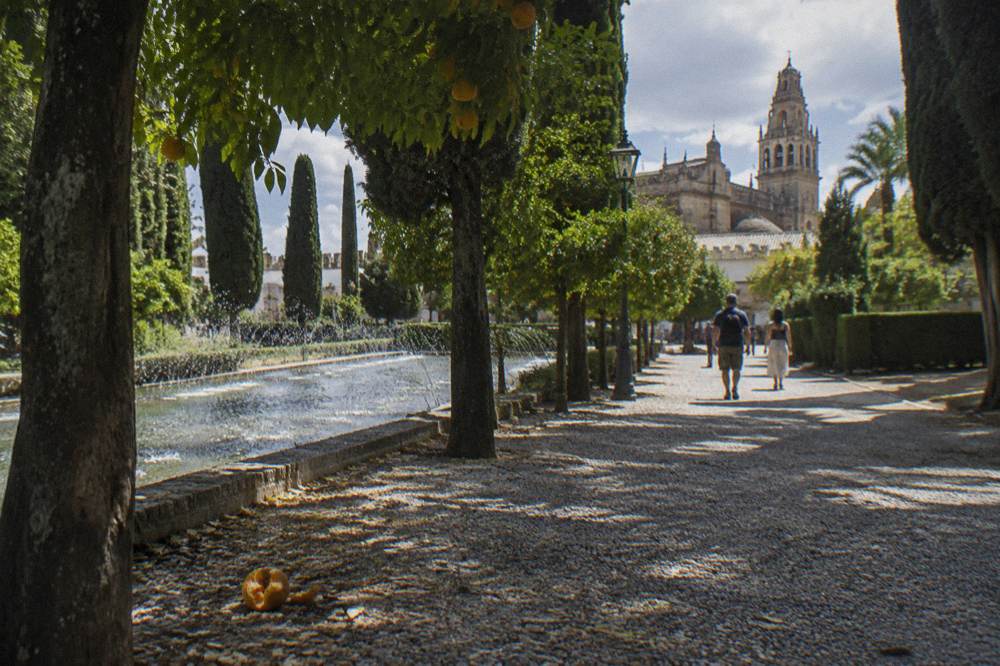
Start with the geography, because it explains the economics. Cordoba's monumental core is small enough that its free layer is continuous rather than scattered. You can stand in Plaza de las Tendillas, walk into the Judería within a few minutes, pass the Calleja de las Flores, reach the walls and the Puerta de Almodóvar, and never cross a threshold that charges. All of it is open public space, free to walk: the squares, the lanes, the city walls and gates, the Torre de la Malmuerta, the Templo Romano exterior, the Jardines de la Victoria and the riverside walks on both banks.
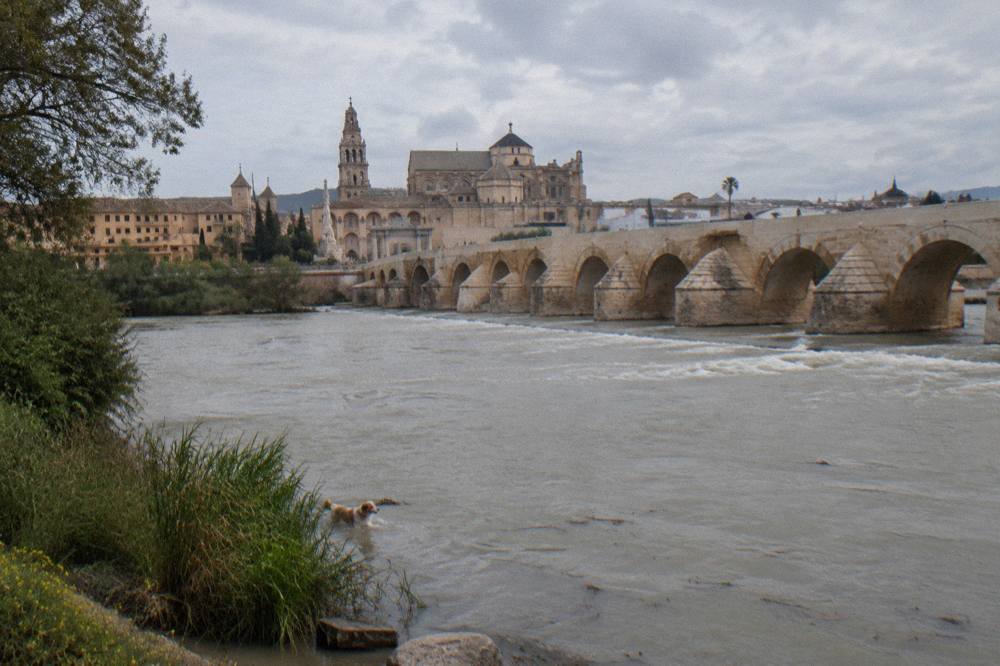
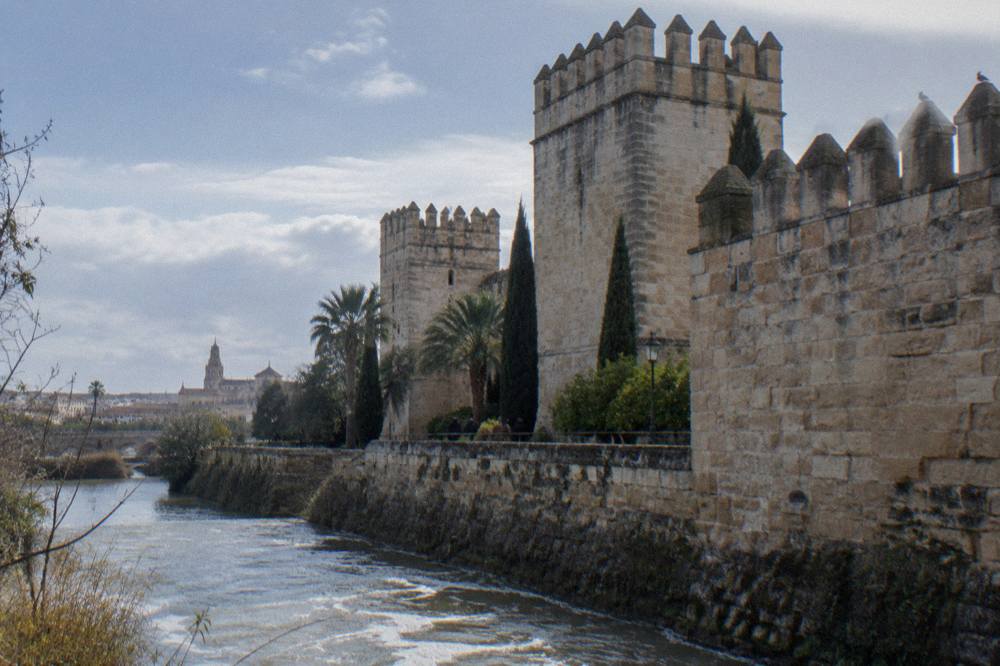
The Roman Bridge deserves its own line in any budget plan. The bridge itself and the Mirador de la Calahorra on the south bank are free public space, twenty four hours a day, and they frame the single best view of the Mezquita-Catedral's mass rising over the water. The trap sits at the south end: the Torre de la Calahorra, the tower housing the Museo Vivo de Al-Andalus, is a paid interior at EUR 4.50. Free place, paid part, and the two facts belong in the same sentence, which is why this guide keeps them together in the table below.
| Free public space | Paid part inside or beside it |
|---|---|
| Roman Bridge and riverbank, 24 hours | Torre de la Calahorra, EUR 4.50 |
| Judería lanes and Calleja de las Flores | Palacio de Viana patios, EUR 8.50 |
| Templo Romano exterior | Interior guided visits, times on the official notice |
| Plaza de las Tendillas and city squares | None, fully public |
| Barrio de San Basilio patio streets | Private patios outside the May festival |
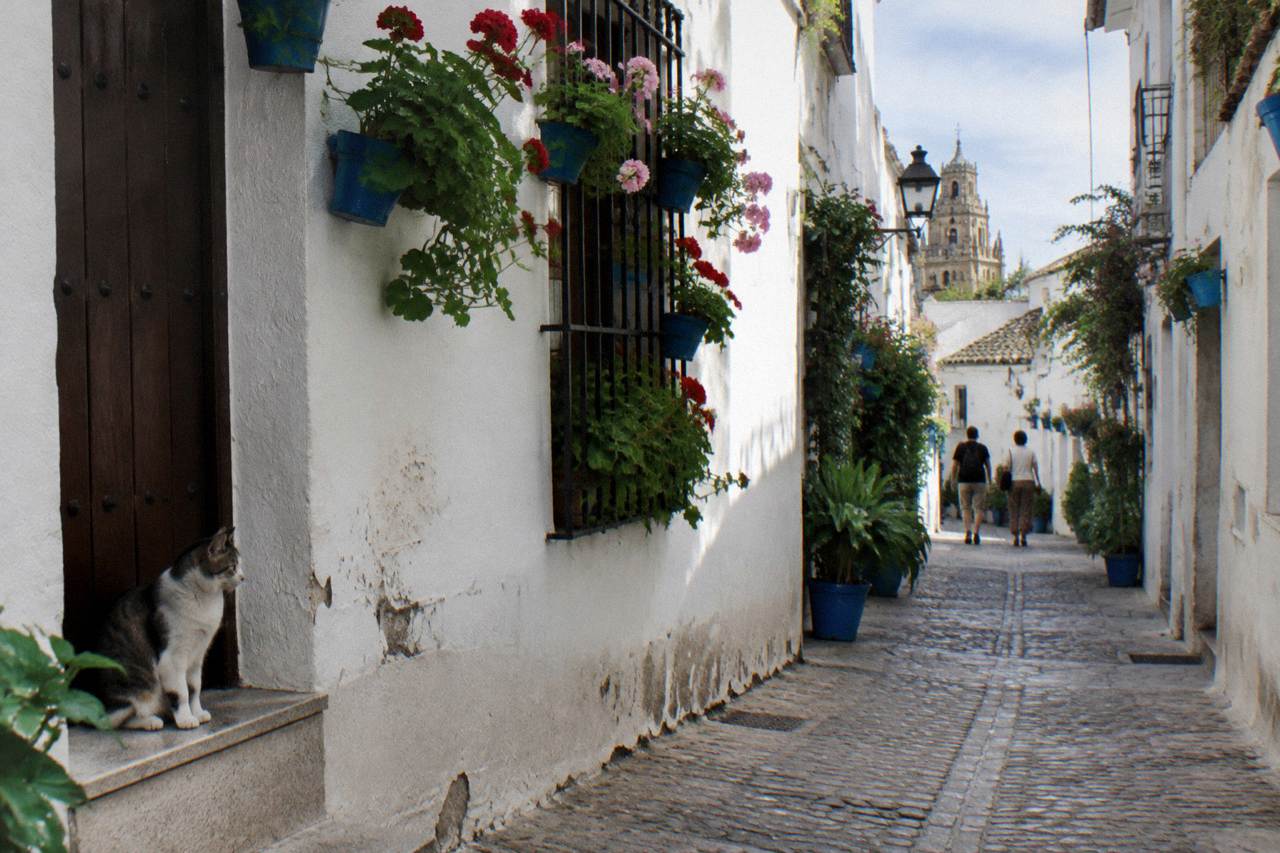
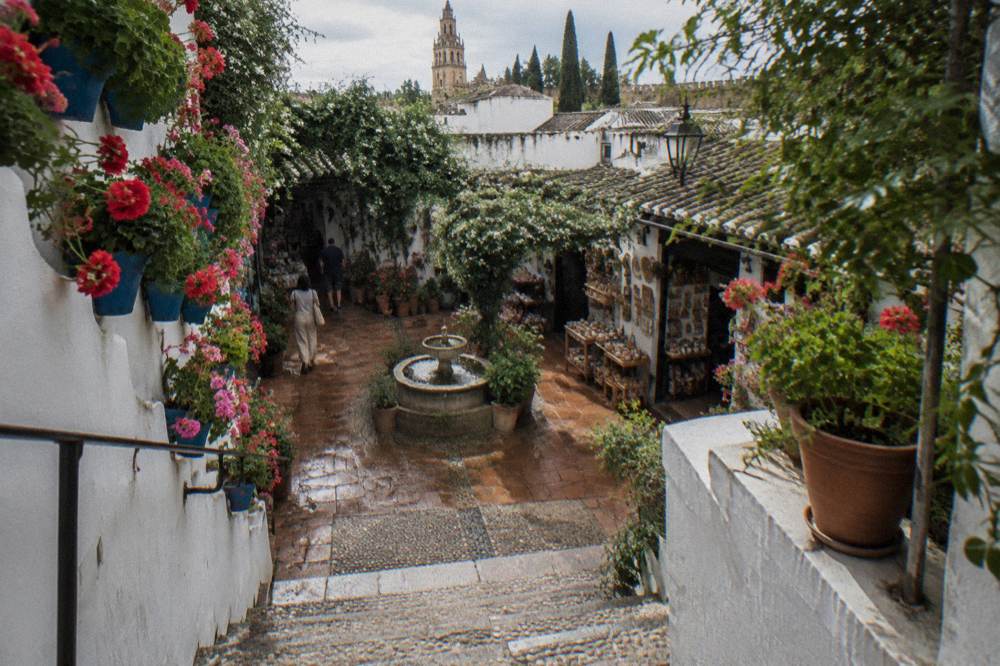
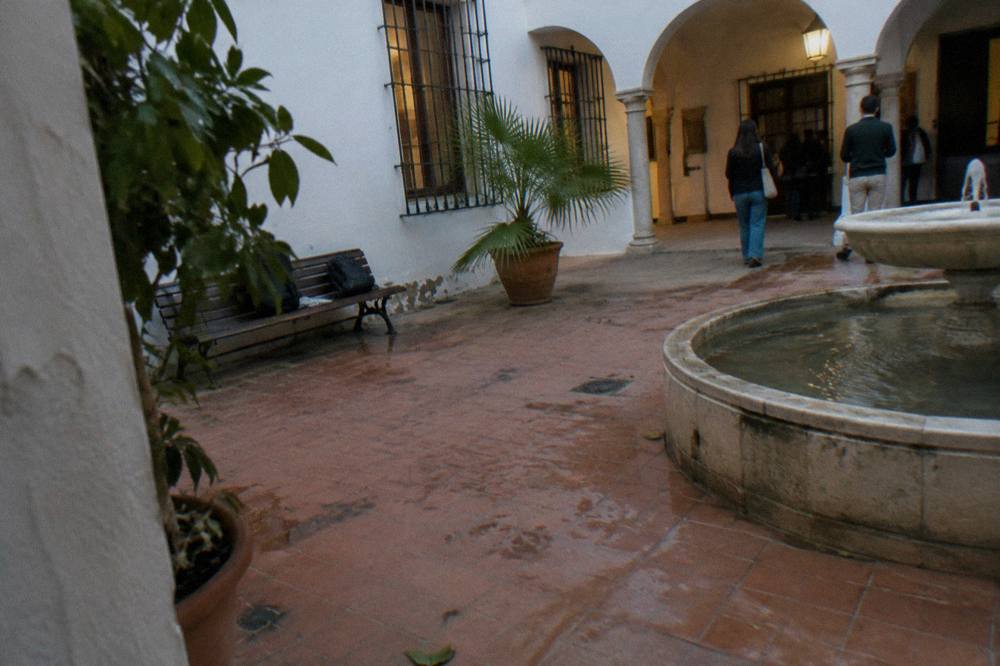
The patios question needs care, because it is where free plans most often break. The private courtyards of the Barrio de San Basilio and the Alcazar Viejo district are free to enter only during the Festival de los Patios, which runs 3 to 16 May 2027, with no appointment and no reservation system announced. Walking those streets is free at any time of year, and the doorways and rejas give plenty from the pavement, but the interior patios are people's homes. Palacio de Viana charges EUR 8.50 for its patios even during the festival, though its Patio de la Cancela participates out of competition and is free during those dates. If patios are the reason for the trip, May is the only month a tight budget gets them all.
One more genuinely free layer: the city's markets and public halls. The Mercado de la Corredera, the Mercado Victoria and the Zoco Municipal de Artesanías are recorded as free to enter, which makes them free sightseeing even if you buy nothing, and the Zoco in particular is where local craft work is displayed rather than just sold. Between squares, walls, riverbank and markets, a visitor with no ticket at all can fill days in Cordoba without repetition. The free plazas and markets in Cordoba guide breaks that layer down street by street.
Which Free Things In Cordoba Need A Condition Met?
Every headline free offer in Cordoba except the public streets carries a condition, and each condition is different: the Mezquita-Catedral slot is limited to Monday to Saturday 8:30 to 9:30 for individual visitors only, the municipal museums open free on non-holiday Thursdays for their last two hours, and the Junta de Andalucía sites are free only for accredited EU citizens. Miss the condition and you pay, so this section is the one to read twice.
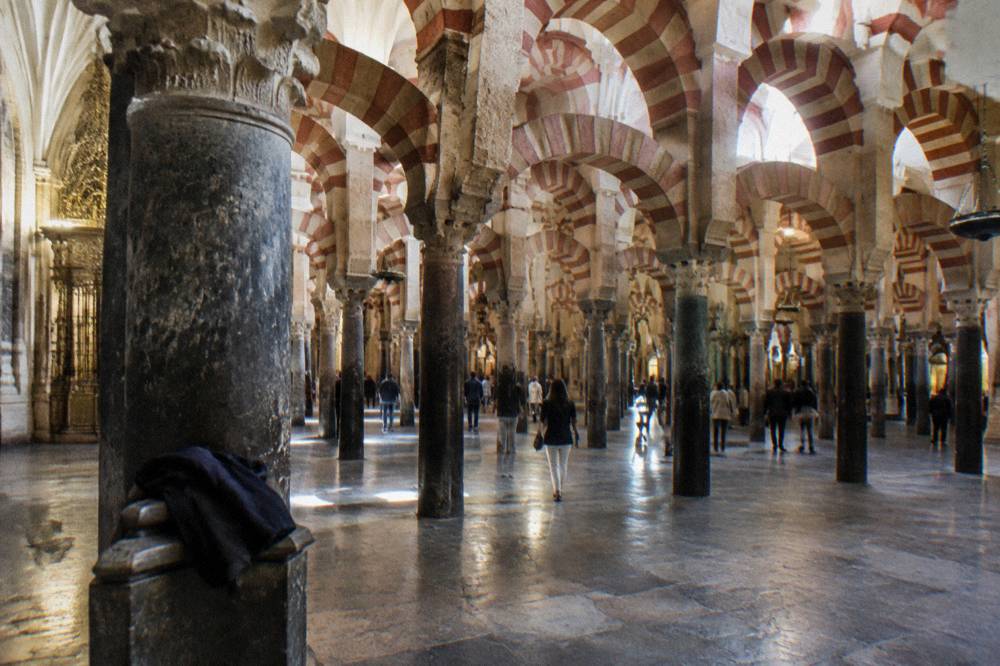
The Mezquita-Catedral is the big one. The Cabildo's free visit runs Monday to Saturday from 8:30 to 9:30, with access stopping at 9:20, and it is for individual visitors only: no groups, and not on days of extraordinary celebration. It is a 60 minute slot, not a free visit of the building. The bell tower at EUR 4, the night visit El Alma de Cordoba at EUR 25 and the Fernandine route at EUR 6 are separate tickets the slot does not cover, and general admission outside the slot is EUR 15. Free all day, outside the slot, only applies to people born or resident in the Diocese of Cordoba, children under 10 and the other categories the Cabildo lists, such as the Andalucía Junta 65 card and over 64 percent disability with companion. Sunday is not in the free slot at all, which catches a lot of weekend visitors. The detailed rules sit in the Mezquita-Catedral guide.
The municipal museums run a different scheme entirely. The Ayuntamiento's museums, the Alcázar de los Reyes Cristianos, the Baños del Alcázar Califal, the Museo Julio Romero de Torres, the Museo Taurino and the Centro Flamenco Fosforito, are free on non-holiday Thursdays for the last two hours of public access: 18:00 to 20:15 in winter, 16 September to 15 June, and 12:00 to 14:15 in summer, 16 June to 15 September. It is free for everyone, until capacity, and it is the one free window with no nationality test. There are extra free days on 28 February, 8 September, 27 September, 17 December and the Noche del Patrimonio, plus 18 May for the Julio Romero de Torres and Taurino museums only.
The Junta de Andalucía regime is the one that surprises non-European readers most. Medina Azahara, the Museo Arqueológico, the Museo de Bellas Artes and the Sinagoga are free every open day, but only for accredited EU citizens. Everyone else pays a token amount, EUR 0.30 at the Sinagoga up to EUR 1.50 at Medina Azahara. This is a nationality rule, not a day rule, and it never merges with the Thursday window. For UK, US and other non-EU visitors, the honest sentence is that these sites are close to free, not free, and the budget should carry the one and a half euros.
| Regime | Who gets in free | When | The catch |
|---|---|---|---|
| Cabildo, Mezquita-Catedral | Individual visitors | Mon to Sat 8:30 to 9:30, last entry 9:20 | No groups, no bell tower, not Sundays, EUR 15 otherwise |
| Ayuntamiento museums | Everyone, until capacity | Non-holiday Thursdays, last two hours, plus listed free days | Mondays closed entirely |
| Junta de Andalucía sites | Accredited EU citizens only | Every open day | Non-EU visitors pay EUR 0.30 to EUR 1.50 |
A fourth, softer condition is timing rather than paperwork: the festival calendar. Semana Santa from 21 to 28 March 2027, Cruces de Mayo from 28 April to 2 May 2027, the patios festival itself, the Batalla de las Flores on 25 April 2027, the Noche Blanca del Flamenco on 19 June 2027, Carnaval en la calle from 6 to 14 February 2027 and the Navidad programme from 1 December 2026 to 6 January 2027 are all free to watch in public space. The Feria de Nuestra Señora de la Salud, 22 to 29 May 2027, is conditional: walking the fairground is free while most casetas are members only. These events turn whole districts into free spectacle, but only on their dates.
What Costs Money Even On A Free Plan?
Even on a free plan, you pay at several Córdoba sights: the Mezquita costs EUR 15 outside its free slot, the bell tower EUR 4, the night visit EUR 25, the Fernandine route EUR 6, the Torre de la Calahorra EUR 4.50, and the Palacio de Viana patios EUR 8.50, while the botanical garden, zoo and Las Ermitas offer no free slot at all, and the Alcázar charges an unspecified small fee outside its free windows.

Treat the paid list as a menu, not a wall. A budget plan does not need to avoid every euro, it needs to know which euros buy something the free layer cannot. The night visit El Alma de Cordoba at EUR 25 is the clearest example: no free alternative exists for the Mezquita after dark, so it is a deliberate splurge or a skip, never an accident. The Fernandine route at EUR 6 is a single ticket covering the group of churches; the individual churches' walk-in rules are not confirmed, so the route ticket is the only firm price to plan around. The bell tower at EUR 4 is separate from both the free slot and general admission, a detail that catches people who assume one ticket climbs everything.
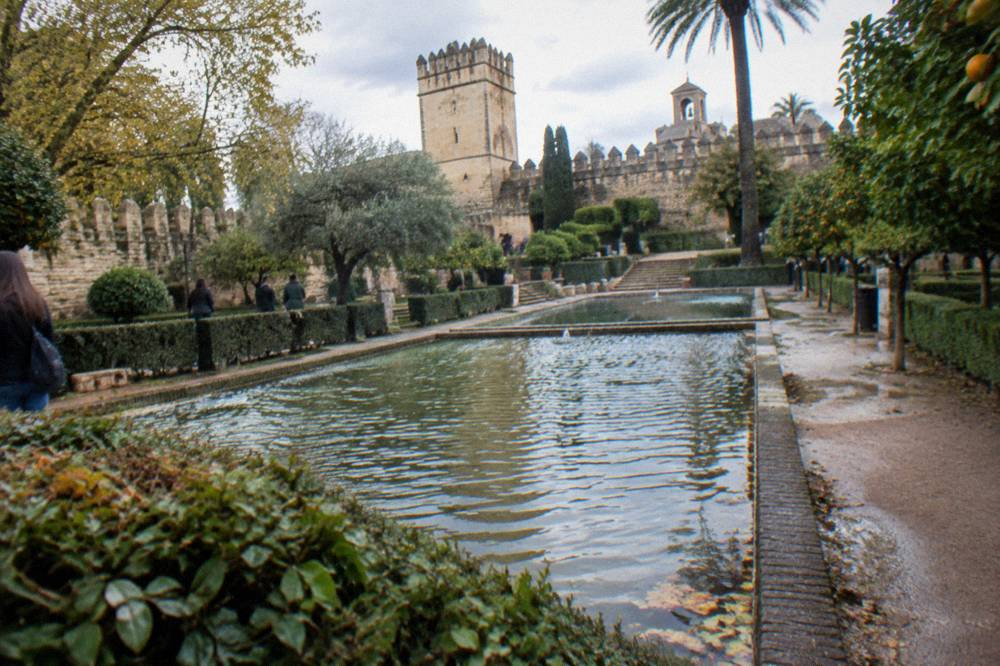
The Alcázar de los Reyes Cristianos is the one monument where this guide deliberately prints no price. The municipal tariff prints one figure and several secondary sites still print another, so the entry price is unconfirmed; expect a small fee, paid outside the free windows. The Thursday window covers it like the other municipal museums, so a budget visitor can see its halls and gardens free on a non-holiday Thursday evening in winter without ever learning what the ticket costs. The Naturaleza Encendida night show in its gardens is a separate paid event, with winter schedule and price unresolved.
| Paid item | Price | Free alternative on the same site |
|---|---|---|
| Mezquita-Catedral general admission | EUR 15 | The 8:30 to 9:30 slot, Mon to Sat, individuals |
| Bell tower | EUR 4 | None |
| Night visit El Alma de Cordoba | EUR 25 | None |
| Fernandine route ticket | EUR 6 | None verified for individual churches |
| Torre de la Calahorra | EUR 4.50 | The bridge and viewpoint outside it, free |
| Palacio de Viana patios | EUR 8.50 | Patio de la Cancela free during the May festival |
| Alcázar de los Reyes Cristianos | A small fee, sources disagree | Thursday last-two-hours window |
| Medina Azahara, non-EU visitors | EUR 1.50 | Free for accredited EU citizens |
From 1 January 2027 there is a new line on this list: the Cabildo starts optional official guided visits of the Mezquita-Catedral, sold at an increase over the normal ticket, with the price not yet published, and from the same date every guide accredited by the Junta de Andalucía may show the interior. That change matters to the free-tour story, and the can free tour guides enter the Mezquita post covers it in full. None of it changes the early slot, which remains the budget route inside. What no free walking tour offers is a way around these tickets: guiding is the free part, entry is bought separately wherever a site charges.
Two smaller traps close the paid list. The Madinat al-Zahra shuttle bus from the visitor centre to the site is a paid ride whose fare has not been published, so no figure appears here, and Medina Azahara itself sits 8 kilometres out with the EUR 1.50 non-EU entry on top. And a few Cordoba names simply cannot be priced at all: whether Casa Andalusí, Casa de Sefarad and the Museo Diocesano charge for entry is not confirmed, and no entry claim is made either way. A budget plan should treat them as unknowns, not as free things that went missing.
When Do The Free Windows Open?
The Mezquita is free Monday to Saturday, 8:30 to 9:30, with last entry at 9:20 and never on Sunday, while municipal sites go free on Thursdays, 18:00 to 20:15 from 16 September to 15 June and 12:00 to 14:15 from 16 June to 15 September. Junta sites are free for EU citizens throughout their opening hours, and the patios festival opens 3 to 16 May 2027.
The day of the week is the master variable. Monday closes every municipal museum, so it belongs to the streets, the riverbank and the Judería, all of which are indifferent to calendars. Tuesday and Wednesday offer the Junta sites at their token non-EU prices and nothing free indoors except the Mezquita morning slot. Thursday is the day the budget plan is built around, because the last two hours of every municipal museum open free to everyone. Friday and Saturday carry the Mezquita slot in the morning and public space after. Sunday has no free museum scheme at all in Cordoba, only the Mezquita's paid day and the open squares, which is the single most common disappointment in the city. The rest of the planning pages sit on Free Things To Do In Cordoba.
Seasons shift the Thursday window, and the shift is not intuitive. In winter the free hours land in the evening, 18:00 to 20:15, which pairs well with a day outdoors and an indoor finish after dark. In summer the window moves to the middle of the day, 12:00 to 14:15, precisely when the streets are at their hottest and an air conditioned hall is worth the most. The municipal museums close on Mondays throughout the year, and on 1 January and 25 December, with no Sunday scheme to compensate.
The Cabildo's own schedule is the final authority on the Mezquita slot, and hours can change for special events, so the standing advice is to check the Cabildo's own schedule before an early start. Days of extraordinary celebration are excluded from the free visit, and the Cabildo does not always flag them far ahead. What is settled is the clock: sixty minutes, one entrance cutoff at 9:20, and no group access. The what time is the Mezquita free post exists entirely for this question, which says something about how often it is asked.
How Do You Order A Free Day In Cordoba?
The shape that works is early slot first, public space in the middle, museum window last: the Mezquita at 8:30, the Judería and riverbank through the day, and the municipal Thursday window at 18:00 in winter or 12:00 in summer. On non-Thursdays, flip it, streets and riverbank at leisure with the morning slot as the only fixed point. The plan below orders the free layer by geography, not by ticket.
Begin at the Roman Temple on Calle Capitulares, not because the temple charges anything, its exterior is free public space, but because it sits at the hinge between the modern centre and the old town, and because it is the meeting point of the Best Of Free Tour, 1H45, the GuruWalk walk by Andaloo Tours rated 4.94 out of 5 across 3,732 reviews, the deepest review pool of any walk on this site's roster. A pay what you want walk costs nothing to book and sets the geography in under two hours, which is exactly what a first day needs.
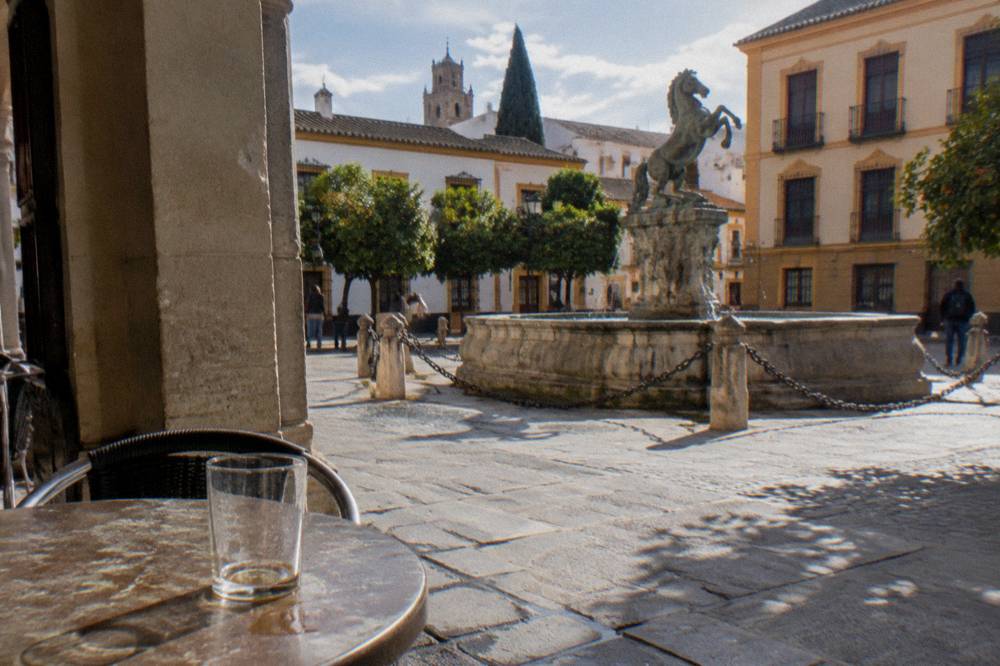
From there the free route writes itself. Plaza de las Tendillas is the city's everyday square, free, busy and useful for orientation. Down through the Judería the lanes narrow, the Calleja de las Flores does its work from the pavement, and the Plaza de Maimónides and Plaza de Judíos give breathing room without a gate. Out at the far side the Puerta de Almodóvar and the city walls are free to walk and touch, and the statue of Averroes stands at the meeting point the 2 Hour Small-Group English Tour uses, another GuruWalk listing, Jose Manuel's, 4.88 out of 5 from 354 reviews. The full sequence, with every free square en route, is mapped in the Cordoba in one day guide.
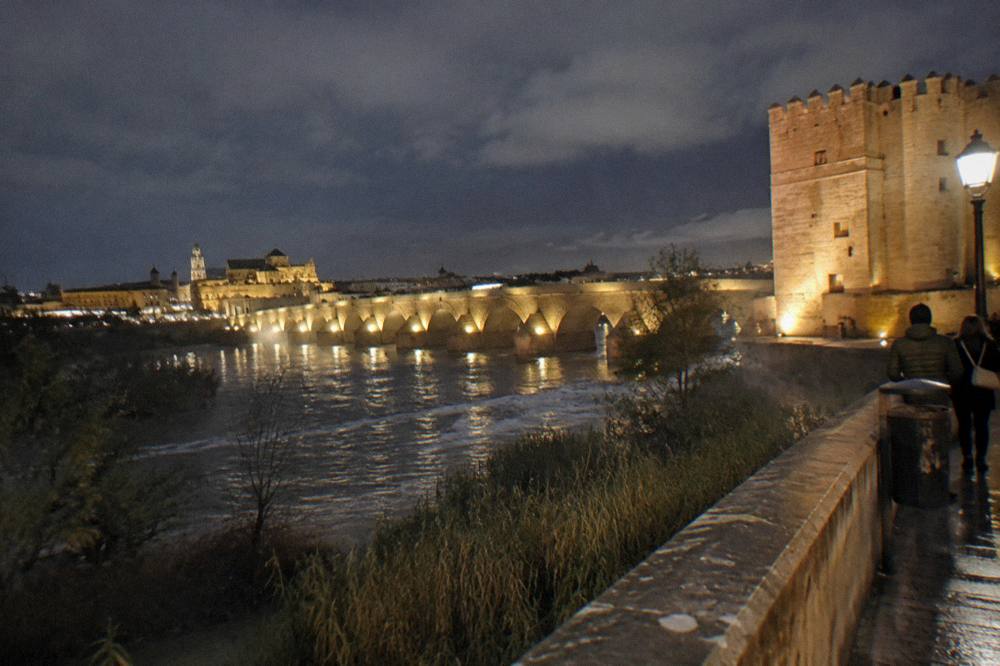
The river finishes it. The Roman Bridge is free at any hour, the Mirador de la Calahorra on the south bank is the viewpoint that frames the whole city, and the Paseo de la Ribera runs the Guadalquivir's bank as public space. The Molino de la Albolafia stands midstream as something you look at rather than enter, and the Puerta del Puente and Triunfo de San Rafael close the circuit at the bridge's north end. Only the Torre de la Calahorra's interior interrupts the free run, at EUR 4.50, and skipping it costs nothing from the outside.
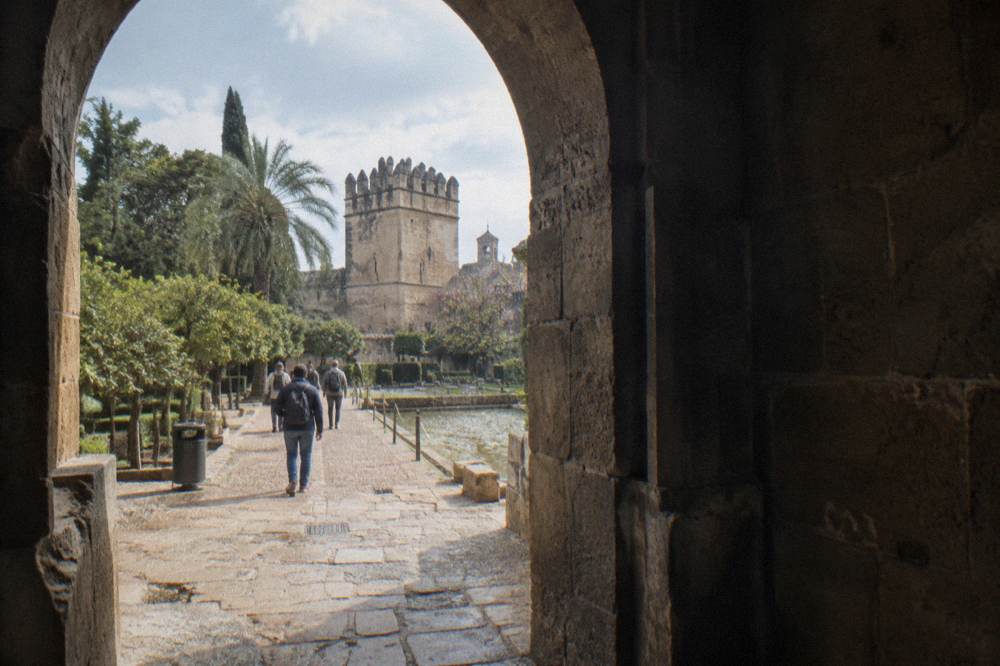
Timing the free windows onto that geography is the last step. The Mezquita slot pins the morning, so the old town walks should start from rather than end at the mosque. The Thursday window, in winter, lands at 18:00, which means the Alcázar gardens, the Baños del Alcázar Califal or the Julio Romero de Torres museum become the evening's destination rather than a midday detour. In summer the same window at 12:00 to 14:15 splits the day in half, streets early, museum over midday, riverbank in the cooler late afternoon. None of this needs money, it needs only the right day of the week.
Which Free Walking Tours Anchor A Budget Day?
The 26 free walks on this site's directory all run pay what you want, mostly on GuruWalk, with a few on freetour.com, and every one of them costs nothing to book: the tip at the end is the whole price. The English language options cluster in the old town and the Jewish Quarter, while the Medina Azahara and patio walks carry separate entry costs on their listings and run in Spanish.
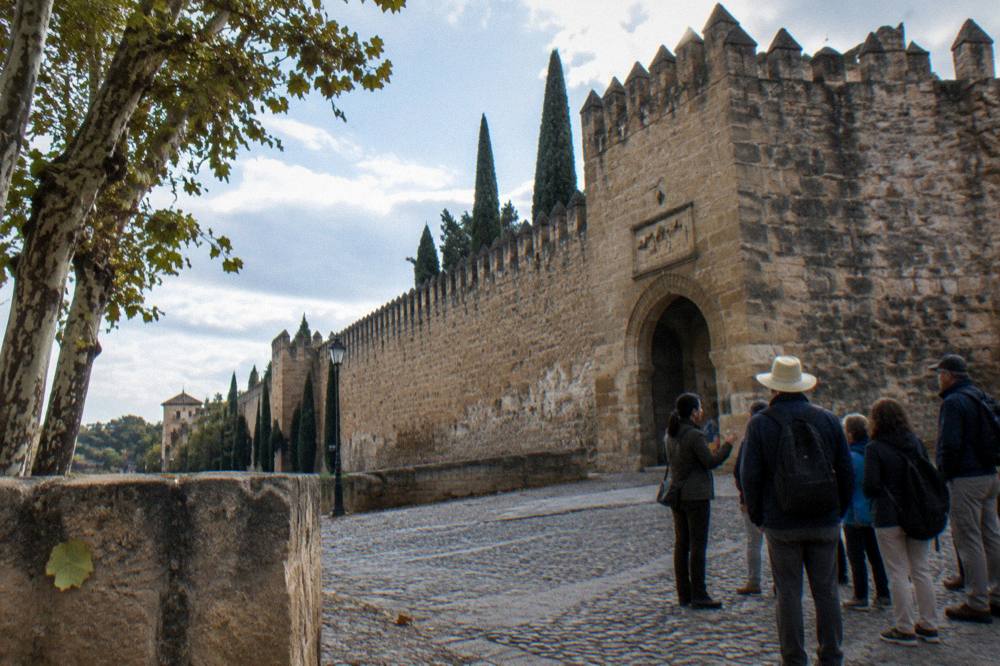
GuruWalk is the platform under most of this city's free walking scene, and this site operates no walk: every listing is an independent local guide, and a referral commission is earned when you book through links here. The Best Of Free Tour, 1H45 by Andaloo Tours is the anchor, 4.94 out of 5 across 3,732 reviews, meeting at the Roman Temple, Calle Capitulares. Around it, WeTour's Heritage Free Tour, 1H30 meets at Plaza de las Tendillas and carries 4.77 out of 5 from 752 reviews, English and Spanish both. It is the natural second walk, starting where the city's commercial heart gives way to the old town.
For English only visitors the bench is real but specific. Enrique's English Heritage Free Tour, 1H30, 4.63 out of 5 from 630 reviews, meets at Plaza del Triunfo by the Mezquita-Catedral, which makes it the walk that fits straight after the 8:30 slot empties you onto the same square. Jose Manuel's 2 Hour Small-Group English Tour meets at the Statue of Averroes, Puerta de Almodóvar, 4.88 out of 5 from 354 reviews. Cordobaecoexperience's English Hidden Gems Free Tour and CÓRDOBA's Jewish Quarter Tour in English cover the popular culture and Judería angles. What none of them can promise is the Mezquita interior as part of the walk: entry is always the visitor's own ticket, and the changes from 1 January 2027 affect accredited guides' access, not the free-tour format.
The conditions worth knowing before booking are few and honest. The Medina Azahara walks and the patio walks carry additional costs on their listings, guiding is pay what you want while the site entry or patio entry is bought separately, and all four of those run in Spanish only. The night walks on the roster are Spanish only too, so there is no English night walk to promise. The freetour.com listings, including the Historic Center Free Tour at 8.9 out of 10 from 1,849 reviews on its listing, rate out of 10 rather than out of 5, a different scale that should never be lined up beside GuruWalk's stars. How the pay what you want model actually works, and what a fair tip looks like, is covered in the how much to tip a free tour in Cordoba post, and the wider scene is in the free walking tours Cordoba guide.
Mistakes That Trip People Up At Cordoba On A Budget
The four mistakes that cost real money are assuming Sunday is free at the Mezquita, confusing the EU-citizen rule with a day rule, expecting the patios outside May, and reading the free slot as covering the tower or the night visit. Each one comes from merging two of Cordoba's separate free regimes into a single idea of "free", and each is avoidable with the split this guide keeps repeating.
Sunday first, because it is the most expensive misunderstanding. The free slot runs Monday to Saturday, and Sunday is simply not in it, so a weekend visitor who saves the Mezquita for Sunday pays EUR 15 or reshuffles the trip. The related mistake is treating the municipal Thursday window or the Junta nationality rule as interchangeable with the slot: they are three regimes with different operators, different conditions and different clocks, and the are museums free on Sundays in Cordoba post dismantles the Sunday assumption in full.
The patios mistake is seasonal. Private patios open their doors during the Festival de los Patios, 3 to 16 May 2027, and not as a year round attraction, so a visitor in October walking San Basilio's streets sees doorway facades, not courtyards. Palacio de Viana's EUR 8.50 patios ticket is the paid alternative, and even its Patio de la Cancela is free only during the festival dates. The EU-citizen mistake runs the other way: a UK or US visitor who hears "the Sinagoga is free" pays EUR 0.30 at the door, and one who hears "Medina Azahara is free" pays EUR 1.50, small sums but proof the rule was misread. The nationality condition travels in the same sentence as the free claim, always.
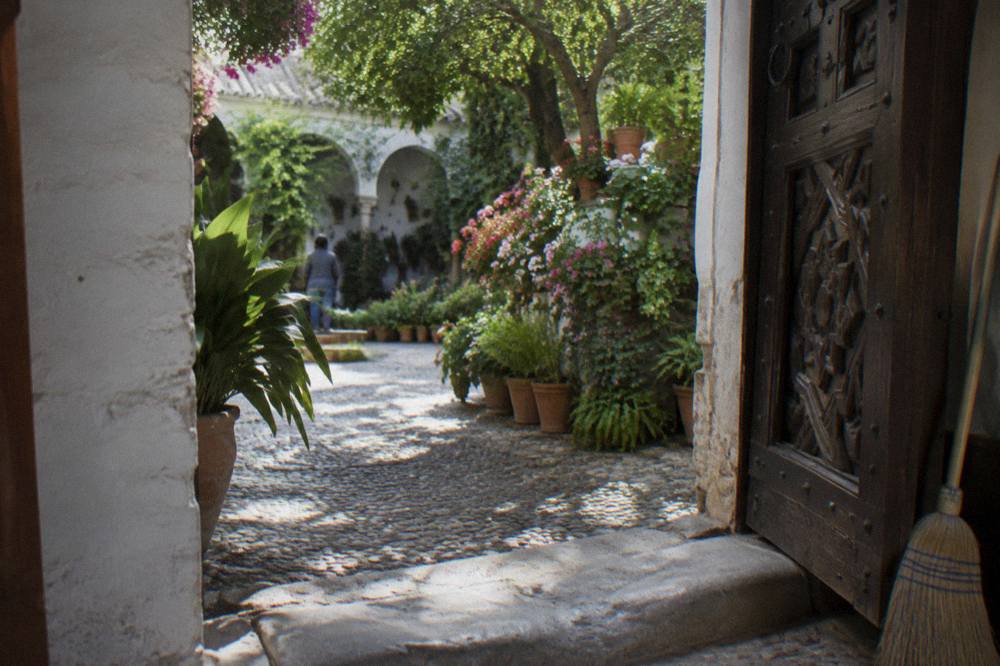
The last pair of mistakes are about scope. The free slot at the Mezquita is a 60 minute early visit for individuals, not a free day pass, and it never includes the bell tower at EUR 4, the night visit at EUR 25 or the Fernandine route at EUR 6. And no free walking tour includes any paid entry, whether the Mezquita, Medina Azahara or the patios, because guiding and admission are separate products sold by separate hands. Budget for the entry you actually want, book the walk for the story, and the two never blur.
Common Questions About Cordoba On A Budget
How much of Cordoba can you see for free?
The entire public layer is free: the Judería, the Calleja de las Flores, every major square, the city walls and gates, the Roman Bridge, the riverbank and the gardens. Add the Mezquita-Catedral's 8:30 to 9:30 slot Monday to Saturday, the municipal museums' Thursday window and the May patios festival, and a multi-day visit can run almost entirely without tickets.
What is the cheapest way to see inside the Mezquita-Catedral?
The free visit slot, Monday to Saturday 8:30 to 9:30 with last entry 9:20, for individual visitors only, excluding days of extraordinary celebration. It is a 60 minute slot and covers neither the bell tower nor the night visit. Outside the slot, general admission is EUR 15.
Are Cordoba museums free for tourists?
The municipal museums are, on non-holiday Thursdays for their last two hours, everyone welcome until capacity. The Junta de Andalucía sites, Medina Azahara, the Museo Arqueológico, Bellas Artes and the Sinagoga, are free only for accredited EU citizens; other visitors pay EUR 0.30 to EUR 1.50.
Is the Roman Bridge free?
Yes, the bridge and the south bank Mirador de la Calahorra viewpoint are free public space around the clock. The Torre de la Calahorra at the bridge's southern end is a separate paid interior at EUR 4.50, and skipping it leaves the view untouched.
Do free walking tours really cost nothing?
Every walk on this site's roster of 26 is pay what you want, mostly on GuruWalk with a few on freetour.com, so booking costs nothing and the tip is decided at the end. Walks covering Medina Azahara or the patios note additional entry costs on their listings, since site entry is always bought separately.
When can you see the patios for free?
During the Festival de los Patios, 3 to 16 May 2027, when private courtyard owners open their doors with free entry and no appointment; the 2027 hours are not yet published. Outside the festival, the patio streets are free to walk but the courtyards are private homes, and Palacio de Viana's patios cost EUR 8.50.