Free Viewpoints In Cordoba: Where To Look Without Paying
Cordoba's best-known view, the Mezquita-Catedral rising over the Guadalquivir from the south bank, costs nothing. This guide separates the free riverbank viewpoints from the paid towers, lists closing days and the two free-entry windows that apply to nothing here, and names the free walking tours that meet within walking distance of each viewpoint.
In Short
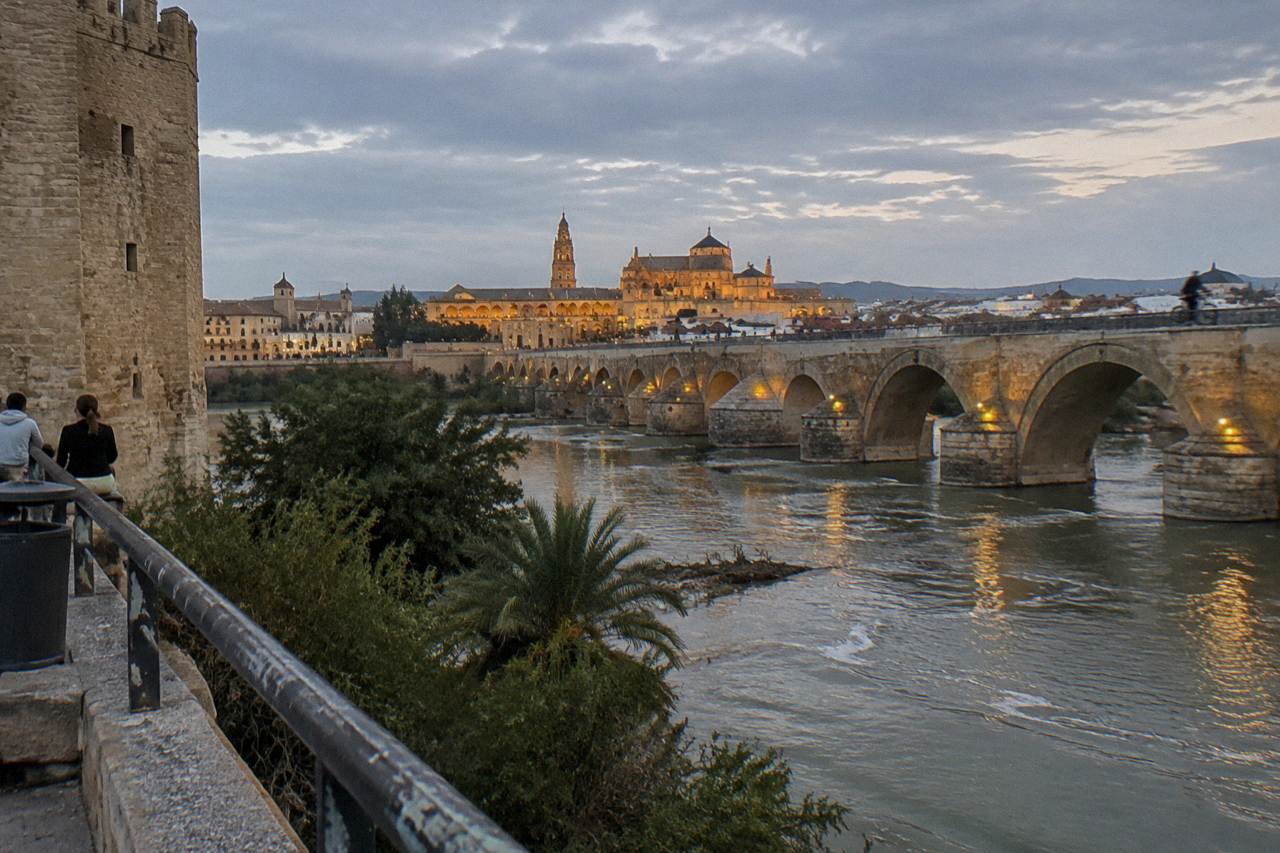
The free viewpoints in Cordoba are the Mirador de la Calahorra on the Roman Bridge's south bank, the Puente Romano itself, the Paseo de la Ribera riverbank, and the Molino de la Albolafia, all public space with no ticket and no closing time. The paid lookouts are the Torre de la Calahorra at EUR 4.50 and the Mezquita-Catedral bell tower at EUR 4. Free walking tours meet at Plaza del Triunfo and Puerta de Almodovar, minutes from the bridge.
The most photographed view of Cordoba, the Mezquita-Catedral framed by the arches of the Puente Romano with the Guadalquivir in front of it, is seen from public ground that never closes and never charges. That single fact organises everything on this page: the south-bank Mirador de la Calahorra, the bridge itself, the riverbank paths and the old water wheel are all free, around the clock, because they are streets and embankments rather than attractions. The paid part of the skyline is small but real, the Torre de la Calahorra museum at EUR 4.50 and the Mezquita bell tower at EUR 4, and knowing where that line falls is the difference between a free afternoon and an unplanned EUR 8.50.
Part of the Free Things To Do In Cordoba guides series, this page covers only the view itself: where to stand, what is genuinely free, what costs money, when the paid towers fit into a day, and which pay-what-you-want walks start close enough to the viewpoints that the walk and the view combine into one outing.
Quick Facts
| Question | Answer |
|---|---|
| What is free? | Mirador de la Calahorra (south bank), Puente Romano, Paseo de la Ribera and riverbanks, Molino de la Albolafia, all public space |
| For whom? | Everyone, no ticket, no booking, public space around the clock |
| What costs money? | Torre de la Calahorra EUR 4.50; Mezquita-Catedral bell tower EUR 4 |
| Closing days | None for the free viewpoints; the paid towers follow their own schedules |
| Nearest free walk platform | GuruWalk (pay what you want walks meeting at Plaza del Triunfo and Puerta de Almodovar) |
| Best-known free view | The Mezquita-Catedral from the south bank of the Roman Bridge |
Which Cordoba Viewpoints Are Free?
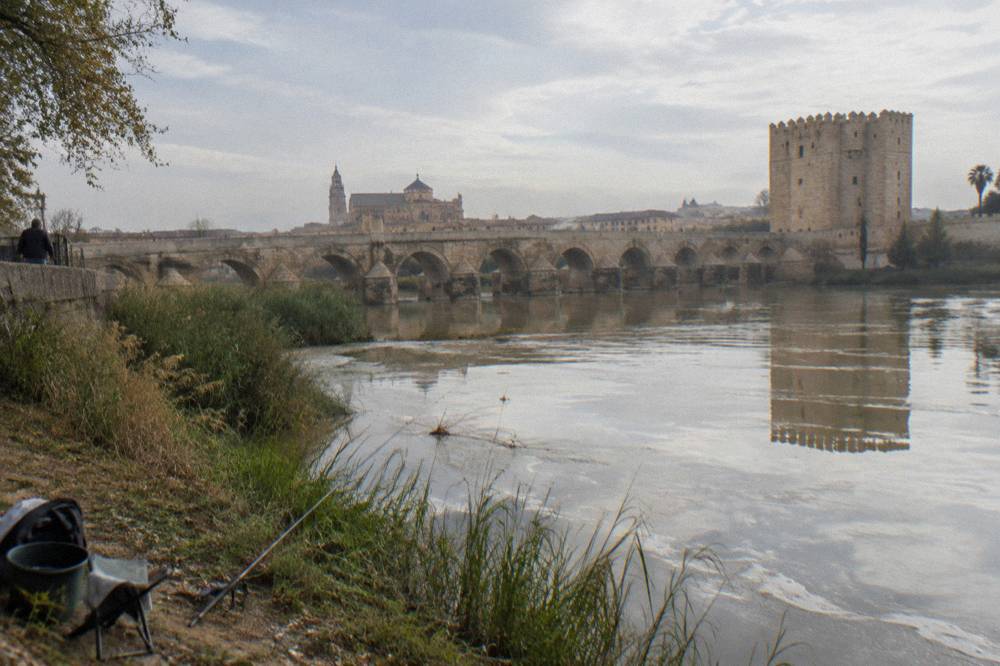
The free viewpoints in Cordoba are the Mirador de la Calahorra on the south bank of the Roman Bridge, the Puente Romano itself, the Paseo de la Ribera and the wider Guadalquivir riverbanks, and the Molino de la Albolafia water wheel. All are public space, open around the clock, with no ticket, no queue and no booking, and together they give the classic view of the Mezquita-Catedral over the river from several angles.
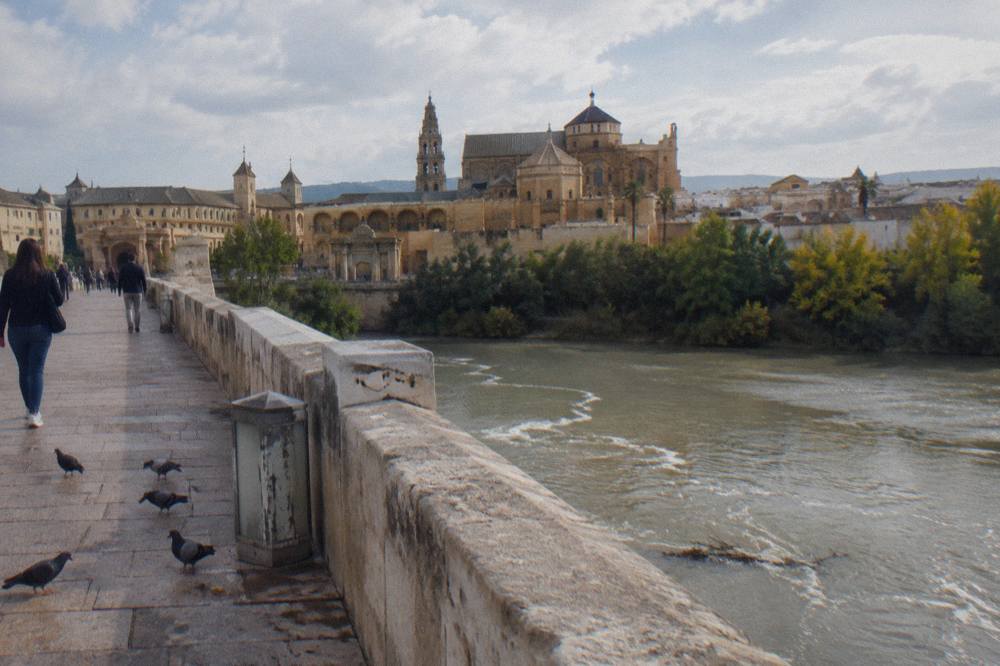
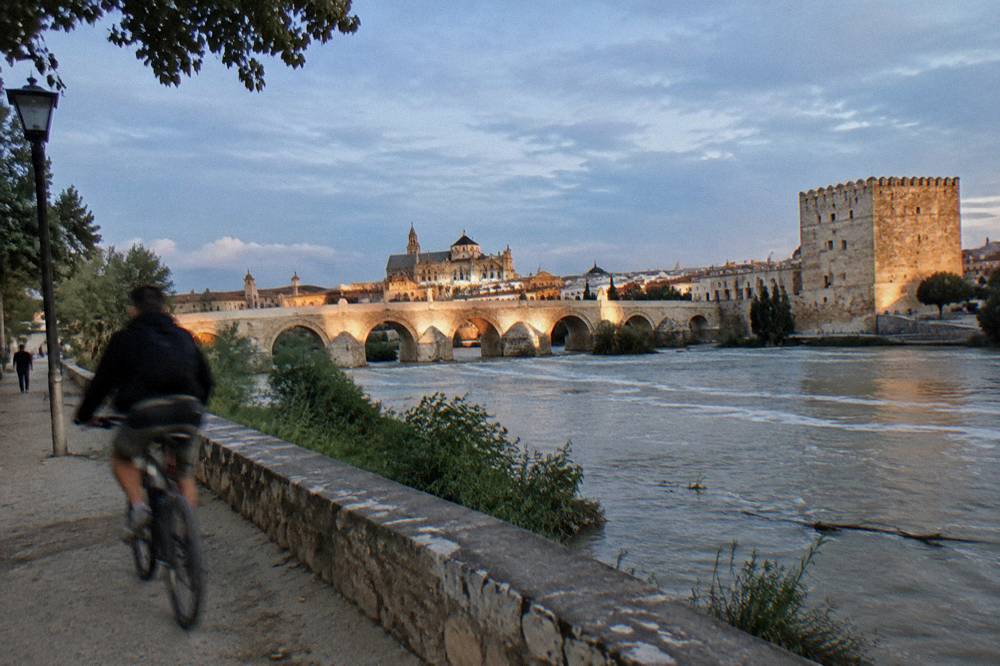
The Mirador de la Calahorra is the view most visitors come for. It sits on the south bank of the Guadalquivir, directly opposite the Puente Romano, and from it the bridge's arches line up with the Mezquita-Catedral's walls and bell tower. Because it is open public ground rather than a ticketed terrace, there is nothing to buy, nothing to reserve and nothing to time a visit around. The city classifies it, like the bridge, as public space.
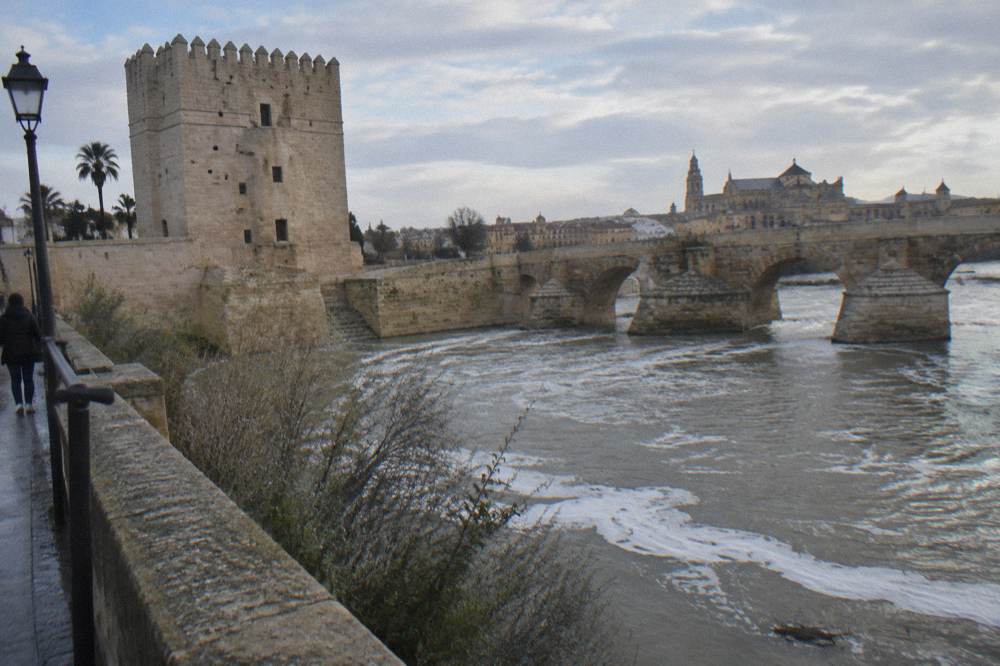
The Puente Romano doubles as a viewpoint in its own right. Walking its length gives a shifting view: the Mezquita-Catedral's mass to one side, the Torre de la Calahorra closing the bridge at the south end, and the river low between the banks. Whether the bridge itself counts as free is a question answered in full elsewhere; the short version is yes, it is a public street, open around the clock, as covered in the guide to whether the Roman Bridge is free.
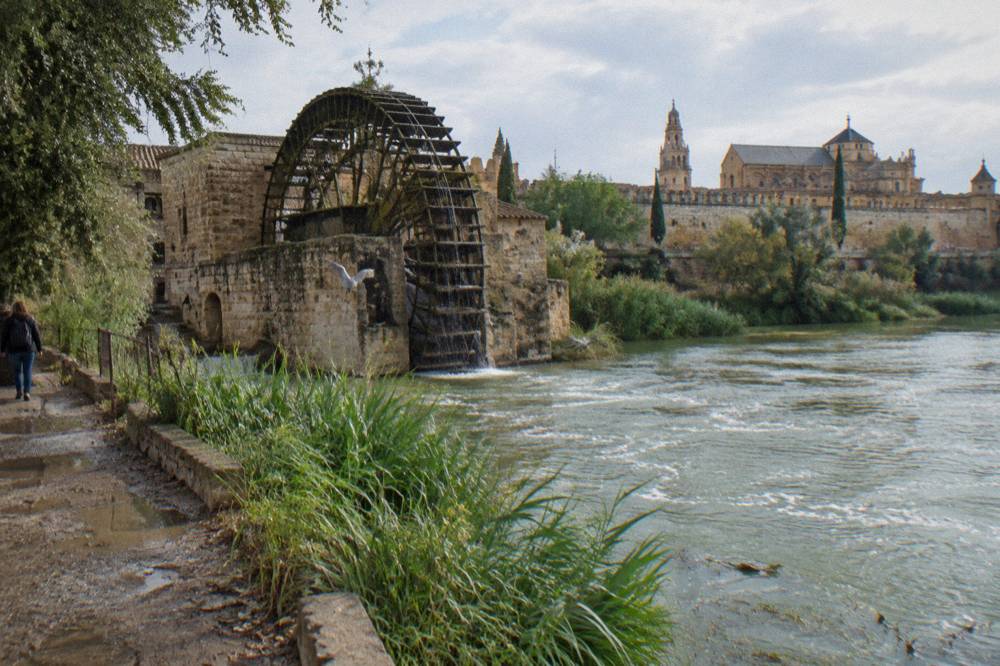
The Paseo de la Ribera and the rest of the Guadalquivir riverbanks stretch the same view along the water. The embankment on the historic-centre side runs below the city walls, so the Mezquita-Catedral appears above the tree line rather than face-on. The Molino de la Albolafia, the medieval water wheel visible from the bank near the bridge, is a free sight in itself: it is seen from the riverbank, which is public space, rather than entered.
Cordoba's free lookout points are few, four named places in all, and every one of them is on or beside the river. Beyond these, no other free viewpoint is confirmed. Rooftop terraces, tower bars and hotel viewing platforms are not confirmed as free, so they do not appear here as free either. If a card or a leaflet promises a free panoramic terrace, treat that as a claim about a private business, not about public Cordoba.
What Is Free Around The Riverbank Viewpoints?
Everything on the river itself is free: both banks of the Guadalquivir, the Paseo de la Ribera, the bridge arches, the water wheel and the south-bank viewpoint. What is not free is inside the towers that punctuate the view, the Torre de la Calahorra at EUR 4.50 and the Mezquita bell tower at EUR 4, and neither tower's ticket is covered by any free window that applies elsewhere in the city.
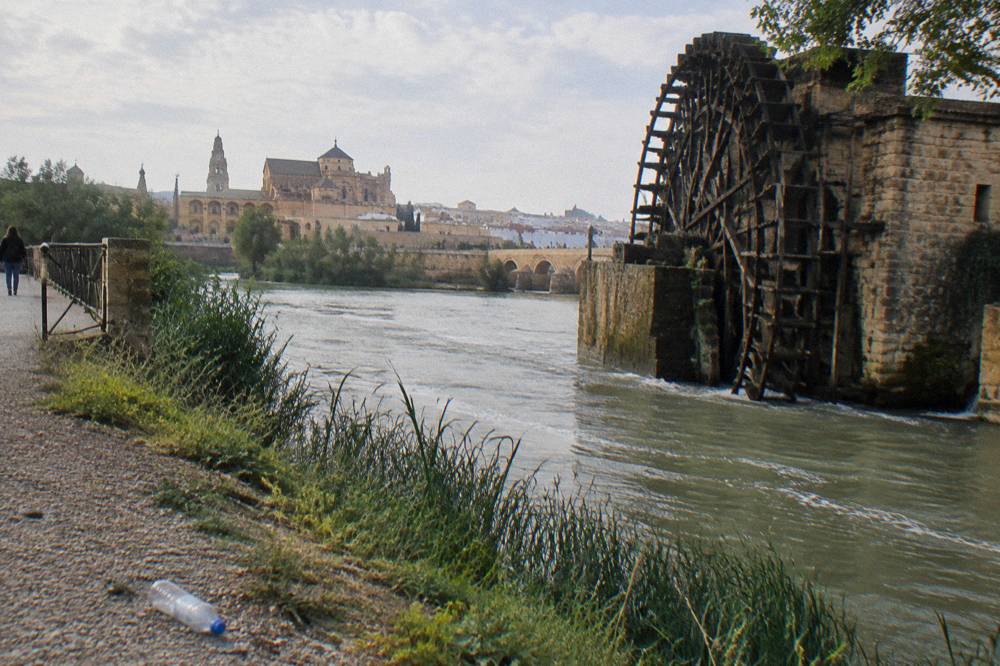
The riverbank deserves more time than most visitors give it. The banks of the Guadalquivir along the Paseo de la Ribera are public space, which means the walk along the water on the city side is as free as any street, and the views change with every hundred metres. From some stretches the Mezquita-Catedral sits directly overhead; from others the walls and the Sotos de la Albolafia hide it, and the river, the water wheel and the wildlife are the sight instead.
The distinction that matters here is free place, paid part, always two facts. The Roman Bridge and the riverbank are free public space; the Torre de la Calahorra, standing at the bridge's south end, charges EUR 4.50 for its museum interior. The bridge view of the tower is free; the tower's own view over the bridge is paid. Neither the municipal Thursday window nor any other free scheme in the city covers it, because it is not a municipal museum.
The Molino de la Albolafia is the quietest of the four free sights. The water wheel sits in the river near the bridge, visible from the bank, something seen from public space rather than a visitable site. It rounds out the riverbank walk without adding a detour: you see it from the same embankment that carries the Paseo de la Ribera.
For readers planning a wider free day, the riverbank connects naturally to the gardens and riverside spaces covered in the free gardens and riverside guide, and the bridge-and-tower split is unpacked in the Roman Bridge and Calahorra viewpoint guide. This page keeps to the view itself; those pages take the wider ground.
The three pay-what-you-want walks above, all listed on GuruWalk, meet in the old town, minutes from the bridge end of the riverbank. The World Heritage Free Tour, 1H30, meets at Plaza de las Tendillas; the English Hidden Gems Free Tour, 1H30, meets at the same square; the 2 Hour Small-Group English Tour meets at the Statue of Averroes, Puerta de Almodovar, on the edge of the Juderia. None of the three has a price, because guiding on GuruWalk is pay what you want, and each can slot before or after a riverbank viewpoint session without transport.
Which Cordoba Viewpoints Cost Money?
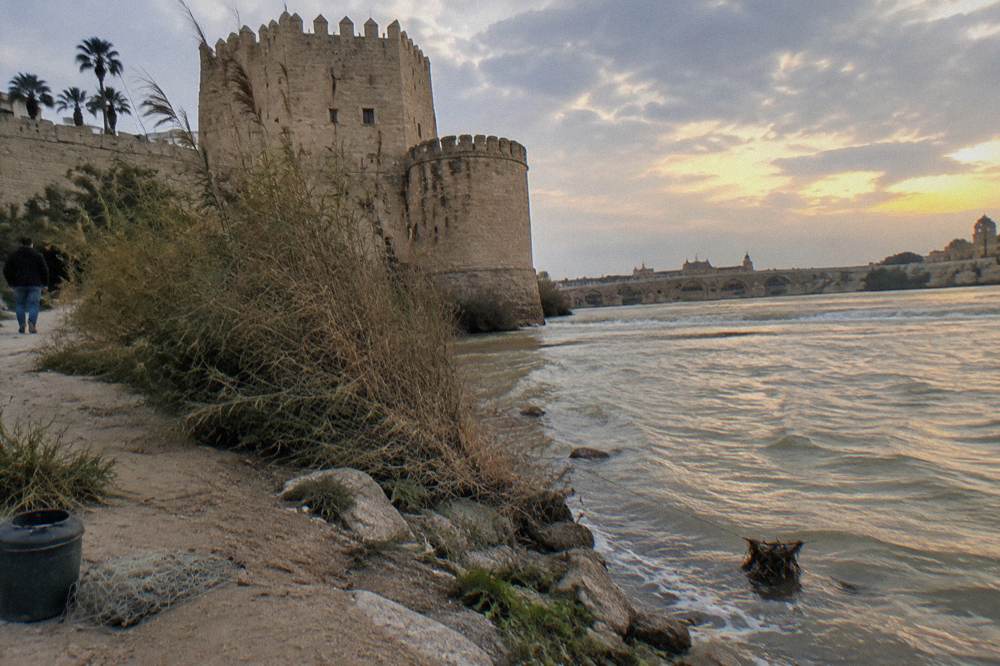
Two viewpoints in Cordoba charge: the Torre de la Calahorra, the museum inside the bridge's south tower, at EUR 4.50, and the Mezquita-Catedral bell tower at EUR 4. Both are separate tickets from anything else in the city, the bell tower is separate even from the Mezquita's own early free slot, and no free day, free window or combined scheme on file covers either one.

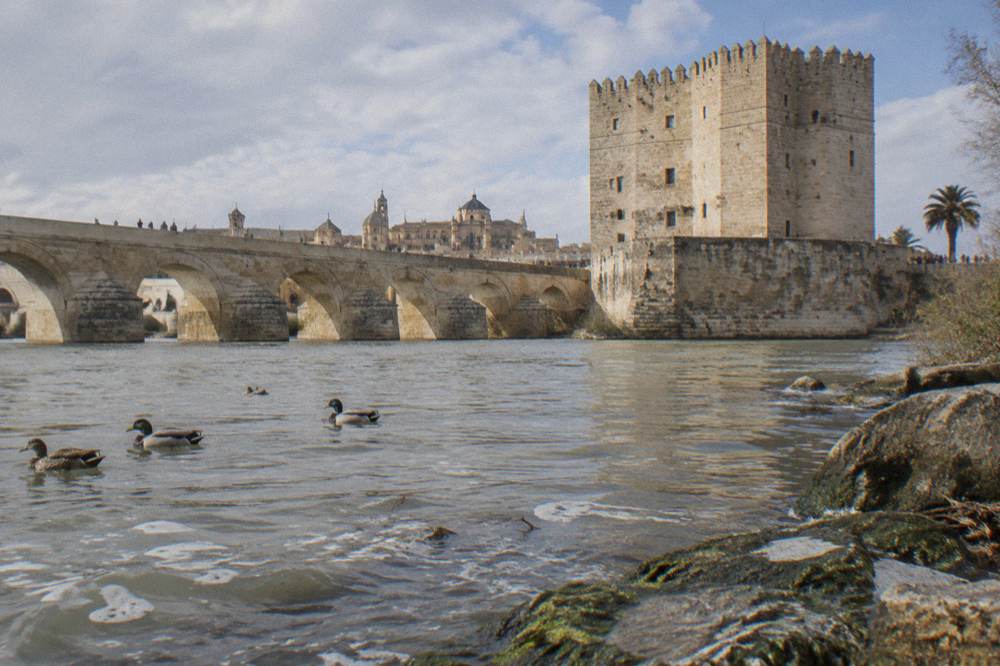
The Torre de la Calahorra houses the Museo Vivo de Al-Andalus, and the EUR 4.50 fee buys the interior and the view from it. No free entry window is published, so the choice is simple: you look at the tower for free from the bridge and the banks, and you pay to look from the tower. The Mezquita bell tower is the other paid lookout. The Cabildo's own ticket pages price it at EUR 4 as a ticket entirely separate from general admission, from the free early slot, from the EUR 25 night visit and from the EUR 6 Fernandine route. Climbing it is a purchase, not a freebie, whatever the hour.
| Viewpoint | Cost | Type | Notes |
|---|---|---|---|
| Mirador de la Calahorra | Free | Public space, south bank | Classic Mezquita view, no ticket |
| Puente Romano | Free | Public space, bridge | Open around the clock |
| Paseo de la Ribera and riverbanks | Free | Public space, embankment | Runs below the city walls |
| Molino de la Albolafia | Free | Public space, seen from bank | Water wheel, not enterable |
| Torre de la Calahorra | EUR 4.50 | Paid museum interior | No free slot found |
| Mezquita-Catedral bell tower | EUR 4 | Paid, Cabildo ticket | Separate from all other Mezquita tickets |
A caution about numbers: these are the only two paid viewpoint fees on this page, and both are stated as EUR figures. Nothing else here carries a price, and any figure you see quoted for a rooftop bar, a hotel terrace or a private mirador is that business's own claim rather than a confirmed price. The municipal museums' Thursday free window, detailed on the city council's museums page, applies to the Alcazar de los Reyes Cristianos and its sister museums, none of which is a tower viewpoint.
The bell tower's schedule belongs to the Cabildo, and the Cabildo itself says hours can change for special events, so the tower's own page is the place to check before committing a morning. From 1 January 2027 the Cabildo also starts optional official guided visits inside the Mezquita, sold above the normal ticket, a change to the interior offering that leaves the paid bell tower ticket and the free riverbank views exactly where they are. The pricing and entry rules around the Mezquita are covered in full in the Mezquita-Catedral guide.
When Can You Visit The Free Viewpoints?
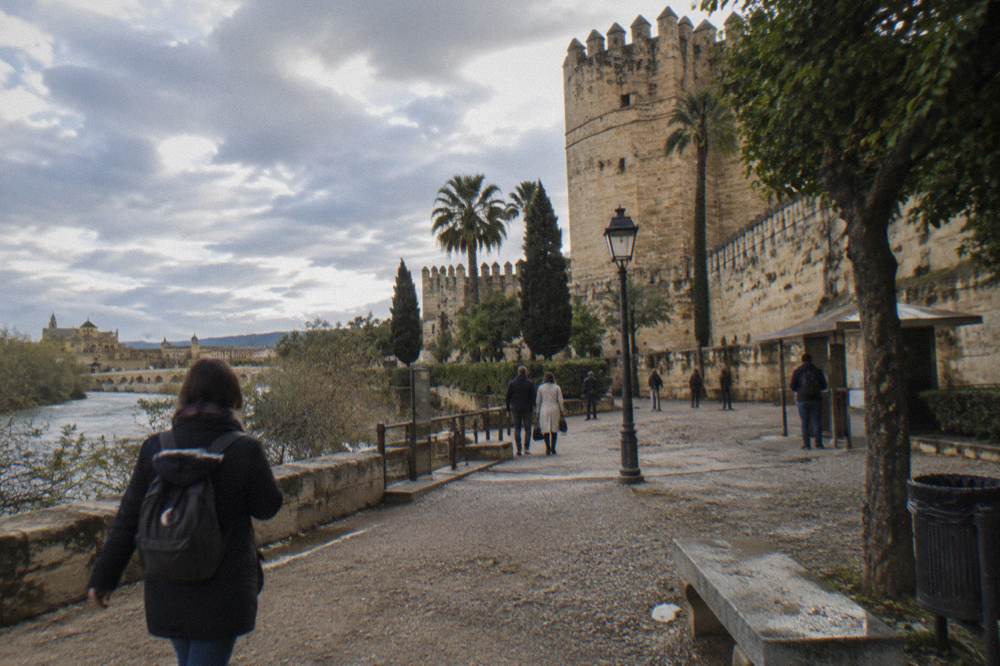
The four free viewpoints, the Mirador de la Calahorra, the Puente Romano, the Paseo de la Ribera and the Molino de la Albolafia vantage, are public space with no opening hours, no closing days and no ticket desk, so the honest answer is whenever you like, within ordinary safety sense for a riverbank at night. The paid towers are the only viewpoints with schedules, and their hours are their own, not the riverbank's.
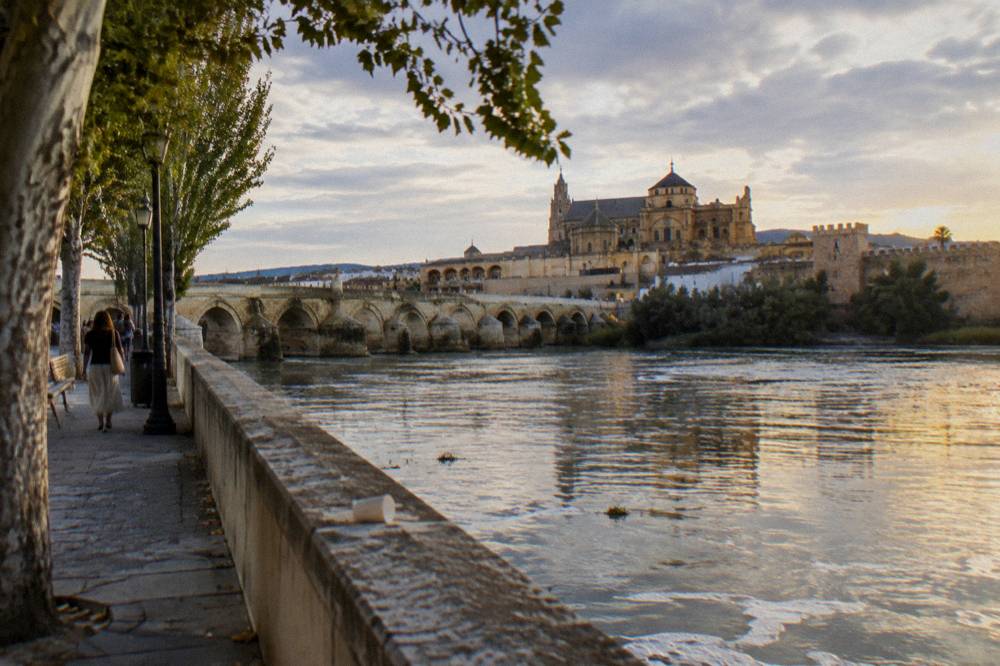
This is the section where free genuinely means free. Public spaces have no hours here because streets and embankments do not have them. There is no Monday closure, no capacity limit, no last entry and no day of extraordinary celebration that shuts the bridge or the bank. That stands in deliberate contrast to almost everything else covered on this site: the municipal museums shut on Mondays and open free only in their Thursday window, the Junta museums keep their own calendar, and the Mezquita's early free slot is a 60-minute morning window. The viewpoints escape all of it. Other pages covering the same trip are gathered on Free Things To Do In Cordoba.
The paid towers are different. The Torre de la Calahorra's interior keeps museum hours, and the bell tower climbs on the Cabildo's schedule, with the Cabildo noting that special events can shift its times. Neither tower's timetable is confirmed, so the practical advice is to treat the tower visits as something to settle on the day and the riverbank views as something that needs no planning at all.
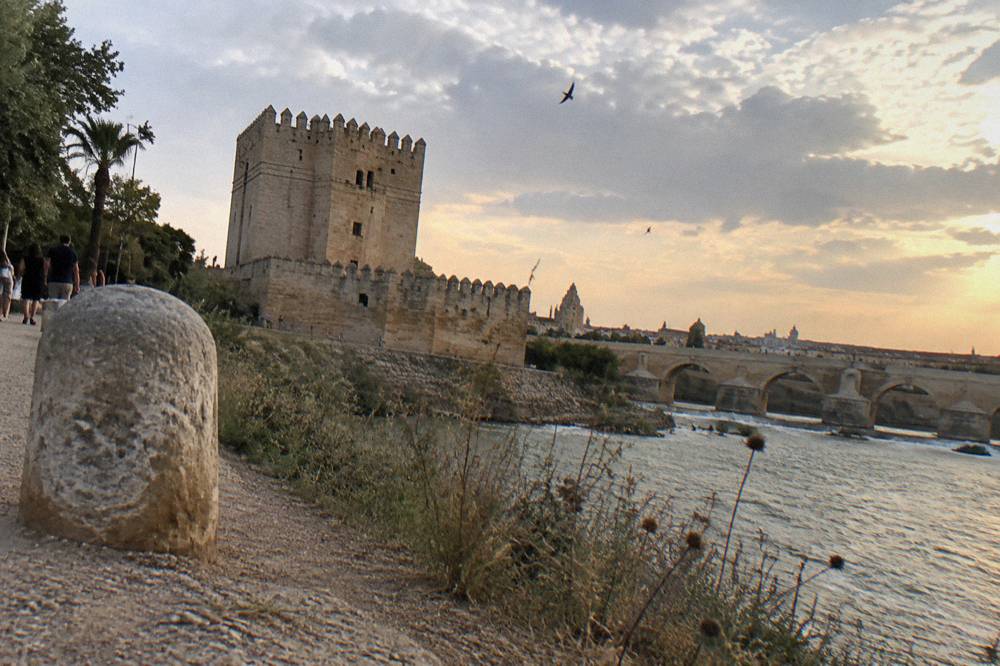
Seasonal events are worth one paragraph because they change the backdrop rather than access. The festival calendar for 2027 on the city council's events calendar runs from Carnaval en la calle in February through Semana Santa in March, the patios in May and the Noche Blanca del Flamenco on 19 June, and all of them are free to watch from public space. The riverbank and the bridge are exactly that, so a viewpoint visit during a festival weekend costs the same nothing, with a different skyline of lighting and crowds. The events themselves are unpacked in the Cruces de Mayo and Feria guide for anyone timing a trip around them.
The English Heritage Free Tour, 1H30, run by guide Enrique on GuruWalk, meets at Plaza del Triunfo, Mezquita-Catedral, which places its start a minute or two from the bridge's north end. It runs in English, lasts an hour and a half, and is pay what you want like every GuruWalk walk on this site. Meeting at Plaza del Triunfo and finishing near the old town makes it a natural pairing with a riverbank viewpoint walk either side of it, and the tour's own page carries the details and the guide's GuruWalk listing link.
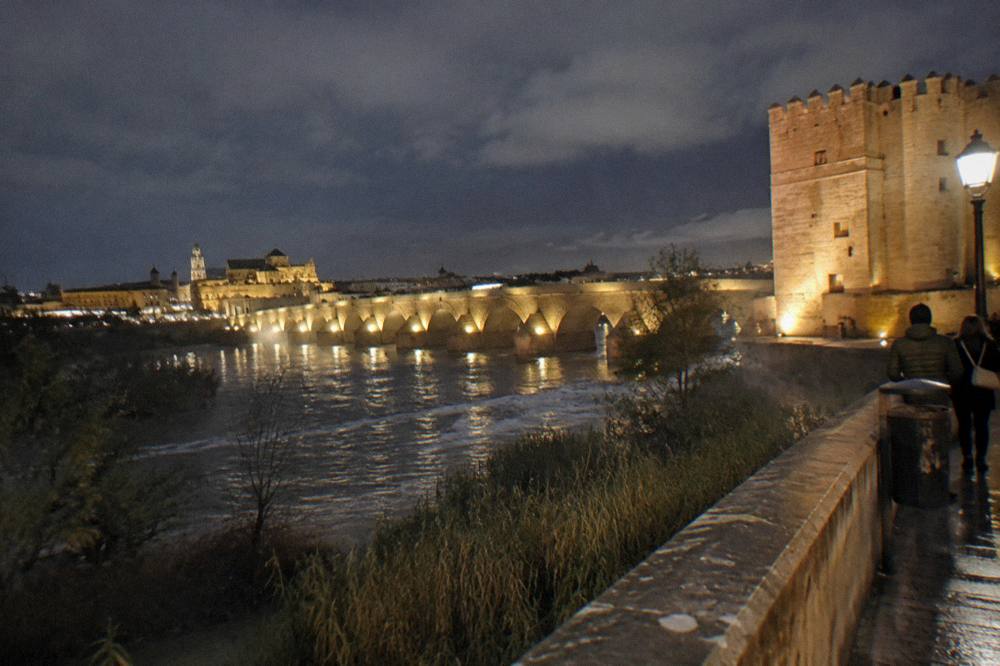
How Do You Combine The Viewpoints With Other Free Sights?
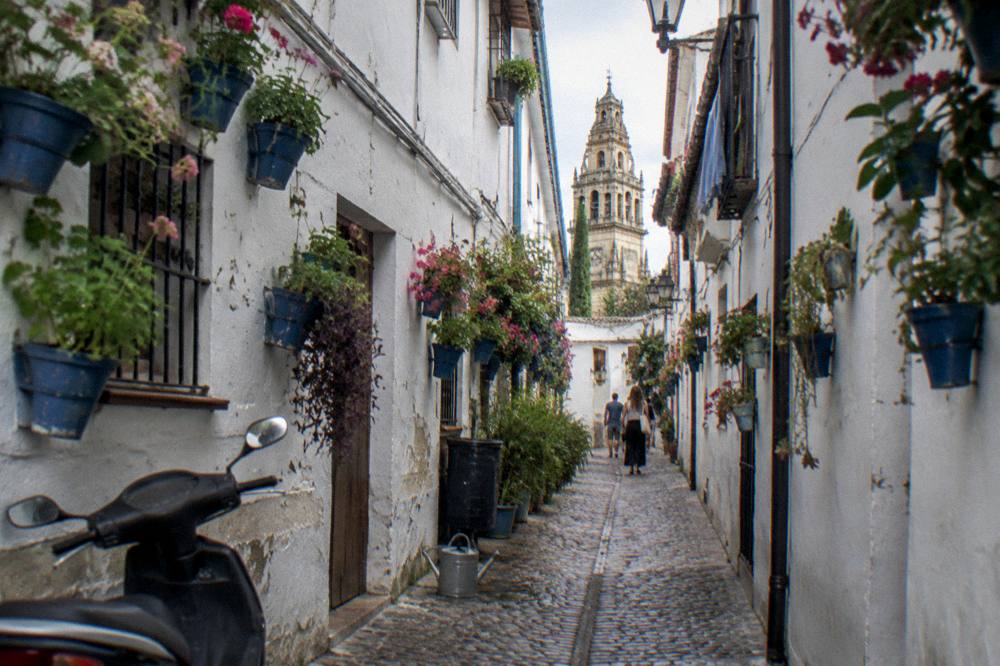
The free viewpoints chain together on foot without spending anything: start at Plaza del Triunfo and the Puerta del Puente, cross the Puente Romano to the Mirador de la Calahorra, return along the Paseo de la Ribera past the Molino de la Albolafia, and finish in the Juderia's free streets, the Calleja de las Flores among them. Every step is public space, and the walk needs no ticket, no booking and no transport.
The bridge anchors the route because it joins the two halves of the view. On the north side, Plaza del Triunfo and the Puerta del Puente with its Triunfo de San Rafael are free public spaces in their own right, so the viewpoint walk begins collecting free sights before it reaches the river. Crossing the bridge delivers the Torre de la Calahorra up close, the river below, and then the south bank, where the Mirador de la Calahorra turns the whole crossing around and gives the postcard line of the Mezquita-Catedral over the water.
The return leg along the Paseo de la Ribera is the part most visitors skip. It passes the Molino de la Albolafia and keeps the walls of the historic centre on one side and the Guadalquivir on the other, and it ends back within reach of the Juderia. The Juderia's streets and alleys are free public space, the Calleja de las Flores among them, and the Juderia and Calleja de las Flores guide covers that quarter in detail. The patios of the San Basilio quarter, whose streets are free to walk all year even though the private patios open freely only during the May festival, sit at the western end of the same bank.
| Leg of the walk | Free sight | Type |
|---|---|---|
| Start | Plaza del Triunfo and Puerta del Puente | Public space |
| Crossing | Puente Romano | Public space, bridge |
| South bank | Mirador de la Calahorra | Public space, viewpoint |
| Return | Paseo de la Ribera and Molino de la Albolafia | Public space, riverbank |
| Finish | Juderia streets and Calleja de las Flores | Public space, quarter |
Extending the day costs nothing either, as long as the extensions stay on the free list. The free plazas and markets of the old town, covered in the free plazas and markets guide, sit north of the river within the same walkable core, and the full inventory of no-cost sights is in the free things to do overview. The mistake to avoid is assuming the paid towers are part of the chain: they are optional extras at EUR 4 and EUR 4.50, not links in a free route.
If the day grows into a full one, the Cordoba in one day guide sequences the same free pieces against the clock, including where the morning's Mezquita free slot fits if you want it. The viewpoint walk is the most flexible block of that day precisely because it has no hours.
Which Free Walking Tours Meet Near The Viewpoints?
Several pay-what-you-want walking tours meet within a few minutes of the free viewpoints: the English Heritage Free Tour gathers at Plaza del Triunfo, the Best Of Free Tour and others start at the Roman Temple, and the Heritage Free Tour departs from Plaza de las Tendillas. All are listed on GuruWalk, every one runs on tips with no fixed fee, and each meeting point lies within the walkable core that holds the bridge and the riverbank.
The closest meeting point to the viewpoints is Plaza del Triunfo, Mezquita-Catedral, where Enrique's English Heritage Free Tour, 1H30, begins. Enrique's walk carries a 4.63 rating from 630 reviews on GuruWalk, runs in English, and the meeting point sits directly at the bridge's north end, so a viewpoint session before or after needs no more than a short stroll. The related tour page on this site carries the walk's details and its GuruWalk listing.
The Roman Temple, Calle Capitulares, hosts the largest English-language option, the Best Of Free Tour, 1H45, run by Andaloo Tours, with a 4.94 rating from 3,732 reviews on GuruWalk, the deepest review pool of any walk on this site's roster. The temple itself is free public space, viewed from outside, so the meeting point doubles as a free sight. The walk lasts an hour and three quarters and runs in English and Spanish.
Plaza de las Tendillas carries its own cluster of starting points, among them WeTour's Heritage Free Tour, 1H30, rated 4.77 across 752 reviews on GuruWalk and running in English and Spanish. The square is free public space in its own right and sits in the commercial heart, from which the riverbank is a straight walk downhill through the old town. There is no verified route on file for any walk beyond its meeting point and neighbourhood, so this page names only where each walk starts and who runs it.
A note on language and platform. Every walk named in this section runs on GuruWalk except where stated, and all of them are real listings run by independent local guides; this site operates no walk and is not owned by GuruWalk, but earns a referral commission when readers book through its links. Spanish-only options, including the night walks in the legends category, are Spanish only, and no English night walk exists on the roster, so anyone hoping for an after-dark guided walk in English should plan the riverbank viewpoints solo instead. The full picture of how the pay-what-you-want model works is in the free walking tours overview.
Mistakes That Trip People Up At Cordoba Viewpoints
The recurring mistakes are paying for a view that is free next door, assuming a tower ticket is covered by a free window, confusing the free bridge with the paid tower on it, and expecting the night walks to run in English. The Mirador de la Calahorra gives the Mezquita view for nothing while two towers nearby charge EUR 4 and EUR 4.50, and no free scheme in the city covers either tower.
The first mistake is buying a tower ticket for a view that public space already provides. The Mirador de la Calahorra delivers the Mezquita-Catedral over the river from the south bank, free, around the clock. The towers sell height and an interior, not the only view, and visitors who only want the classic photograph can keep the EUR 8.50.
The second is merging the three free regimes, a trap that runs through this whole site. The municipal Thursday window applies to the city's museums, not the towers. The Junta's EU-citizen free rule applies to Medina Azahara, the archaeological and fine arts museums and the Sinagoga, not to any viewpoint. The Mezquita's early free slot covers neither its own bell tower nor anything across the river. Each scheme is real, none of them touches a viewpoint, and any advice that blends them is wrong.
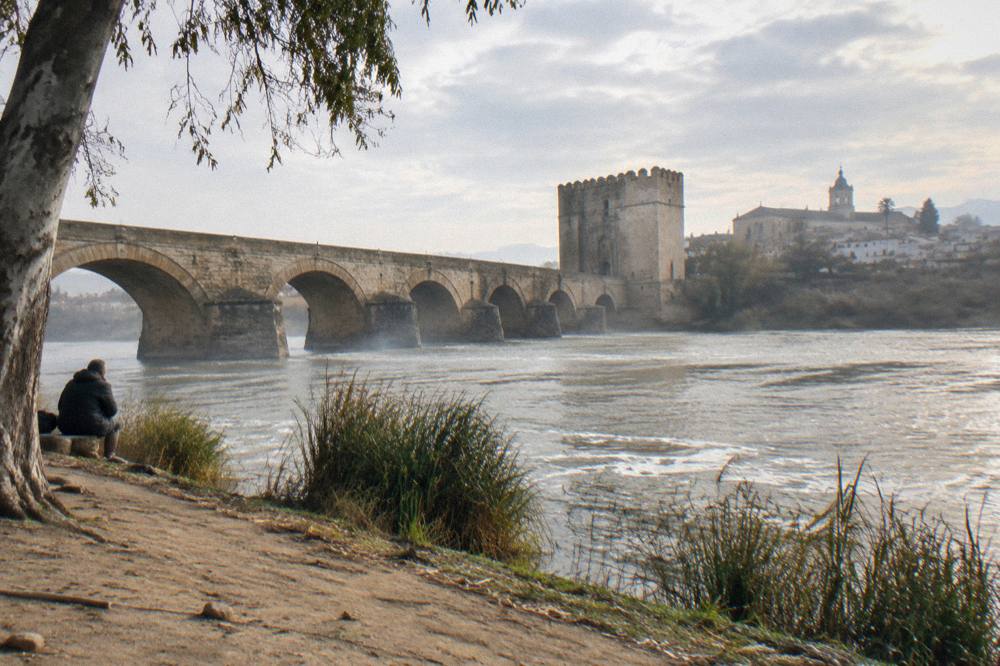
The third is treating the Torre de la Calahorra as part of the bridge. The bridge is free public space; the tower at its south end is a paid museum at EUR 4.50 with no free slot found. Walking to the tower costs nothing, entering it does not.
The fourth is expecting an English night walk. The night and legends walks on the roster run in Spanish only, so the after-dark riverbank, which is free and unstaffed, is the English-speaker's evening option. The fifth is planning tower visits without checking the day: the Cabildo says the bell tower's times can shift for special events, so confirm before building a morning around the climb.
For anyone whose viewpoint walk turns into a longer exploration, the trio above extends the day on the same pay-what-you-want basis. The Jewish Quarter Tour in English, 1H30, meets at Puerta de Almodovar on the Juderia's edge; the English Hidden Corners walk, 1H30, meets at Plaza del Doctor Emilio Luque; the Unknown Side Tour, 1H45, meets at the Roman Temple, Calle Capitulares. All are GuruWalk listings, all cost nothing to join with a tip at the end, and the two with fewer than 20 reviews show no score on their listings, which this site reports as it is rather than dressing up.
Common Questions About Cordoba Viewpoints
Which Cordoba viewpoints are free?
The Mirador de la Calahorra on the Roman Bridge's south bank, the Puente Romano itself, the Paseo de la Ribera and the Guadalquivir riverbanks, and the Molino de la Albolafia seen from the bank. All are public space with no ticket, no hours and no booking, and the Mirador gives the classic Mezquita-Catedral view over the river.
Is the view of the Mezquita from the Roman Bridge free?
Yes. The bridge is a public street open around the clock, and the view of the Mezquita-Catedral from its length and from the south bank costs nothing. The paid part of the skyline is the towers: the Torre de la Calahorra at EUR 4.50 and the Mezquita bell tower at EUR 4, both optional and both separate from the free bridge view.
Do the paid towers ever have free entry?
No free entry is published for either. The Torre de la Calahorra charges EUR 4.50 with no free slot announced, and the Mezquita bell tower is a EUR 4 Cabildo ticket separate from every other Mezquita ticket, including the early free slot. The municipal Thursday window and the Junta's EU-citizen rule apply to museums, not to these towers.
When are the free viewpoints open?
Always, in the sense that public space has no hours. The Mirador de la Calahorra, the bridge, the riverbank paths and the water wheel vantage carry no opening times, closing days or capacity limits. Only the paid tower interiors keep schedules, and the Cabildo notes its bell tower times can change for special events.
Are there free walking tours near the viewpoints?
Yes. The English Heritage Free Tour, 1H30, meets at Plaza del Triunfo beside the bridge; the Best Of Free Tour, 1H45, meets at the Roman Temple, Calle Capitulares; the Heritage Free Tour, 1H30, meets at Plaza de las Tendillas. All are pay-what-you-want GuruWalk listings run by independent local guides. This site operates no tour and earns a referral commission when you book through its links.
Can you see the Mezquita at night from the viewpoints for free?
Yes, from the same public riverbank and bridge, which never close. There is no English-language night walk on the roster, since the night and legends walks run in Spanish only, so an evening at the viewpoints is a self-guided, free affair. The Mezquita's own paid night visit, El Alma de Cordoba at EUR 25, is a separate interior ticket, not a viewpoint.