Free Things To Do In Cordoba: What Costs Nothing And What Has A Condition
Most of Cordoba's famous sights have a free angle, but only some are free for everyone. This guide separates the genuinely free places from the conditional ones, lists what the paid parts cost, and lays out a free day that actually works.
In Short
The Roman Bridge, the Juderia, Calleja de las Flores, Plaza de la Corredera, the Roman Temple exterior and every public square are free to everyone. The Mezquita-Catedral is free only Monday to Saturday 8:30 to 9:30, for individuals, no groups. Municipal museums are free the last two hours on non-holiday Thursdays. Junta museums, including Medina Azahara, are free for accredited EU citizens only.
Part of the Free Things To Do In Cordoba guides series.
Quick Facts
| Question | Answer |
|---|---|
| Free for everyone, always | Roman Bridge, riverbank, Juderia streets, Calleja de las Flores, Plaza de la Corredera, Roman Temple exterior, all public squares |
| Free with a time condition | Mezquita-Catedral, Monday to Saturday 8:30 to 9:30, individuals only, no groups |
| Free with a nationality condition | Medina Azahara, Museo Arqueologico, Bellas Artes, Sinagoga: accredited EU citizens only |
| Free on certain days | Municipal museums, last two hours on non-holiday Thursdays, plus 28 Feb, 8 Sep, 27 Sep, 17 Dec |
| Paid parts next to free ones | Mezquita bell tower EUR 4, general entry EUR 15, Torre de la Calahorra EUR 4.50, Palacio de Viana patios EUR 8.50 |
| Closing days to know | Municipal museums closed Mondays; Medina Azahara closed most Mondays |
| Nearest free walk platform | 26 pay-what-you-want walks across GuruWalk and freetour.com |
Cordoba in Andalusia has one of the sharpest free-to-paid splits of any Spanish city. The old town itself, the squares, the riverside and the whole Juderia cost nothing, yet the single most famous building charges EUR 15 outside a 60-minute morning slot, and the free schemes behind the museum doors are three separate regimes that do not overlap. Getting this right is the difference between a free day and a day of surprise ticket queues. This guide, from Free Things To Do In Cordoba, sets out what costs nothing for everyone, what carries a condition, what the paid parts beside them cost, and how the pay-what-you-want walking tours fit in.
Which Cordoba Sights Cost Nothing For Everyone?
The genuinely free list is the public realm: the Roman Bridge and its south-bank viewpoint, the Juderia lanes, Calleja de las Flores, Plaza de la Corredera, the Roman Temple exterior, the city walls and Puerta de Almodóvar, Torre de la Malmuerta, the gardens of Victoria and Agricultura, and every plaza from Tendillas to Capuchinos. All of it is open public space, free to walk at any hour, with no ticket, no slot and no condition.
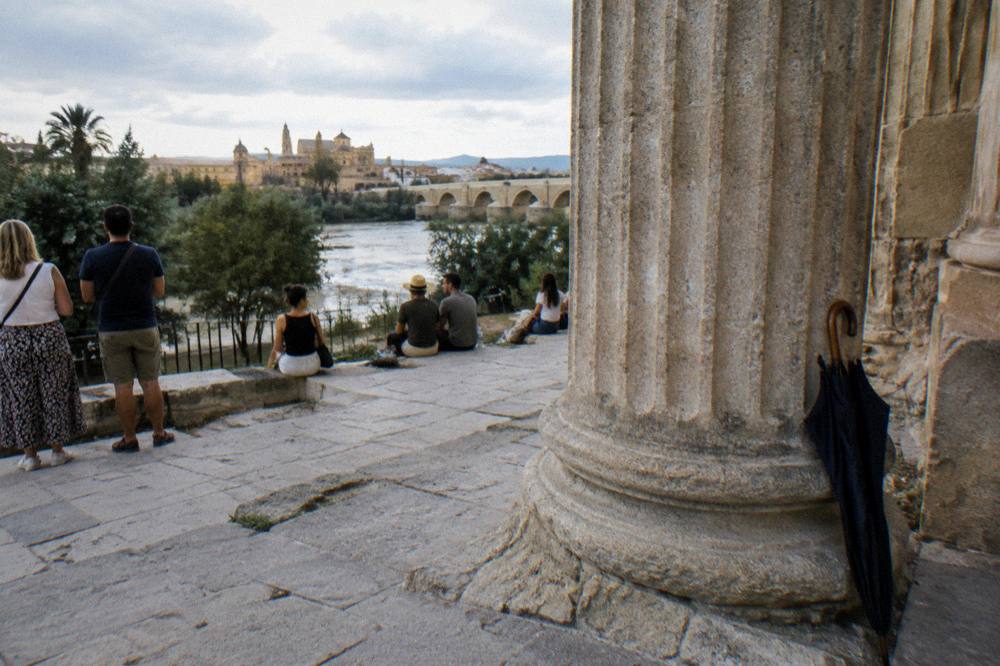
These are not consolation prizes. The view from the Mirador de la Calahorra on the south bank of the Roman Bridge is the classic postcard shot of the Mezquita-Catedral across the Guadalquivir, and the bridge and riverbank leading to it are free public space around the clock. You can stand there at eight in the morning or eleven at night and no one will ask you for anything. The Molino de la Albolafia, the old water wheel visible from the bridge, is another free riverside sight in public space.
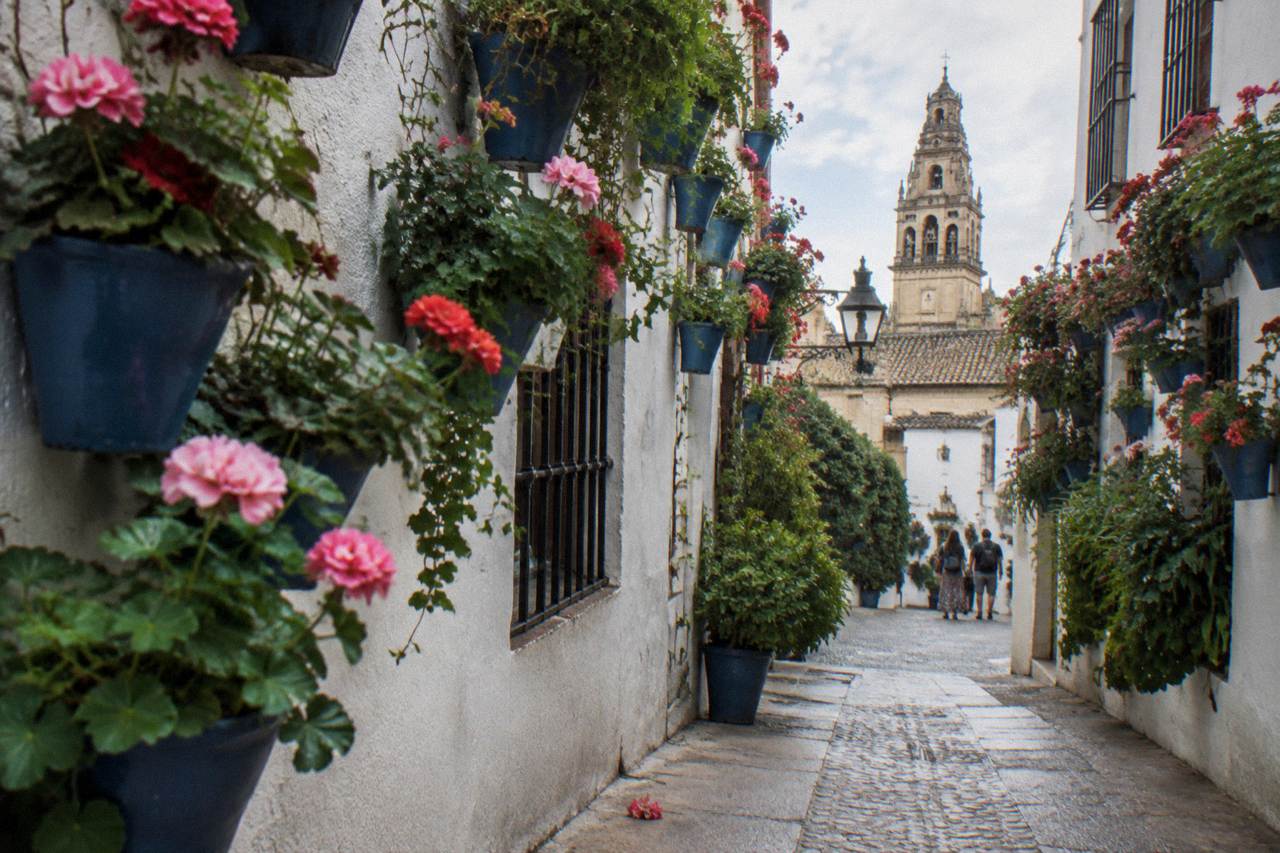
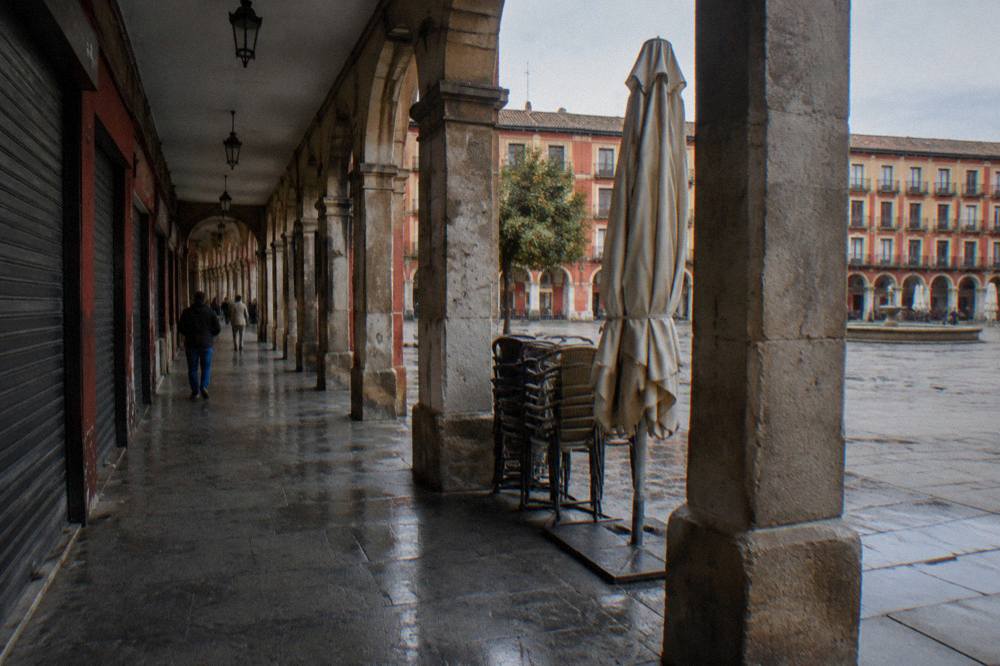
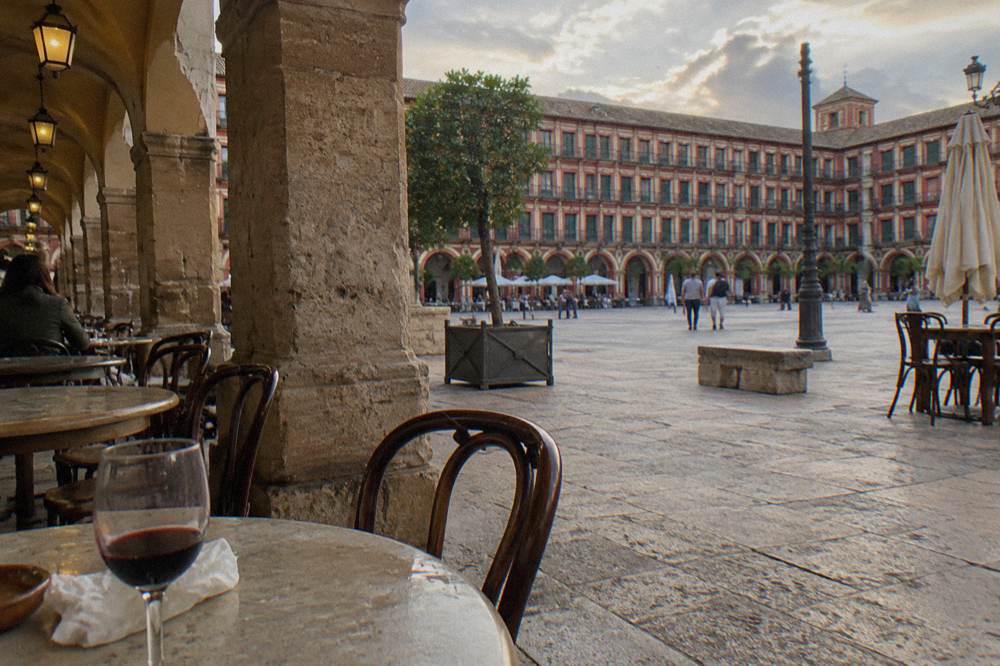
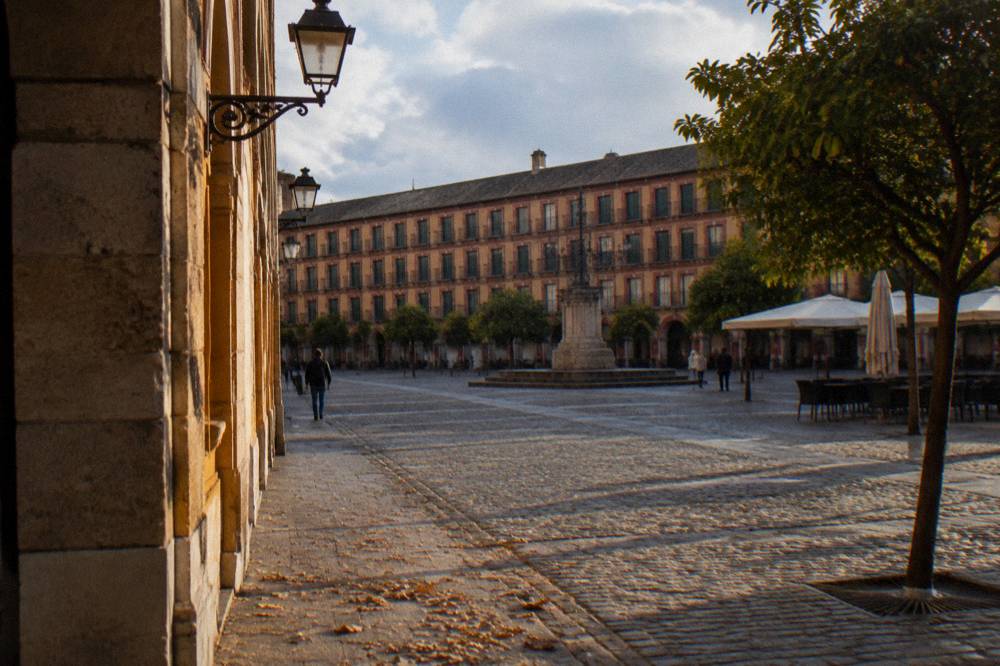
Inside the old town, the Juderia's lanes are the main free attraction in themselves. Calleja de las Flores is the narrowest and most photographed of them, a whitewashed alley hung with flower pots that opens onto a small courtyard with a view up to the Mezquita bell tower. It costs nothing because it is simply a street. Nearby, Plaza de Maimónides and Plaza de Judíos sit at the heart of the old Jewish quarter, and the streets around Puerta de Almodóvar carry the surviving city wall. On the other side of the centre, Plaza de la Corredera is a broad Castilian-style arcaded square, and Plaza de Capuchinos holds the Cristo de los Faroles, the Christ of the Lanterns, one of the city's most photographed corners after dark.
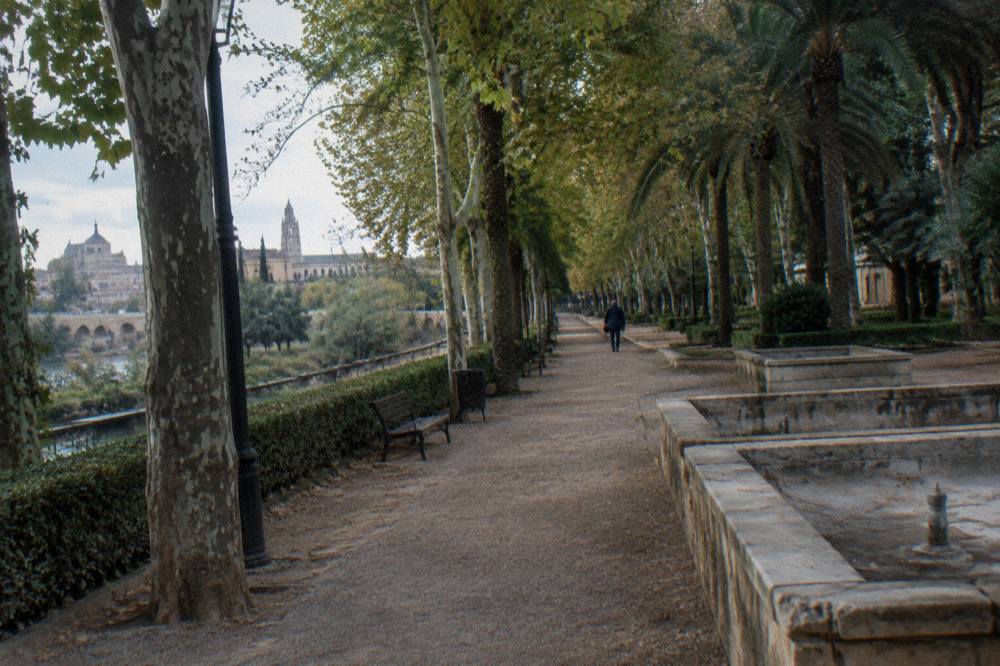
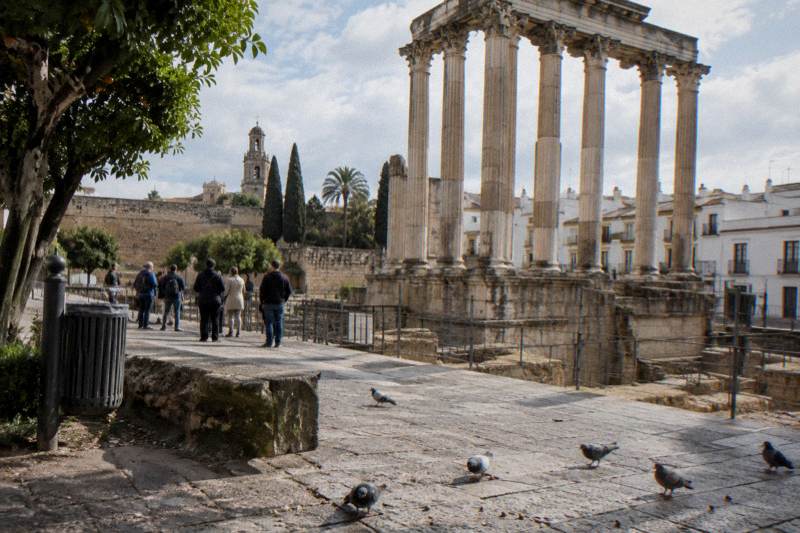
The Roman Temple on Calle Capitulares is free to look at from every side: its columns stand in the open air beside the city hall. The Mausoleo Romano by the Puerta de Gallegos is the same story, exterior visible from public ground. Further afield within walking distance of the centre, the Jardines de la Victoria and Jardines de la Agricultura are free public gardens, and Plaza de Colón holds the Mausoleo del Gran Capitán.
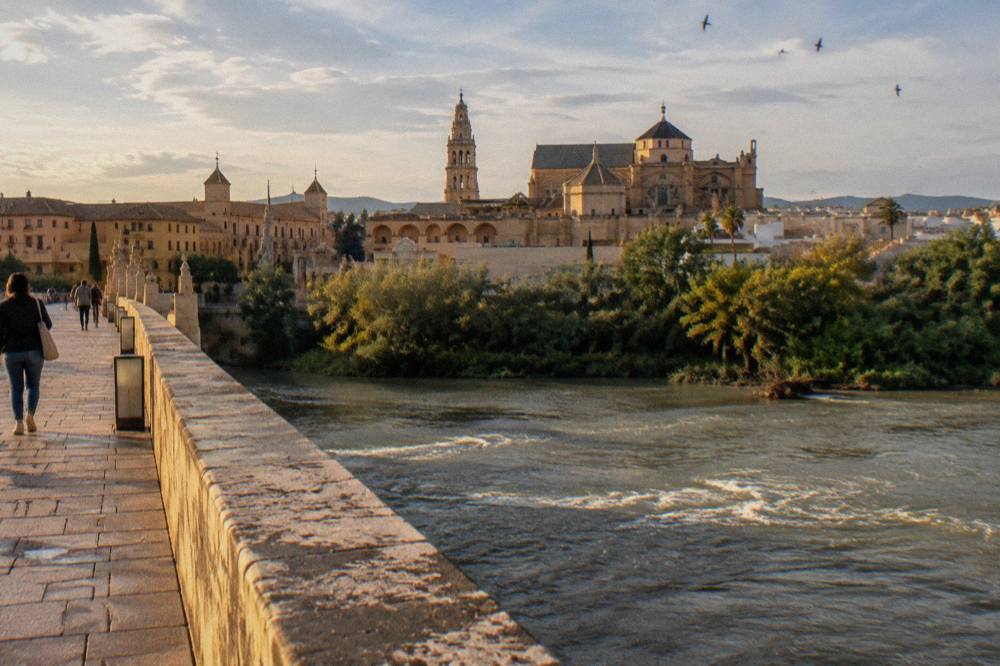
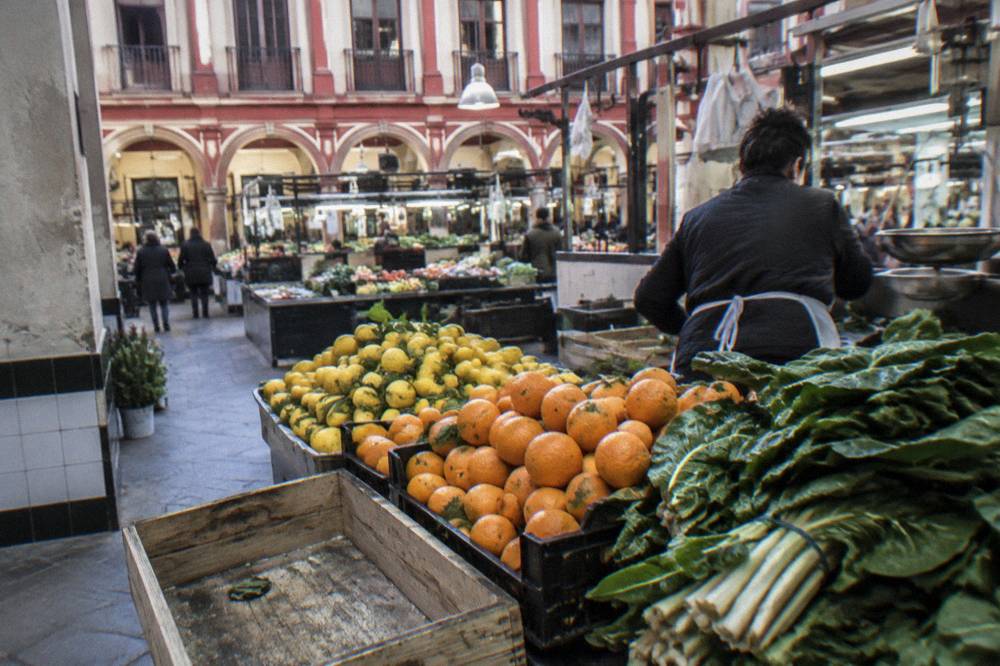
Markets add a free indoor option. The Mercado de la Corredera, also called Mercado Sánchez Peña, and the Mercado Victoria are both free to enter and browse, and the Zoco Municipal de Artesanías shows local craft work. None of these carries an entry charge.
| Free place, no condition | What you get | Type |
|---|---|---|
| Puente Romano and riverbank | Bridge crossing, riverside walk, Mezquita views | Public space |
| Mirador de la Calahorra | South-bank viewpoint over the old town | Public space |
| Juderia lanes and Calleja de las Flores | The historic Jewish quarter streets | Public space |
| Plaza de la Corredera and Mercado de la Corredera | Arcaded square, indoor market | Public space, free entry |
| Templo Romano (exterior) | Roman columns on Calle Capitulares | Public space |
| Murallas and Puerta de Almodóvar | City wall and gate | Public space |
| Jardines de la Victoria and Agricultura | Public gardens | Public space |
| Plaza de Capuchinos | Cristo de los Faroles corner | Public space |
The complete picture of the old town's free geography, including every square and garden on this list, is set out in the free plazas and markets in Cordoba and free gardens and riverside in Cordoba guides, which cover each place in more detail.
Which Free Things In Cordoba Come With A Condition?
Three separate conditional regimes exist. The Mezquita-Catedral is free Monday to Saturday 8:30 to 9:30, last entry 9:20, for individual visitors only, no groups, and not on days of extraordinary celebration. Municipal museums are free for everyone on non-holiday Thursdays, the last two hours of opening. Junta de Andalucía museums, including Medina Azahara, are free every open day for accredited EU citizens only, with others paying EUR 0.30 to EUR 1.50.
The Mezquita-Catedral free slot is the single most misunderstood free offer in the city. It is a 60-minute early-morning slot, not a free visit of the building at will: general admission outside the slot is EUR 15. The slot excludes groups, and the bell tower, the night visit and the Fernandine route are separate tickets the free slot does not cover. From 1 January 2027 the Cabildo also starts optional official guided visits at an increase over the normal ticket, and from the same date every guide accredited by the Junta de Andalucía may show the interior. Whether the Capilla Mayor and Coro are open during the free slot is not stated, so treat the slot as early access rather than a full tour, and check the Cabildo's own schedule before you go, since hours change for special events. The full breakdown, including who never pays at all, is in the Mezquita-Catedral guide.
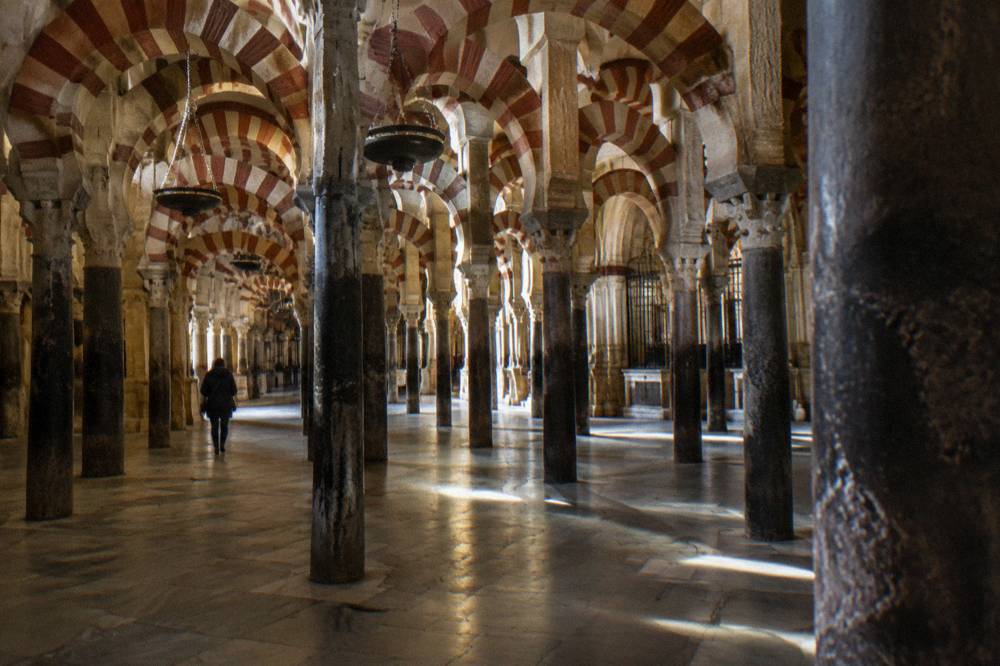
The municipal museums run a different scheme entirely. The Alcázar de los Reyes Cristianos, the Baños del Alcázar Califal, the Museo Julio Romero de Torres, the Museo Taurino and the Centro Flamenco Fosforito are free to everyone on non-holiday Thursdays for the last two hours of public access: 18:00 to 20:15 in winter, from 16 September to 15 June, and 12:00 to 14:15 in summer, from 16 June to 15 September, until capacity. They are also free on 28 February, 8 September, 27 September, 17 December and the Noche del Patrimonio, and the Julio Romero de Torres and Taurino museums additionally on 18 May. There is no Sunday free scheme at these museums. The free museums in Cordoba guide carries the full museum-by-museum detail.
The Junta de Andalucía museums are the third regime, and it is a nationality rule, not a day rule. Medina Azahara, the Museo Arqueológico, the Museo de Bellas Artes and the Sinagoga are free every open day, but only for accredited EU citizens. Everyone else pays EUR 1.50 at Medina Azahara and EUR 0.30 at the Sinagoga. Most readers of this site, from the UK, the US and beyond, fall into the paying side of that rule, so budget for it rather than assuming free entry.
Outside the museums, the big conditional free event is the Festival de los Patios, running 3 to 16 May 2027, when the private courtyards of San Basilio and the Alcazar Viejo district open free of charge, with no appointment and no reservation system announced. The Concurso de Rejas y Balcones, the balcony and railing competition, runs over the same dates. The patios are not free outside the festival, and Palacio de Viana, whose Patio de la Cancela is a free out-of-competition patio during the festival, charges EUR 8.50 for its patios the rest of the year. The Cordoba patios festival guide covers the whole event.
| Regime | Who runs it | Free for | The condition |
|---|---|---|---|
| Mezquita-Catedral early slot | Cabildo Catedral | Individual visitors | Mon to Sat 8:30 to 9:30 only, no groups, not on extraordinary celebration days |
| Municipal museums | Ayuntamiento de Cordoba | Everyone, until capacity | Non-holiday Thursdays, last two hours; plus fixed free days |
| Junta de Andalucía museums | Junta de Andalucía | Accredited EU citizens | Nationality rule; others pay EUR 0.30 to EUR 1.50 |
| Festival de los Patios | Ayuntamiento competition | Everyone | 3 to 16 May 2027 only; patios closed to the public the rest of the year |
If you want a guide through any of this rather than going alone, the pay-what-you-want walks below are all English-language options run by independent local guides on GuruWalk, each free to book with no fixed price.
What Costs Money Next To The Free Things In Cordoba?
The paid attractions cluster right beside Cordoba's free sights: general Mezquita admission runs EUR 15 with its bell tower at EUR 4, the El Alma de Cordoba night visit costs EUR 25, the Fernandine churches route is EUR 6, the Torre de la Calahorra charges EUR 4.50, Palacio de Viana's patios cost EUR 8.50, and the Alcázar applies a small fee outside its free windows.

The tower-versus-bridge split catches the most people. The Roman Bridge is free public space; the Torre de la Calahorra at its south end houses the Museo Vivo de Al-Andalus and charges EUR 4.50 to go inside. You can photograph the tower, cross past it and stand at the Mirador de la Calahorra without paying a cent: only the interior is ticketed. The same pattern repeats at the Mezquita, where the free morning slot covers none of the bell tower, the night visit or the Fernandine route. The Roman Bridge and Calahorra viewpoint guide separates the two cleanly.
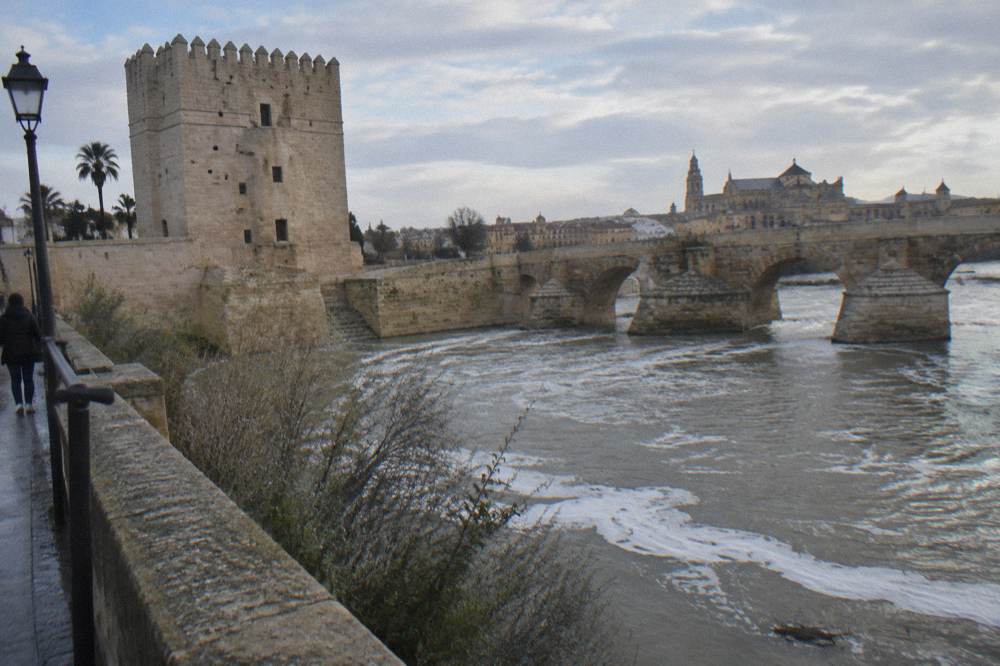
The Alcázar de los Reyes Cristianos deserves its own caution. Its price is contested between the municipal tariff and several secondary sites, so no figure is printed here: outside the Thursday window and the fixed free days, expect a small fee paid at the gate. Its gardens follow the same entry rule as the building. The Naturaleza Encendida night show in the Alcázar gardens is a separately ticketed paid event, with its winter schedule and price unannounced.
Beyond those, the clearly paid sights with no free slot found are the Palacio de Viana patios at EUR 8.50, the botanical garden, the zoo and Las Ermitas. The Medina Azahara shuttle from the visitor centre to the site is a paid extra, and its fare is not confirmed on an official page, so check at the visitor centre. The Festival de la Guitarra in the first half of July is a paid festival, unlike the free public events listed further down.
| Sight | Paid part | Price | Free part beside it |
|---|---|---|---|
| Mezquita-Catedral | General admission | EUR 15 | Mon to Sat 8:30 to 9:30 slot for individuals |
| Mezquita bell tower | Tower ticket | EUR 4 | Not covered by the free slot |
| El Alma de Cordoba | Night visit | EUR 25 | Separate ticket entirely |
| Fernandine route | Churches route ticket | EUR 6 | Individual church entry rules not verified |
| Torre de la Calahorra | Museum interior | EUR 4.50 | Bridge and viewpoint free |
| Alcázar de los Reyes Cristianos | Entry outside free windows | A small fee | Thursday two-hour window, fixed free days |
| Palacio de Viana | Patios | EUR 8.50 | Patio de la Cancela free during the patios festival |
The practical answer to the Mezquita entry price, if the early slot does not suit you, is to let a local guide structure the visit at no fixed cost. The Best Of Free Tour by Andaloo Tours, rated 4.94 out of 5 across 3,732 reviews on GuruWalk, runs 1 hour 45 minutes in English or Spanish from the Roman Temple on Calle Capitulares, and it is pay what you want: GuruWalk's own page for this walk shows no price at all.
When Can You Do The Free Things In Cordoba?
The public realm is free around the clock, every day of the year. The Mezquita slot runs Monday to Saturday mornings, never Sunday. Municipal museums are closed Mondays and free on Thursday afternoons or evenings by season. Junta museums open Tuesday to Sunday. The free festivals cluster between February and June, with Semana Santa 21 to 28 March 2027 and the patios 3 to 16 May 2027.
Timing decides which of the conditional frees you can actually collect. The Mezquita slot demands an 8:30 start, Monday to Saturday, with access stopping at 9:20, and Sunday is not in the slot at all; outside the slot, diocesan residents, children under 10 and the other listed categories enter free all day. Municipal museums close on Mondays, along with 1 January and 25 December, so their free Thursday window needs a weekday stay. Medina Azahara closes on most Mondays too, plus 1 January, 6 January, 1 May and 24, 25 and 31 December, and its hours shift by season, with the summer schedule adding evening opening from 21 June to 20 September.
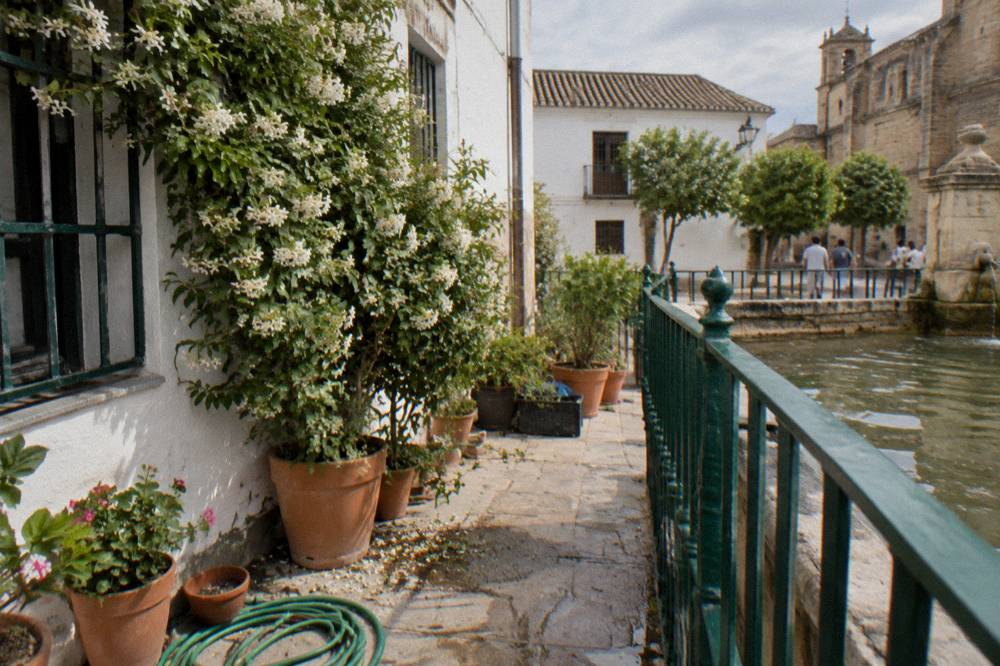
The festival calendar is where Cordoba gives away the most. In 2027 the free-to-watch programme includes Carnaval en la calle from 6 to 14 February, Semana Santa from 21 to 28 March, the Batalla de las Flores on 25 April, Cruces de Mayo from 28 April to 2 May, the Festival de los Patios and the Concurso de Rejas y Balcones from 3 to 16 May, the Ofrenda floral a San Rafael on 7 May, the Feria de Nuestra Señora de la Salud from 22 to 29 May, where walking the fairground is free though most casetas are members-only, and the Noche Blanca del Flamenco on 19 June. Navidad runs 1 December 2026 to 6 January 2027, free to watch in public space.
| Period | Free thing | Timing condition |
|---|---|---|
| Daily, 8:30 to 9:30 | Mezquita-Catedral slot | Monday to Saturday only, individuals |
| Non-holiday Thursdays | Municipal museums | Last two hours, winter 18:00 to 20:15, summer 12:00 to 14:15 |
| 28 Feb, 8 Sep, 27 Sep, 17 Dec | Municipal museums | All day, everyone, until capacity |
| Every open day | Junta museums for EU citizens | Nationality, not a day rule |
| 3 to 16 May 2027 | Festival de los Patios | Festival dates only, no appointment |
| 21 to 28 March 2027 | Semana Santa | Free to watch in public space |
| 19 June 2027 | Noche Blanca del Flamenco | One night, free |
The 2027 patios hours have not been published yet, so treat the festival dates as firm and the visiting hours as announced closer to the event on the festival's own pages. The Cruces de Mayo and Feria guide and the Noche Blanca del Flamenco guide carry the per-event detail.
How Do You Plan A Free Day In Cordoba?
A realistic free day needs one paid decision up front: whether the 8:30 Mezquita slot is worth the early start, because general entry otherwise costs EUR 15. Around that, the Juderia, Calleja de las Flores, the Roman Temple, Plaza de la Corredera and the Roman Bridge with its south-bank viewpoint form a walkable free loop. If the day is a non-holiday Thursday, the municipal museum window fills the last two hours of opening at no cost.
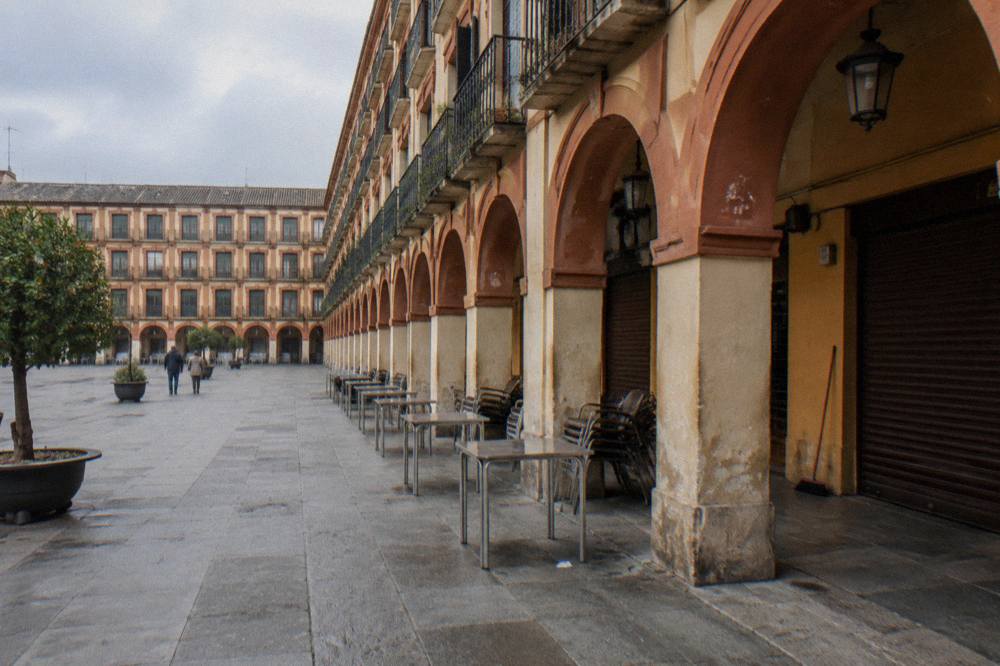
Start with the shape of the old town. The Roman Temple on Calle Capitulares sits at the top of the centre, the Juderia and the Mezquita cluster at the bottom by the river, and Plaza de la Corredera and Plaza de las Tendillas sit between them. A loop from the temple down through Tendillas and the Corredera into the Juderia, past Calleja de las Flores and the Plazas of Maimónides and Judíos, then out through the Puerta del Puente onto the Roman Bridge, is a full day on foot that touches only free ground. The Cordoba in one day and Cordoba on a budget guides build two variations of exactly this loop.
Slot the conditional items around the walking. The Mezquita early slot must come first, at 8:30. A Thursday visit inverts the day: spend the morning in the free streets, the afternoon walking the bridge and riverbank, then use the municipal museum window, 18:00 to 20:15 in winter, to close the day inside the Alcázar or the Julio Romero de Torres museum without paying. If you are not an EU citizen, treat the Sinagoga at EUR 0.30 and Medina Azahara at EUR 1.50 as minor paid items rather than free ones, since the free rule does not apply to you.
A pay-what-you-want walk slots neatly into a free day because it carries no fixed cost. The Heritage Free Tour by WeTour, 4.77 out of 5 across 752 reviews on GuruWalk, runs 1 hour 30 minutes in English or Spanish from Plaza de las Tendillas, the natural midpoint of the loop above.
If your day centres on the river end of town rather than the centre, the English Heritage Free Tour, guided by Enrique and rated 4.63 out of 5 across 630 reviews on GuruWalk, runs 1 hour 30 minutes in English from Plaza del Triunfo beside the Mezquita-Catedral, the corner where the Juderia, the bridge and the mosque-cathedral all meet.
Which Free Walking Tours Start In Central Cordoba?
The directory ships 26 pay-what-you-want walks, all listed on GuruWalk except the Historic Center Free Tour, the Monumental Free Tour and the Flowers Courtyards Tour, which run on freetour.com. Central meeting points are the Roman Temple on Calle Capitulares, Plaza de las Tendillas, Plaza del Triunfo by the Mezquita-Catedral, the Statue of Averroes at Puerta de Almodóvar and Plaza de la Corredera. All are free to book, with a tip at the end.
The meeting points matter because they let you anchor a walk to the part of town you are already in. The Roman Temple on Calle Capitulares is the single busiest meeting point on the roster: the Best Of Free Tour by Andaloo Tours starts there, 4.94 out of 5 across 3,732 reviews, running 1 hour 45 minutes in English or Spanish. The 2 Hour Small-Group English Tour by Jose Manuel, 4.88 out of 5 across 354 reviews, instead meets at the Statue of Averroes, Puerta de Almodovar. Plaza de las Tendillas anchors several more, including the Heritage Free Tour and the World Heritage Free Tour by Córdoba Más, 4.44 out of 5 across 25 reviews.
By the Mezquita, Plaza del Triunfo hosts the English Heritage Free Tour by Enrique, and Puerta del Puente on the same square hosts Artencordoba's 2 Hour Night Tour. The other night walks on the roster, including Córdoba Luminosa and the Mysteries and Legends tour, meet elsewhere and all run in Spanish only: there is no English night walk on this roster. The Statue of Averroes at Puerta de Almodóvar is the meeting point for the small-group English tour, which keeps its group small by design, and Plaza de la Corredera hosts the Max 8 People Free Tour by Sergio, 4.96 out of 5 across 607 reviews, which also caps numbers and runs in Spanish.
| Walk | Platform | Guide | Language | Meeting point |
|---|---|---|---|---|
| Best Of Free Tour, 1H45 | GuruWalk | Andaloo Tours | English, Spanish | Roman Temple, Calle Capitulares |
| Heritage Free Tour, 1H30 | GuruWalk | WeTour | English, Spanish | Plaza de las Tendillas |
| English Heritage Free Tour, 1H30 | GuruWalk | Enrique | English | Plaza del Triunfo, Mezquita-Catedral |
| 2 Hour Small-Group English Tour | GuruWalk | Jose Manuel | English | Statue of Averroes, Puerta de Almodovar |
| Historic Center Free Tour, 2 Hours | freetour.com | listed on freetour.com | English, Spanish | Puerta del Puente, Plaza del Triunfo |
Three walks run on freetour.com rather than GuruWalk: the Historic Center Free Tour, 8.9 out of 10 across 1,849 reviews shown on its freetour.com listing, the Monumental Free Tour, 8.5 out of 10 across 542 reviews, and the Flowers Courtyards Tour, 9.2 out of 10 across 164 reviews. Their reviews are on a ten-point scale on that platform and are not comparable with the five-point GuruWalk scores. The walks with additional costs on their listings, including the Medina Azahara tours and the patios tours, are pay what you want for the guiding while the entry is bought separately, and they run in Spanish only.
Routes are as each operator publishes them on its own GuruWalk or freetour.com listing and can change, so this site promises no stop on any walk; the meeting point is the planning fact. How the pay-what-you-want model works in practice, and what a fair tip looks like, is covered in how free walking tours work in Cordoba. If you are weighing the platform itself, whether GuruWalk is legit covers the question directly.
Mistakes That Trip People Up At The Free Things In Cordoba
The four recurring mistakes are treating the Mezquita slot as an all-day free visit, assuming the Junta museums are free for everyone, expecting private patios to be open outside the May festival, and confusing the Torre de la Calahorra with the free bridge beside it. Each mistake comes from merging the three separate free regimes into one imagined blanket free entry that does not exist.
The Mezquita mistake is the costliest. The free slot is 60 minutes, Monday to Saturday only, excludes groups, and covers none of the bell tower, the night visit or the Fernandine route. Arrive at 11:00 expecting free entry and the ticket is EUR 15. Sunday visitors in particular need to plan around it, since Sunday is not in the slot at all, and the is the Mezquita free on Sundays question exists precisely because of this trap.
The nationality mistake affects most non-EU readers directly. Medina Azahara, the Museo Arqueológico, the Museo de Bellas Artes and the Sinagoga are free for accredited EU citizens only; a UK or US visitor pays EUR 0.30 to EUR 1.50 at the same doors. The Thursday window mistake runs the other way: people assume the municipal Thursday free hours apply to the Junta museums or the Mezquita, and they do not, they apply only to the five municipal museums, and only for two hours.
The patios mistake is seasonal. Outside the Festival de los Patios, the private courtyards of San Basilio are family homes, not attractions. Palacio de Viana offers paid visits to its patios at EUR 8.50. The bridge mistake is smaller but common: the Torre de la Calahorra charges EUR 4.50 inside, while everything around it, the bridge, the riverbank, the viewpoint, is free public space. A final caution on prices: the Alcázar's fee is contested between sources, so confirm it at the gate rather than trusting any single figure you read online.
Common Questions About Free Sights In Cordoba
Is the Mezquita-Catedral free?
Only in the early slot: Monday to Saturday 8:30 to 9:30, last entry 9:20, for individual visitors, with no groups and not on days of extraordinary celebration. Outside that slot, general admission is EUR 15. People born or resident in the Diocese of Cordoba, children under 10 and the other listed categories enter free all day.
Are museums free on Sundays in Cordoba?
No. There is no Sunday free scheme. Municipal museums are free on non-holiday Thursdays for the last two hours of opening, plus fixed dates including 28 February, 8 September, 27 September and 17 December. Junta museums are free every open day for accredited EU citizens only, as a nationality rule rather than a day rule.
Is the Roman Bridge free?
Yes, the bridge, the riverbank and the Mirador de la Calahorra viewpoint on the south bank are free public space around the clock. The Torre de la Calahorra at the bridge's south end charges EUR 4.50 for its interior museum, but you cross the bridge and enjoy the views without paying anything.
Can you visit the patios of Cordoba for free?
Only during the Festival de los Patios, which runs 3 to 16 May 2027, with free entry, no appointment and no reservation system announced. The visiting hours for 2027 are not yet published. Outside the festival the private patios are homes, and Palacio de Viana's patios cost EUR 8.50.
Is Medina Azahara free?
For accredited EU citizens it is free every open day, as a Junta de Andalucía museum. Everyone else pays EUR 1.50. The site closes on most Mondays plus 1 January, 6 January, 1 May and 24, 25 and 31 December, and the shuttle from the visitor centre is a separate paid service.
Are the free walking tours in Cordoba really free?
They are pay what you want: no fixed price, you tip the guide at the end what you think the walk deserved. This directory ships 26 such walks, nearly all on GuruWalk, with three listed on freetour.com. Walks flagged with additional costs, such as the Medina Azahara and patios tours, cover the guiding at pay what you want while entry tickets are bought separately.