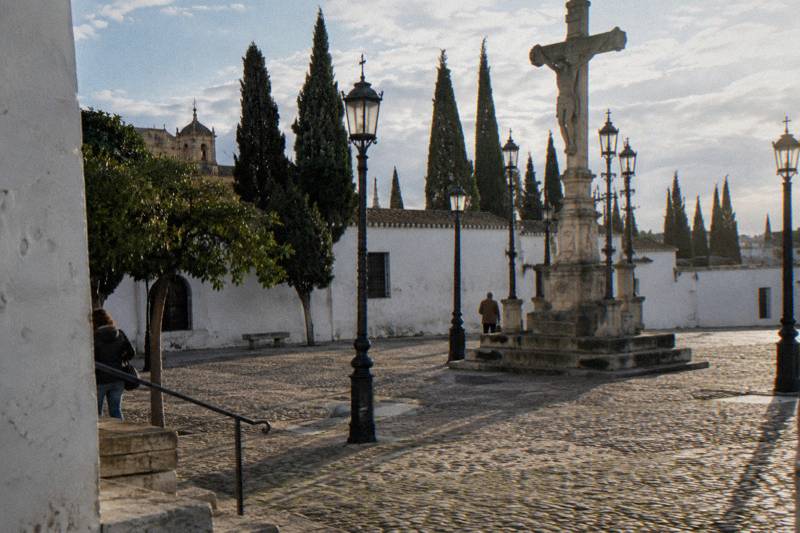
Free Plazas And Markets In Cordoba: Squares, Stalls And Street Life
Cordoba's squares and markets are the part of the city that costs nothing to enter. This guide separates the free plazas and walk-in markets from the parts where money starts, and shows where free walking tours meet.
In Short
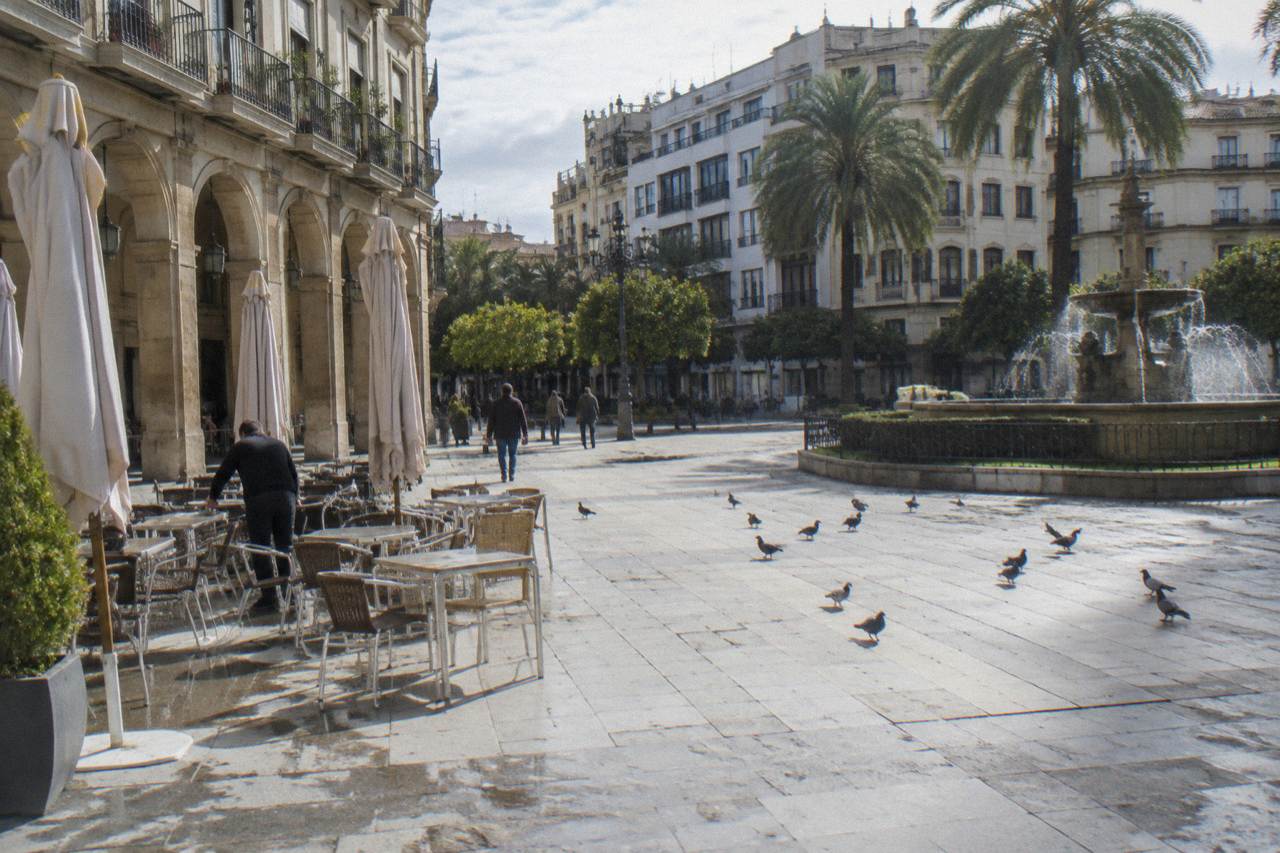
Cordoba's main plazas, including Plaza de las Tendillas, Plaza de la Corredera and Plaza del Potro, are public space and free at any hour. Mercado Victoria and the Mercado Sánchez Peña are free to walk into; you only pay for what you buy at the stalls. The paid parts sit nearby: municipal museums charge outside the free Thursday window, and the Mezquita-Catedral free slot runs Monday to Saturday 8:30 to 9:30 for individual visitors only.
Part of the Cordoba free-things guides, this page covers the squares and markets side of the city.
Quick Facts
| Question | Answer |
|---|---|
| Are the plazas free? | Yes, all the plazas here are public space, open around the clock |
| Are the markets free to enter? | Mercado Victoria, Mercado Sánchez Peña and the Zoco Municipal cost nothing to walk into |
| What costs money inside the markets? | Food, drink and crafts at the stalls; no entry fee at any of the three |
| Are museums near the plazas free? | Municipal museums are free on non-holiday Thursdays for the last two hours (winter 18:00 to 20:15, summer 12:00 to 14:15), for everyone until capacity |
| Closing days to know | Municipal museums close Mondays, 1 January and 25 December; market stall hours vary by trader |
| Nearest free walk platforms | GuruWalk and freetour.com both list free walking tours meeting in the plazas |
| Paid neighbours to budget for | Torre de la Calahorra EUR 4.50, Mezquita-Catedral bell tower EUR 4, Palacio de Viana patios EUR 8.50 |
Cordoba's street life happens in two kinds of place: the stone squares that have served as markets, bullrings and meeting points for centuries, and the covered markets that replaced them. Both are free to enter. The money in this city starts at the museum doors and the monument turnstiles, not in the plazas, and once you know where that line falls you can spend a full day in the open air without buying a ticket for anything. This guide walks through every square and market on the free side, names the parts nearby that do charge, and points to the free walking tours whose meeting points sit in these same plazas.
The site publishes a full directory of 26 free, pay-what-you-want walks alongside these attraction pages, and everything here follows the same rule: free means free, and where a condition applies, the condition travels in the same sentence.
Which Plazas In Cordoba Are Free To Enjoy?
Every plaza in this guide is unfenced public space, free to enter and free to linger in at any hour: Plaza de las Tendillas, Plaza de la Corredera, Plaza del Potro, Plaza de Capuchinos and Plaza de Colón, along with the Judería's smaller squares. There is no ticket, no closing gate and no charge to sit, photograph or walk through. The only costs you will meet in a plaza are the café tables that choose to operate there.
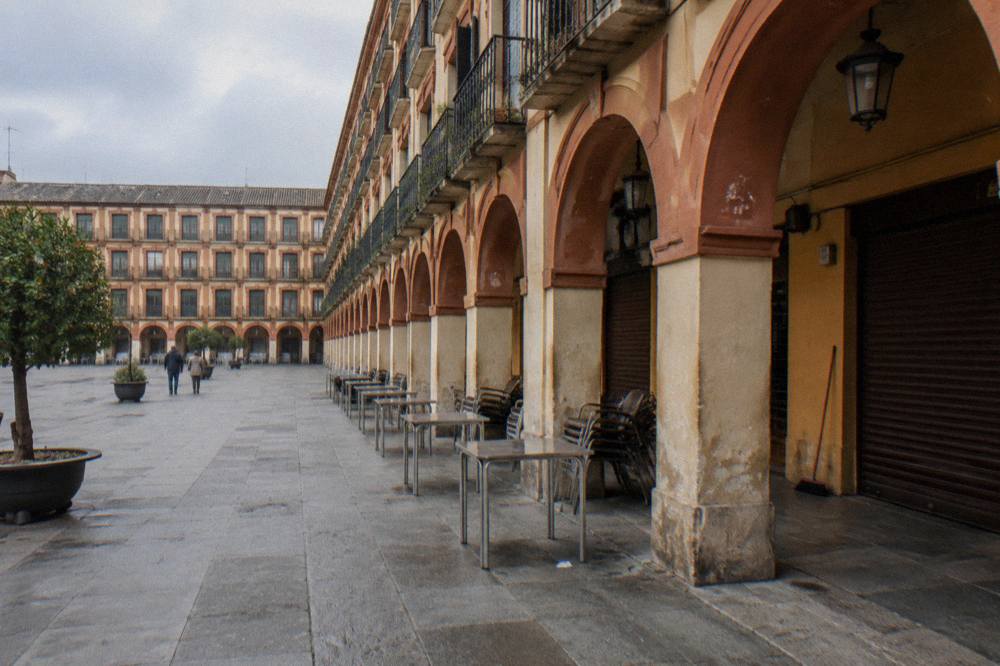
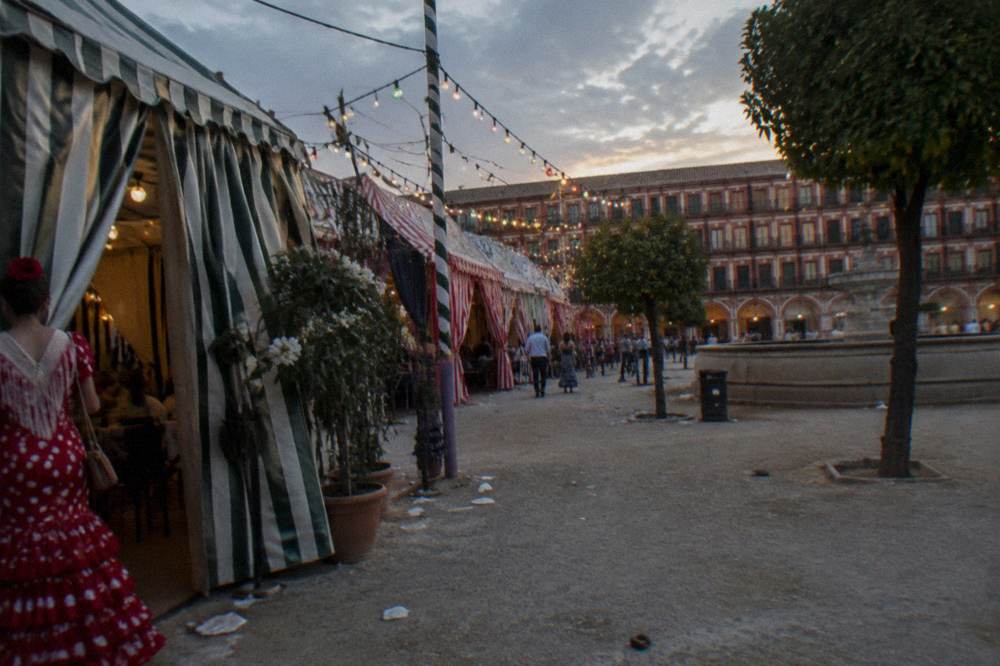
Plaza de las Tendillas is the city's working centre, the square locals cross on their way somewhere else and the meeting point several free walking tours use as a start. It is public space in the plainest sense: no fence, no fee, no hours. The square's role as a gathering point is exactly why it appears so often on walking-tour listings; guides pick it because nobody can be charged for standing in it. Around it, the shopping streets of the old centre run north towards Plaza de la Corredera.
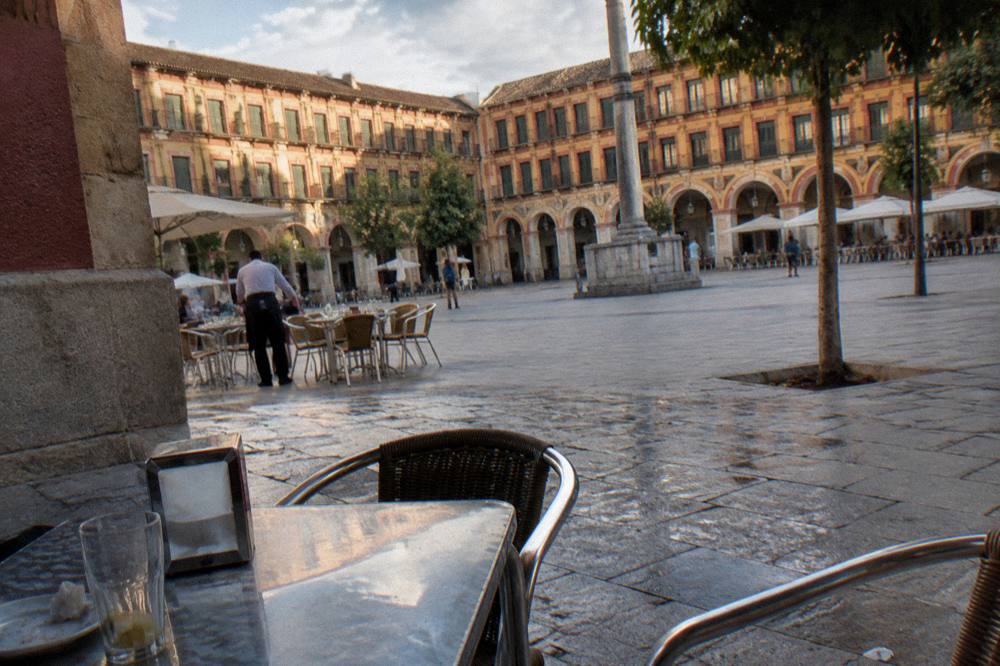
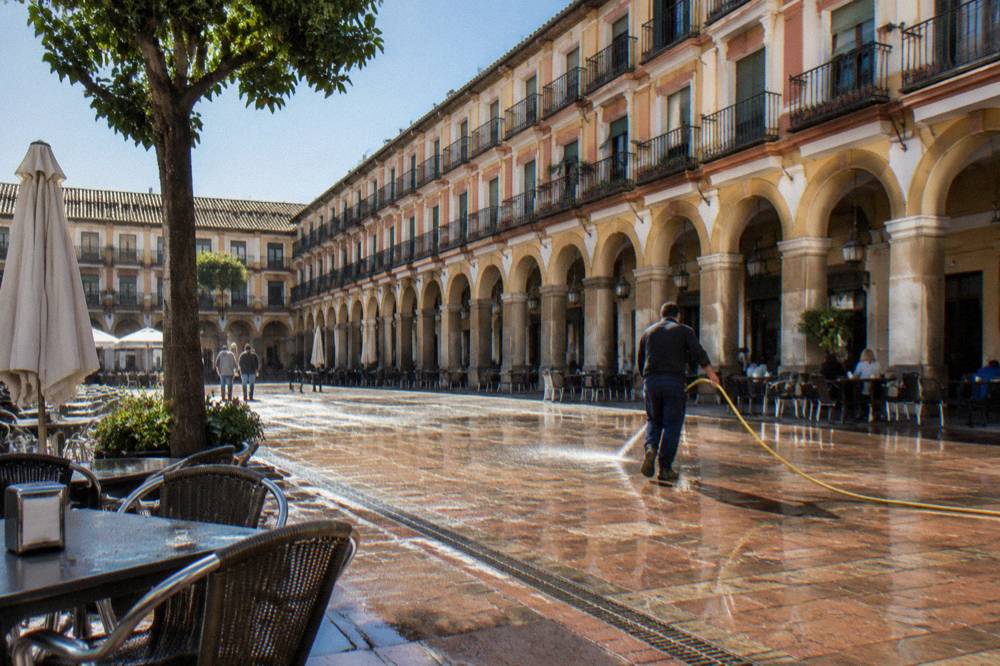
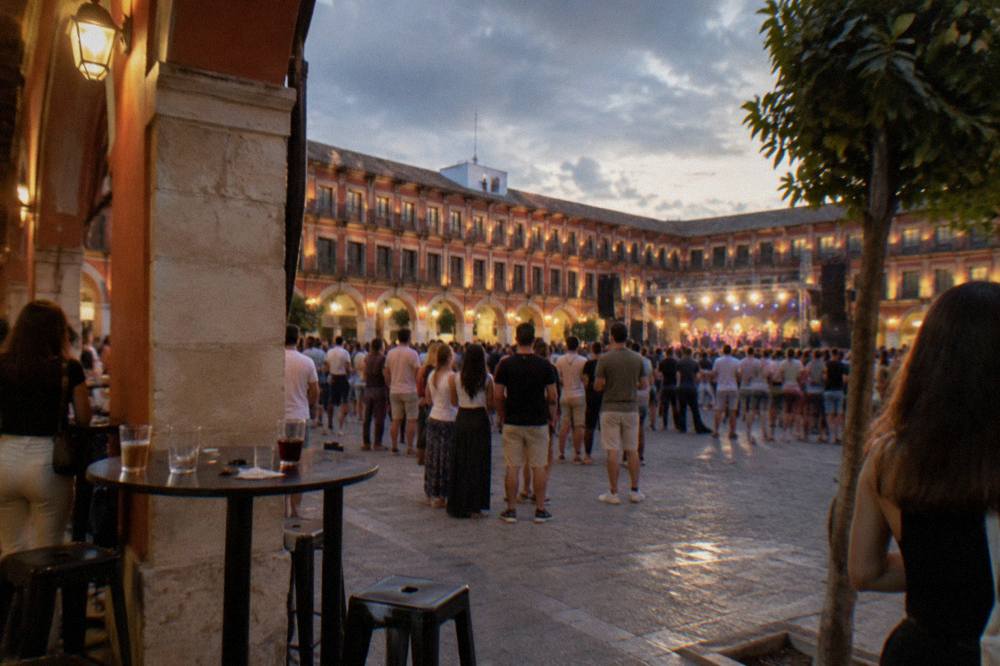
Plaza de la Corredera is the largest of the old squares and the most market-shaped. Its arcades were built for trading, and its history as a commercial and spectacle space is written into the uniform balconies that ring it. Today it holds the Mercado Sánchez Peña along one side, covered later in this guide, and a scatter of café tables in the open centre. Like every plaza here it is free public space, and the Axerquía neighbourhood around it is where several of the less-visited free walks begin.
Smaller but just as free, Plaza del Potro sits at the edge of the old town with the Posada del Potro on it, the building that houses the Centro Flamenco Fosforito. The plaza costs nothing; the flamenco centre inside is a municipal museum, which means it follows the municipal rule: paid outside its windows, free on non-holiday Thursdays for the last two hours of public access (winter 18:00 to 20:15, summer 12:00 to 14:15), for everyone until capacity. That split, free square with a conditionally free museum on it, is the pattern to watch all through this guide.
Plaza de Capuchinos, with the Cristo de los Faroles at its heart, and Plaza de Colón with the Mausoleo del Gran Capitín, round out the list. Both are open public space. The mausoleum is viewable from the plaza as exterior public space; no free interior visit has been confirmed. For a fuller read on the riverside and garden squares that also cost nothing, the free gardens and riverside guide covers the green side of the city.
| Plaza | Status | What sits on or near it |
|---|---|---|
| Plaza de las Tendillas | Free public space, 24 hours | Free walking-tour meeting point; shopping streets |
| Plaza de la Corredera | Free public space, 24 hours | Mercado Sánchez Peña on its edge; Axerquía walks nearby |
| Plaza del Potro | Free public space, 24 hours | Posada del Potro, housing the Centro Flamenco Fosforito |
| Plaza de Capuchinos | Free public space, 24 hours | Cristo de los Faroles |
| Plaza de Colón | Free public space, 24 hours | Mausoleo del Gran Capitán, exterior viewing |
| Plaza de Maimónides and Plaza de Judíos | Free public space, 24 hours | Judería lanes, Calleja de las Flores a short walk away |
Which Cordoba Markets Are Free To Walk Into?
All three of Cordoba's walk-in markets, Mercado Victoria, the Mercado Sánchez Peña in Plaza de la Corredera, and the Zoco Municipal de Artesanías, are free to enter with no ticket and no minimum spend. You pay only for what you buy at a stall. None of the three charges an entry fee, and the Zoco is a crafts market rather than a food hall, so browsing costs nothing by design.
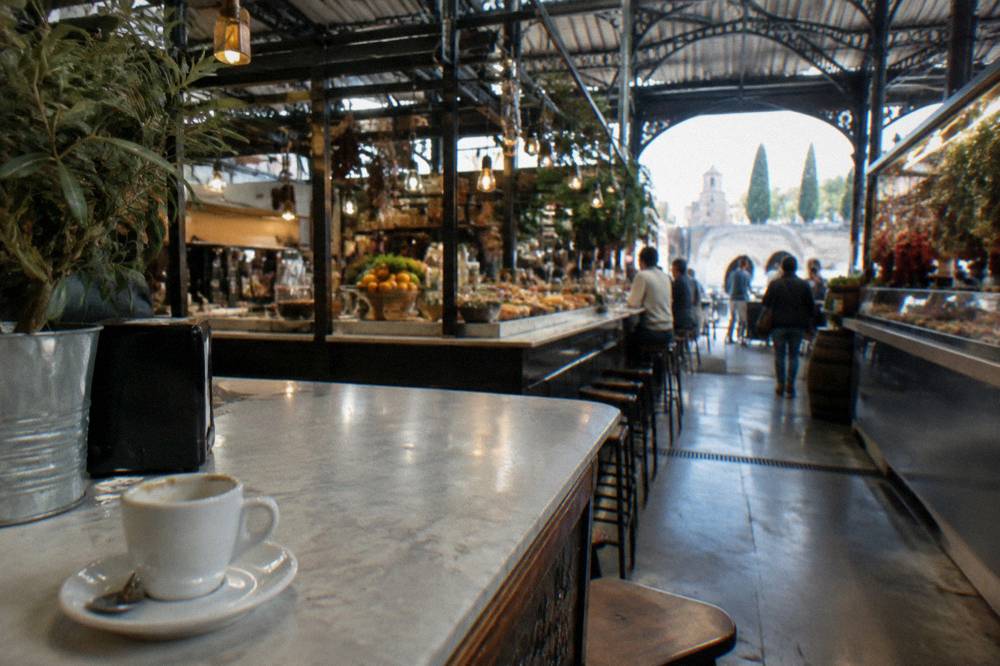
Mercado Victoria is the gastronomy market, an iron market hall refitted as a food hall. Entry is free; the stalls inside sell Basque pintxos, Cordoban salmorejo, sherry by the glass and the rest of the standard Andalusian repertoire, and each stall sets its own prices. The market works as a free sight even for visitors who buy nothing: the building itself is the attraction, and browsing the stalls costs exactly as much as you choose to spend. Stall opening hours vary by trader, so treat any individual stall's schedule as its own affair.
- 28 February
- 8 September
- 27 September
- 17 December
- Noche del Patrimonio
- 18 MayJulio Romero de Torres and Taurino only
Closed Mondays, 1 January and 25 December. No Sunday free scheme.
The Mercado de la Corredera, officially the Mercado Sánchez Peña, sits on the great arcaded square of the same name. It is a conventional neighbourhood food market: free to walk in, free to wander, produce and counters rather than a tourist layout. For anyone tracing the history of the square, the market is the modern remnant of the trading function the arcades were built for. Between the free plaza outside and the free market inside, a visit to the Corredera corner can run an hour without spending anything.
The Zoco Municipal de Artesanías is the crafts market, the place to see leather, silver and ceramics work rather than food. It is free to enter in the same way, and it is the closest thing the city centre has to a permanent artisan display. All three markets share one rule for the free-side visitor: the door costs nothing, the stall is where the money is.
If your interest runs more to squares than stalls, the plazas and street life in the Judería guide covers the old quarter's lanes, including the Calleja de las Flores, all of it public space on the same free footing.
| Market | Type | Entry | What you pay for |
|---|---|---|---|
| Mercado Victoria | Gourmet food hall | Free | Food and drink at the stalls |
| Mercado Sánchez Peña | Neighbourhood food market | Free | Produce and counter goods |
| Zoco Municipal de Artesanías | Crafts market | Free | Nothing, unless you buy craftwork |
What Costs Money In The Cordoba Markets?
Strictly nothing at the door: no market in Cordoba charges entry, and no stall is obliged to sell you anything. The money starts at the stalls, where food, drink and craftwork are sold at trader-set prices, and beyond the markets at the nearby monuments: the Torre de la Calahorra at EUR 4.50, the Mezquita bell tower at EUR 4 and Palacio de Viana's patios at EUR 8.50 are all separate paid tickets.
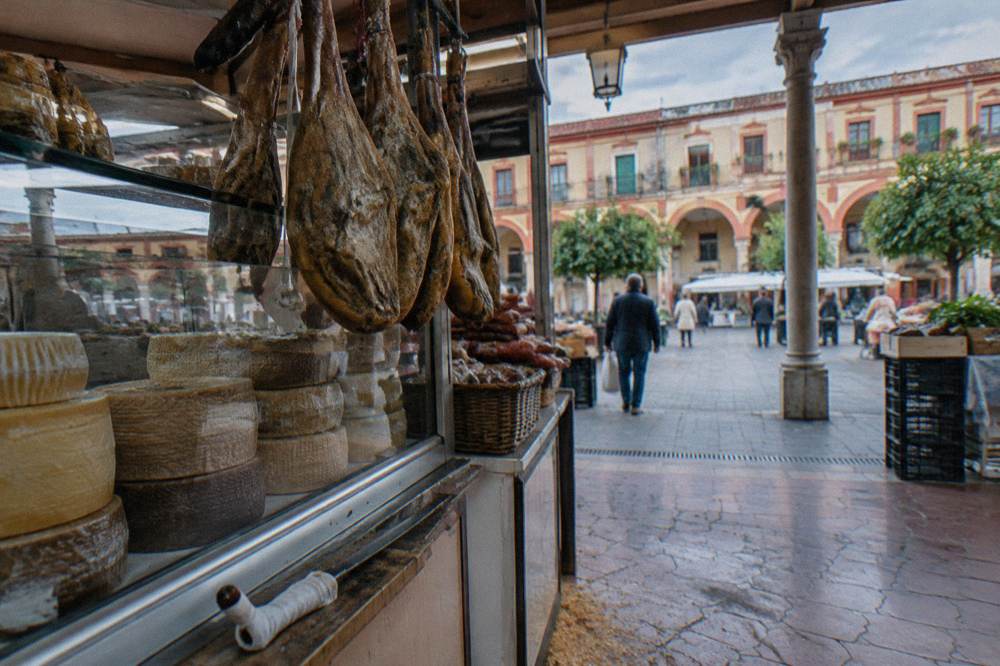
Inside the markets, everything is à la carte. Mercado Victoria's stalls each price their own tapas and drinks, and the market publishes no combined ticket or minimum; the same goes for the traders at the Mercado Sánchez Peña and the artisans at the Zoco. No planning range can be given for individual stalls because none is published, so treat stall prices as something to read at the counter. The structure is plain: entry is free, purchases are voluntary, and hours are set by each trader.
- 14 Spanish only
- 6 English and Spanish
- 6 English only
The paid neighbours are where a market walk can quietly accumulate cost. The Roman Bridge and the riverbank viewpoint are free public space, but the Torre de la Calahorra museum inside is a paid visit at EUR 4.50. The Mezquita-Catedral runs its free slot Monday to Saturday 8:30 to 9:30 (last entry 9:20) for individual visitors only, with no groups; the bell tower at EUR 4, the night visit El Alma de Cordoba at EUR 25 and the Fernandine route at EUR 6 are all separate tickets the free slot does not cover, and general admission outside the slot is EUR 15. These are the numbers a market-and-plaza day trips over the moment you head towards the river.
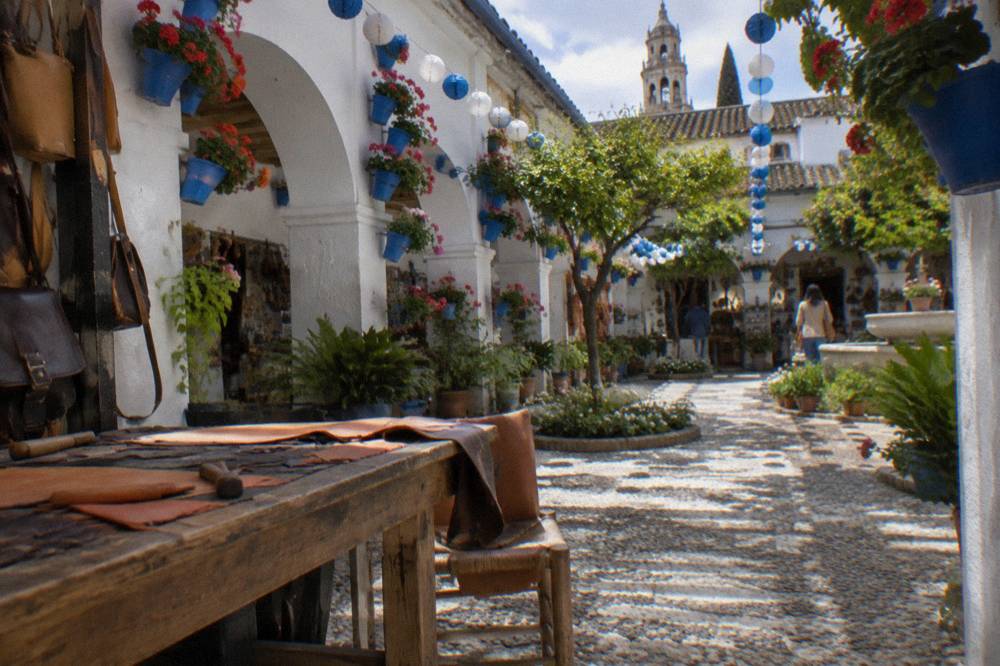
Palacio de Viana charges EUR 8.50 for its patios, and that price stands even during the Festival de los Patios, when its Patio de la Cancela is a free out-of-competition patio; the paid patios and the free one are separate things at the same address. The municipal museums on and around the plazas, the Alcázar de los Reyes Cristianos among them, charge a small fee outside their free windows, and the Alcázar's exact tariff is one this site does not print because the official tariff and secondary sources disagree. Paid it is, outside the windows; the figure is a matter for the ticket desk.
One paid item worth flagging inside a market context: the municipal museums sell a combined ticket, the Bono General, which is a paid product and not a free-side option. It only makes sense alongside the museums you actually intend to enter outside the Thursday window, and the free Thursday window itself is explained in full in the free museums in Cordoba guide.
When Can You Visit The Plazas And Markets?
The plazas are public space with no opening or closing hours at all, so the honest answer is any time. The markets keep trader hours: Mercado Victoria, the Mercado Sánchez Peña and the Zoco Municipal are open during trading days with individual stall schedules, while the municipal museums nearby open Tuesday to Sunday and close Mondays, 1 January and 25 December, with a free Thursday window in the last two hours of public access.
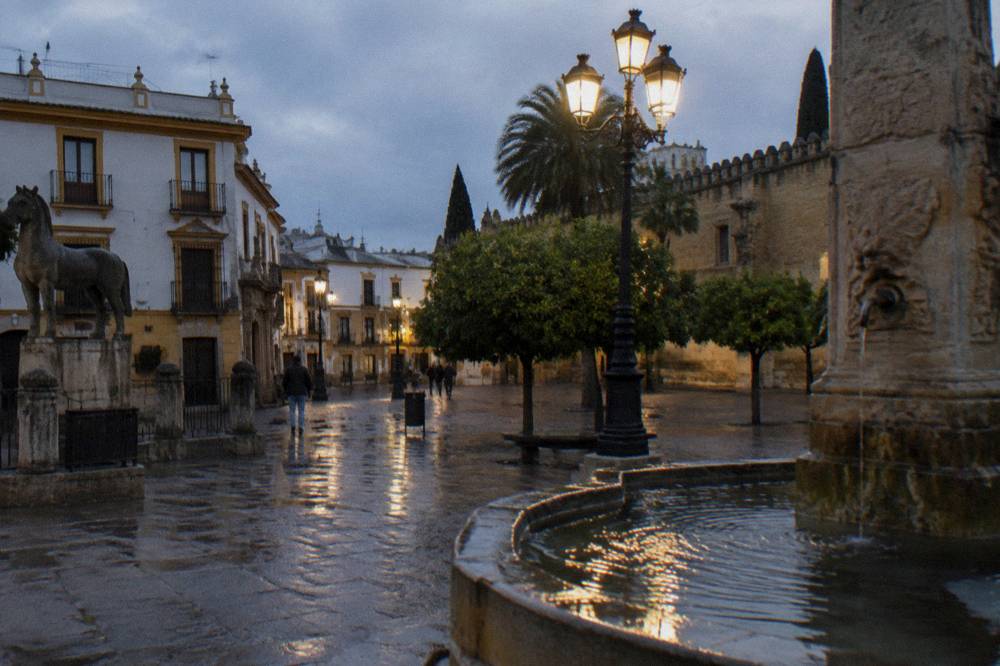
For the plazas, "when" is genuinely a non-question: public space does not close. The practical timing question is about the paid and conditional neighbours. Municipal museums, which include the Alcázar de los Reyes Cristianos, the Baños del Alcázar Califal, the Museo Julio Romero de Torres, the Museo Taurino and the Centro Flamenco Fosforito, run winter hours 16 September to 15 June, Tuesday to Friday 8:15 to 20:15, Saturday 9:30 to 17:30 and Sunday plus holidays 8:15 to 14:15; summer hours 16 June to 15 September run Tuesday to Sunday 8:15 to 14:15. The free Thursday window sits inside those hours: 18:00 to 20:15 in winter, 12:00 to 14:15 in summer, everyone admitted free until capacity. Everything else covered here is indexed on Free Things To Do In Cordoba.
- Plaza de las TendillasFree
- Plaza de la CorrederaFree
- Puerta de AlmodóvarFree
- Puente Romano and riverbankFree, 24 hours
- Torre de la CalahorraEUR 4.50 inside
Beyond Thursdays, the municipal scheme adds free days on 28 February, 8 September, 27 September, 17 December and the Noche del Patrimonio, with 18 May free at the Julio Romero de Torres and Taurino museums only. Those dates are for the municipal museums and no one else; the Junta de Andalucía museums run a different regime entirely, free every open day for accredited EU citizens only, with everyone else paying EUR 0.30 at the Sinagoga up to EUR 1.50 at Medina Azahara. The three regimes, Cabildo, Ayuntamiento and Junta, are separate and never merge.
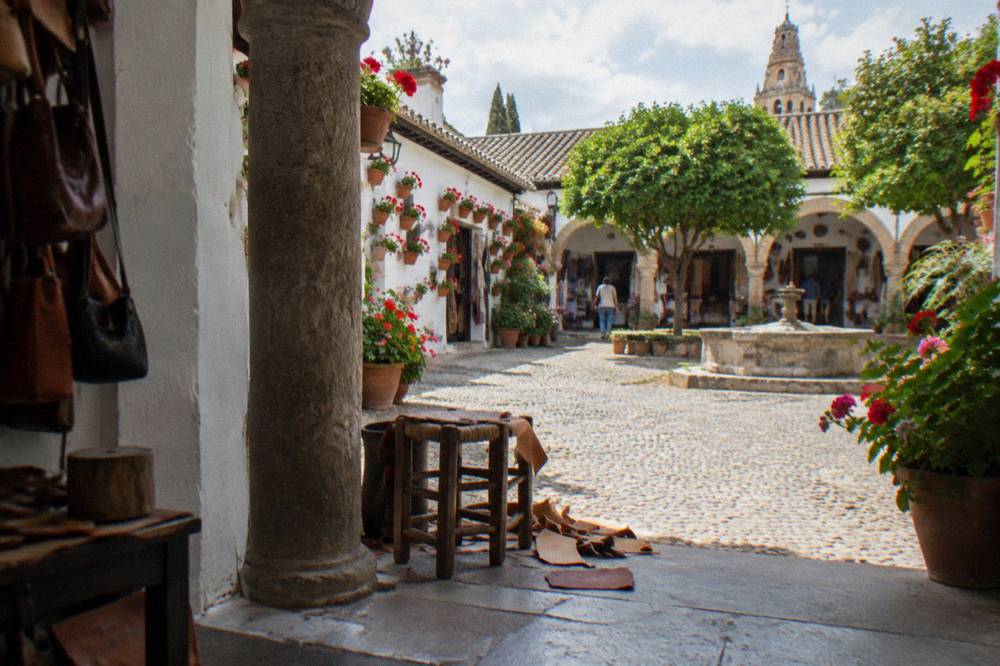
For the markets themselves, the schedule that matters is each trader's own. The 2027 city calendar, published by the city council on its official calendar page, sets the festival dates around which market and plaza life shifts: Carnaval en la calle 6 to 14 February, Semana Santa 21 to 28 March, the Festival de los Patios 3 to 16 May, the Feria de Nuestra Señora de la Salud 22 to 29 May and the Noche Blanca del Flamenco on 19 June. All of those are free to watch in public space, which includes the plazas in this guide.
| What | When open | Free window |
|---|---|---|
| Plazas (all in this guide) | Public space, no hours | Always free |
| Mercado Victoria | Trading days, per-stall hours | Entry always free |
| Mercado Sánchez Peña | Trading days, per-stall hours | Entry always free |
| Zoco Municipal de Artesanías | Trading days | Entry always free |
| Municipal museums | Tue to Sun; closed Mondays, 1 Jan, 25 Dec | Non-holiday Thursdays, last two hours; plus 28 Feb, 8 Sep, 27 Sep, 17 Dec, Noche del Patrimonio |
| Mezquita-Catedral free slot | Monday to Saturday 8:30 to 9:30, last entry 9:20 | Individual visitors only, no groups, not on days of extraordinary celebration |
How Do You Combine The Plazas And Markets With Other Free Sights?
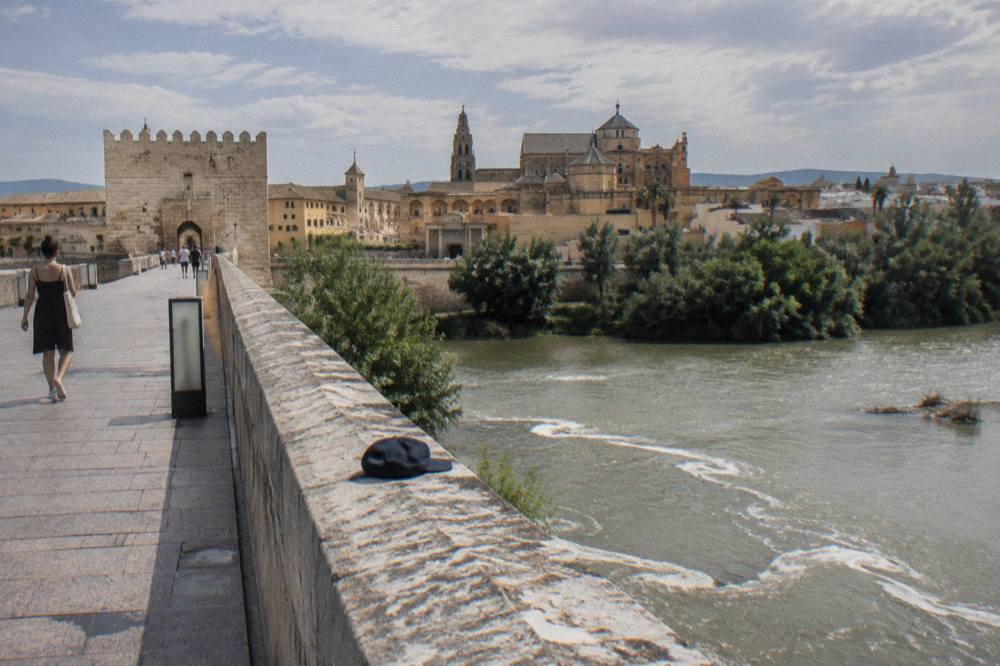
You can combine Cordoba's plazas and markets with its other free sights on one walking route: take the Mezquita's early free slot from 8:30 to 9:30, then walk from Plaza de las Tendillas through the Judería lanes to the Roman Bridge and the Guadalquivir riverbank, all public space needing no ticket, and close the day with the Thursday museum window.
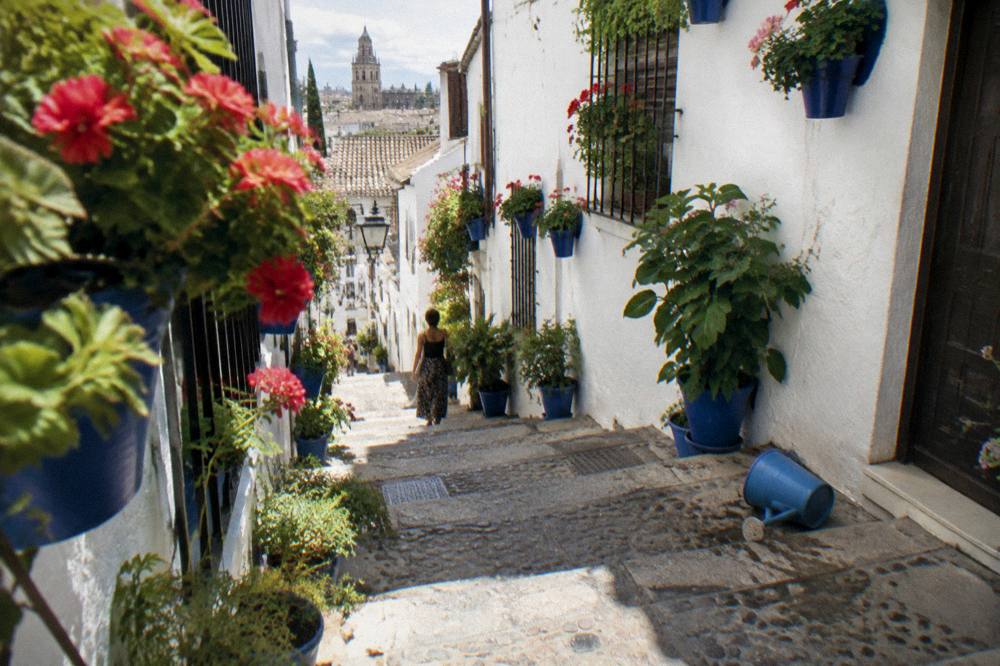
The geography makes this easy. The squares named here sit in two clusters: the Tendillas and Corredera group in the commercial centre and Axerquía, and the Potro and Capuchinos group at the old town's edge, with the Judería, the Calleja de las Flores and the Puerta de Almodóvar walls all free public space between them. Every one of those entries costs nothing, and the Cordoba in one day guide lays out a full free-day sequence if you want the whole route planned.
- 1ReservePick a date on the guide's GuruWalk page, or the freetour.com listing
- 2MeetBe at the stated meeting point before the start time
- 3Walk1h30 to 2h45 with an independent local guide
- 4PayPay what you want at the end, directly to the guide
The river end of that chain needs the usual split stated: the Puente Romano, the Mirador de la Calahorra on the south bank and the riverbank paths are free public space, while the Torre de la Calahorra museum inside the bridge-end tower is EUR 4.50. The same free-square, paid-part logic you use at the Posada del Potro applies at the bridge: stand and look for free, pay only if the museum inside is what you came for. The Roman Bridge and Calahorra viewpoint guide gives that stretch its own page.
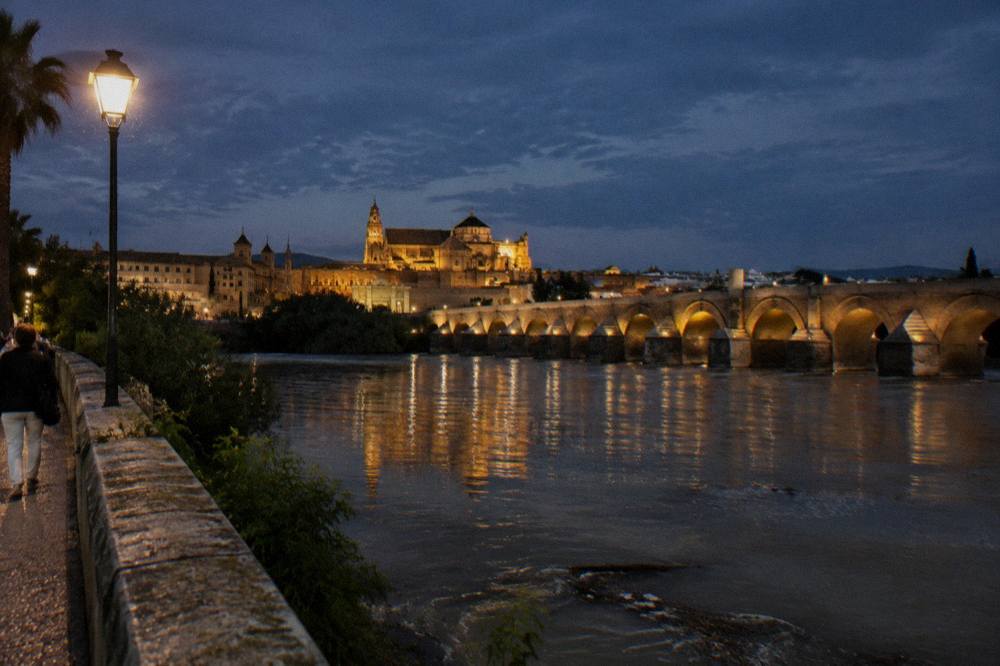
Timing is the multiplier. The Mezquita free slot is early, 8:30 to 9:30 with last entry 9:20, individual visitors only and never on days of extraordinary celebration; done that way, the rest of the day is free territory. The Thursday museum window, 18:00 to 20:15 in winter, turns an evening plaza walk into a free museum visit, and the municipal free days on 28 February, 8 September, 27 September and 17 December do the same on those dates. In May, the Festival de los Patios opens private courtyards for free from 3 to 16 May 2027, with no appointment, and the patios of San Basilio sit a short walk from the Corredera side of the city; the festival has its own guide at Cordoba patios festival.
- JanNavidad to 6 Jan
- FebCarnaval 6 to 14
- MarSemana Santa 21 to 28
- AprBatalla de las Flores 25Cruces de Mayo from 28
- MayCruces de Mayo to 2Patios 3 to 16Feria 22 to 29
- JunNoche Blanca del Flamenco 19
- Jul
- Aug
- Sep
- Oct
- Nov
- DecNavidad from 1 Dec
Every non-holiday Thursday of the year also carries the municipal museum window. Dates are 2026 to 2027.
One caution that belongs here rather than later: patios are free only during the festival. There is no free walk-in arrangement for private courtyards outside those dates, and Palacio de Viana's patios stay a paid EUR 8.50 visit all year. Anyone selling you a "free patios any day" idea is selling the festival's rule without the festival.
Which Free Walking Tours Meet In The Plazas?
Free walking tours use the plazas as meeting points because the squares are free public space, and several run from them: Heritage Free Tour and other GuruWalk walks meet at Plaza de las Tendillas, the 2 Hour Small-Group English Tour meets at the Statue of Averroes by Puerta de Almodóvar, and freetour.com listings including the Monumental Cordoba Free Walking Tour also start from Plaza de las Tendillas. Every walk is pay what you want.
- A time ruleCabildo CatedralMezquita-CatedralOne 60-minute slot, Monday to Saturday 8:30 to 9:30, individual visitors only.
- A nationality ruleJunta de AndalucíaMedina Azahara, Museo Arqueológico, Museo de Bellas Artes, SinagogaFree every open day for accredited EU citizens. Others pay EUR 0.30 to EUR 1.50.
- A day ruleAyuntamientoAlcázar de los Reyes Cristianos, Baños del Alcázar Califal, Julio Romero de Torres, Taurino, FosforitoFree for everyone on non-holiday Thursdays, last two hours of public access. Closed Mondays.
The Tendillas is the busiest free-tour meeting point in the city. On GuruWalk, the Heritage Free Tour run by WeTour, 1 hour 30 minutes, rated 4.77 out of 5 from 752 reviews, meets there in English and Spanish; the World Heritage Free Tour by Córdoba Más, 1 hour 30 minutes, rated 4.44 out of 5 from 25 reviews, meets there too; and the English Hidden Gems Free Tour by Cordobaecoexperience, rated 4.56 out of 5 from 98 reviews, also starts at the same square. On freetour.com, the Monumental Cordoba Free Walking Tour, 2 hours, rated 8.5 out of 10 across 542 reviews shown on its freetour.com listing, meets at Plaza de las Tendillas as well, and the Flowers Courtyards Tour, rated 9.2 out of 10 across 164 reviews on its freetour.com listing, starts from the same point.
The largest walk in the directory, the Best Of Free Tour by Andaloo Tours, 1 hour 45 minutes, rated 4.94 out of 5 from 3,732 reviews, meets at the Roman Temple in Calle Capitulares, on the plaza-and-monument edge of the old town rather than in a square itself. It runs in English and Spanish on GuruWalk. The Heritage Free Tour and the English Hidden Gems Free Tour, both carded above, give the Tendillas-start alternatives in the same category.
The east side of the old town has its own cluster. The 2 Hour Small-Group English Tour by Jose Manuel, rated 4.88 out of 5 from 354 reviews on GuruWalk, meets at the Statue of Averroes by Puerta de Almodóvar, next to the free city walls and gate that are public space in their own right. In the Axerquía, the Max 8 People Free Tour by Sergio, rated 4.96 out of 5 from 607 reviews, runs in Spanish from Plaza de la Corredera, and the Camino de Santiago Route walk by WeTour also meets at the Corredera, in Spanish. No Cordoba walk has a verified route beyond its meeting point and neighbourhood, so choose by language, duration, meeting point and rating rather than by any promised landmark list.
For English speakers who want the quieter side, the English Hidden Corners walk by Antonio, 1 hour 30 minutes from Plaza del Doctor Emilio Luque, is the related tour for this guide; it sits under 20 reviews on GuruWalk, so no score is shown, and its rating should be read as a small pool rather than a verdict. Its meeting point places it squarely in the Axerquía streets between the Corredera and the gardens, the neighbourhood this page's markets-and-squares route keeps crossing.
The Unknown Side Tour by WeTour, 1 hour 45 minutes from the Roman Temple in Calle Capitulares, is another English-language option in the same family, likewise under 20 reviews with no score shown. Both are pay what you want, like everything in the directory, and both are carded here because English-language walks in the hidden-corners category are the scarcer commodity in a roster where many walks run in Spanish only.
A paragraph on how these walks work, since it decides whether you book at all: every walk in this directory, all 26 of them, is free to join with payment at the end, at whatever you decide. Reservations can be cancelled without charge on both platforms this site covers, GuruWalk and freetour.com, and the mechanics are explained in the how free walking tours work in Cordoba post, with tipping norms covered separately in what to tip a free tour in Cordoba.
Mistakes That Trip People Up At Cordoba Plazas And Markets
The mistakes that cost money here are predictable: assuming museums are free on Sunday when the actual window is Thursday evenings, expecting the patios to be open free all year when only the festival opens them, calling the Mezquita free without its 8:30 to 9:30 slot and individual-only rule, and printing an Alcázar price when the official figures do not agree. Each one is a real trap for visitors, not a hypothetical.
- Mon8:30 to 9:30
- Tue8:30 to 9:30
- Wed8:30 to 9:30
- Thu8:30 to 9:30
- Fri8:30 to 9:30
- Sat8:30 to 9:30
- SunNo free slot
Last entry 9:20. Individual visitors only, no groups, not on days of extraordinary celebration.
Sunday is not a free day in Cordoba's municipal museums. There is no Sunday scheme at all: the free window for everyone is the last two hours on non-holiday Thursdays, plus the named free days of 28 February, 8 September, 27 September, 17 December and the Noche del Patrimonio. Visitors who plan a Sunday museum run on a "Spanish museums are free on Sundays" assumption arrive at full-price doors. The reverse trap also exists: the Junta museums, the Sinagoga among them, are free every open day but only for accredited EU citizens, with non-EU visitors paying EUR 0.30 at the Sinagoga and EUR 1.50 at Medina Azahara. A nationality rule and a day rule sit side by side in this city, and mixing them up is the single most common error.
The patios mistake is seasonal. Private courtyards are free to enter during the Festival de los Patios, 3 to 16 May 2027, no appointment; outside those dates there is no free walk-in arrangement, and Palacio de Viana charges EUR 8.50 for its patios all year. The 2027 festival hours are not yet published, so any specific opening time you read for next May is a guess. The city calendar for the festival is on the official patios festival site, which states free entry with no appointment for the festival itself.
The Mezquita mistake is condensation. The free visit is a 60-minute early slot, Monday to Saturday 8:30 to 9:30 with last entry 9:20, for individual visitors only, no groups, and not on days of extraordinary celebration. It is not "the Mezquita is free", and it covers none of the bell tower at EUR 4, the night visit at EUR 25 or the Fernandine route at EUR 6. General admission outside the slot is EUR 15. The Alcázar mistake is the mirror image: the municipal tariff and secondary sites disagree on the entry fee, so this site prints no figure, and any confident EUR 5 or EUR 7 you read elsewhere is quoting one side of a live disagreement. "A small fee outside the free windows" is the honest sentence.
The market mistake is milder: expecting a single schedule. No market here publishes one set of hours, because each trader keeps their own. Plan the market stop around the plaza, which never closes, and check stall days individually when a specific counter matters.
Common Questions About Cordoba Plazas And Markets
Are the plazas in Cordoba free?
Yes. Every plaza in this guide, Plaza de las Tendillas, Plaza de la Corredera, Plaza del Potro, Plaza de Capuchinos and Plaza de Colón, is unfenced public space with no entry charge and no opening hours. The only money you can spend in a plaza is at the café tables that choose to operate there.
Is Mercado Victoria free to enter?
Entry is free. Mercado Victoria is a gastronomy market in an iron market hall, and you pay only for food and drink at the stalls, each of which sets its own prices. Stall hours vary by trader, so the building is the reliable part of the plan and the stalls are the variable part.
Which Cordoba markets can you walk into for free?
All three covered markets on the free side: Mercado Victoria, the Mercado Sánchez Peña at Plaza de la Corredera, and the Zoco Municipal de Artesanías for crafts. None charges an entry fee or requires a purchase. The paid items in a market visit are stall purchases only.
Are museums free on Sundays in Cordoba?
No. There is no Sunday free scheme. Municipal museums are free on non-holiday Thursdays for the last two hours of public access, 18:00 to 20:15 in winter and 12:00 to 14:15 in summer, for everyone until capacity, plus named free days including 28 February and 17 December. Junta museums are free only for accredited EU citizens, on any open day.
Which free walking tours meet in Plaza de las Tendillas?
Several. On GuruWalk, the Heritage Free Tour by WeTour, the World Heritage Free Tour by Córdoba Más and the English Hidden Gems Free Tour by Cordobaecoexperience all meet there. On freetour.com, the Monumental Cordoba Free Walking Tour and the Flowers Courtyards Tour also start from the square. All are pay what you want.
What costs money near the plazas and markets?
The monuments and museums: the Mezquita-Catedral is EUR 15 outside its free 8:30 to 9:30 slot, its bell tower is EUR 4, the Torre de la Calahorra is EUR 4.50 and Palacio de Viana's patios are EUR 8.50. Municipal museums charge a small fee outside the Thursday window. The plazas and market doors themselves cost nothing.