The Roman Bridge And The Calahorra Viewpoint: Free Bridge, Paid Tower
The Roman Bridge costs nothing to cross, the south-bank viewpoint beside the Calahorra costs nothing to stand on, and only the tower's interior museum carries a ticket. Here is exactly where the free part ends.
In Short
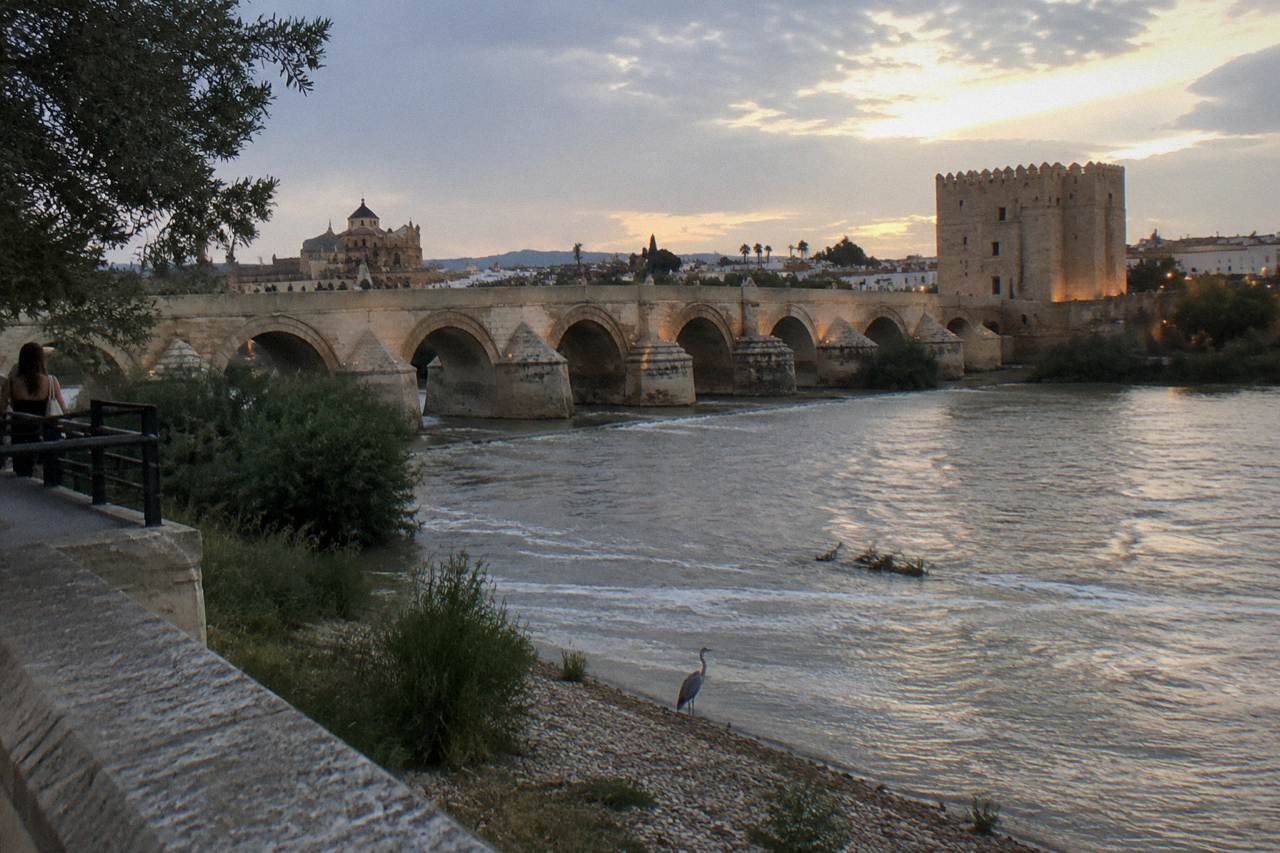
The Roman Bridge and the Calahorra viewpoint are free, open public space with no ticket, no gate and no closing time. The Torre de la Calahorra inside is a paid museum at EUR 4.50. The riverbank, the Puerta del Puente, the Triumphal arch of San Rafael and the Molino de la Albolafia viewpoint are all free.
The Roman Bridge is one of the few big sights in Cordoba that asks nothing of your wallet: no ticket desk, no timed entry, no queue for a scanner. You walk out over the Guadalquivir, you look back at the Mezquita-Catedral skyline, you cross to the far bank and you stand at the Mirador de la Calahorra, and the whole circuit stays in free public space. The one paid piece sits right at the southern end: the Torre de la Calahorra, a museum inside the tower, which charges EUR 4.50. This guide separates the free layers from that single ticket so you know exactly what you are and are not paying for. It is part of the Free Things To Do In Cordoba guides series, covering free things to see and do across the city.
Quick Facts
| Question | Answer |
|---|---|
| Is the bridge itself free? | Yes, free public space, 24 hours |
| Is the Calahorra viewpoint free? | Yes, the south-bank mirador is free public space |
| What costs money? | The Torre de la Calahorra museum inside, EUR 4.50 |
| Free things on the north bank | Puerta del Puente, Triunfo de San Rafael, Plaza del Triunfo |
| Free riverside spots | Paseo de la Ribera, the Guadalquivir banks, Molino de la Albolafia |
| Any closing days for the free parts? | No, the bridge and riverbank are open public space |
| Nearest free walk platform | GuruWalk, with walks meeting at Plaza del Triunfo and Puerta del Puente |
Is The Roman Bridge Free To Walk?
Yes, the Roman Bridge is completely free to walk, at any hour, in either direction, with no ticket, no gate and no capacity limit. It is unfenced public space across the Guadalquivir, the same legal status as any street in the city, and the only paid element anywhere on it is nothing at all: the ticket office belongs to the tower on the far bank, not to the crossing itself. One of the free walks starts in this part of the city: English Heritage Free Tour, 1H30.
The bridge is recorded in the city's free-attractions data as open public space, available around the clock. That classification matters more than it sounds. Several of Cordoba's headline sights are conditional: the Mezquita-Catedral free visit exists only inside a Monday to Saturday 8:30 to 9:30 slot, the municipal museums open free only in a Thursday window, and the Junta museums are free only for accredited EU citizens. The bridge belongs to none of those regimes. There is no condition, no nationality rule, no day of the week to remember.
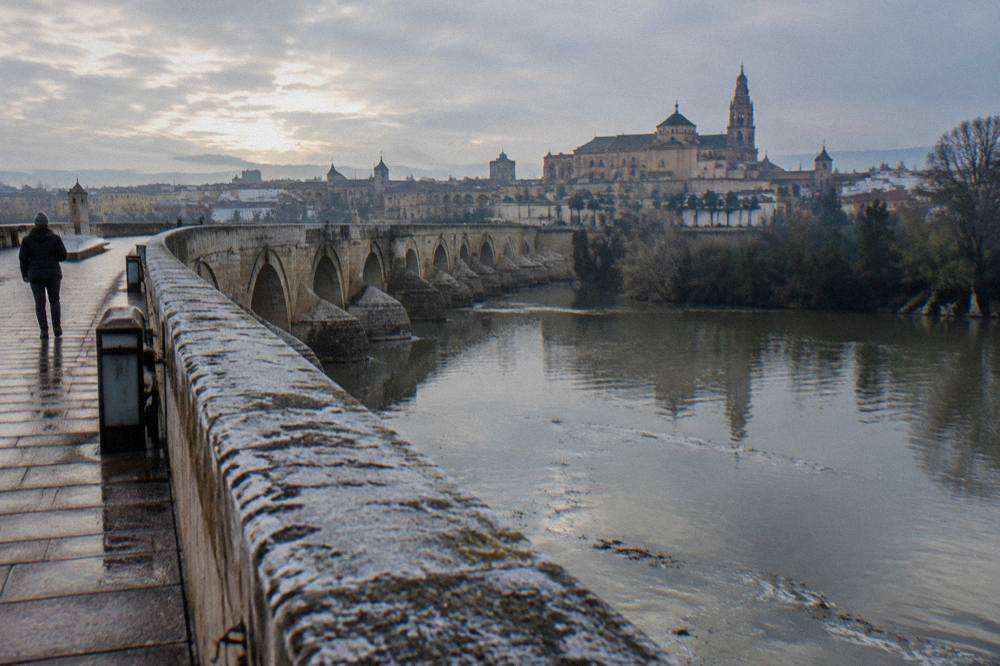
What you get from the crossing is the single best free panorama of the historic centre. The Mirador de la Calahorra, the raised south-bank viewpoint at the bridge's far end, is free public space too, and from that side you face the whole north bank: the Puerta del Puente, the Triunfo de San Rafael, and above them the Mezquita-Catedral with its bell tower. Nothing between your feet and that view costs anything.
Two practical points complete the picture. First, the bridge is pedestrian space and open public space, so you are walking it among other people on foot rather than among vehicles. Second, because it is public space, there is no official schedule to check and no announcement list; the only reason the crossing would ever be unavailable is exceptional city activity, which is not announced in advance, so treat the bridge as simply always open.
What Is Free Around The Roman Bridge?
Four named free sights cluster within the bridge's immediate orbit on both banks: the Puerta del Puente and the Triunfo de San Rafael on the north side, the Mirador de la Calahorra on the south side, and the Molino de la Albolafia waterwheel viewpoint on the riverbank. All are recorded as free public space, all are unfenced, and none carries an entry rule of any kind.
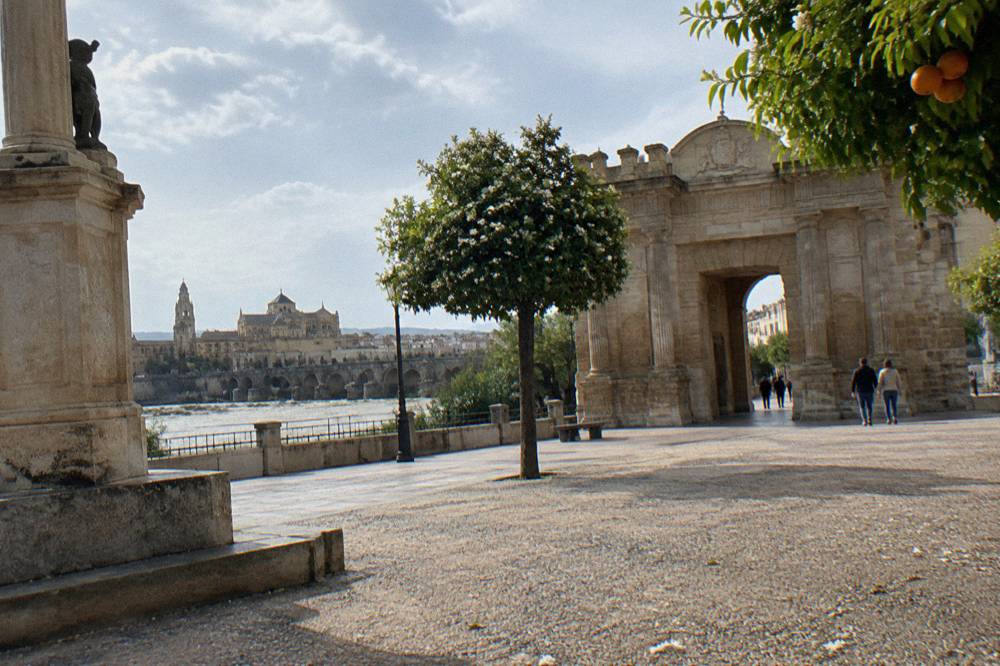
On the north bank, the Puerta del Puente and the Triunfo de San Rafael together form a single stretch of free open public space. The Puerta del Puente stands at the bridge's city end; the Plaza del Triunfo beside it is the open square where, usefully for this guide, several free walking tours choose to meet. Both are free to walk through at any time, in the same way the bridge itself is.
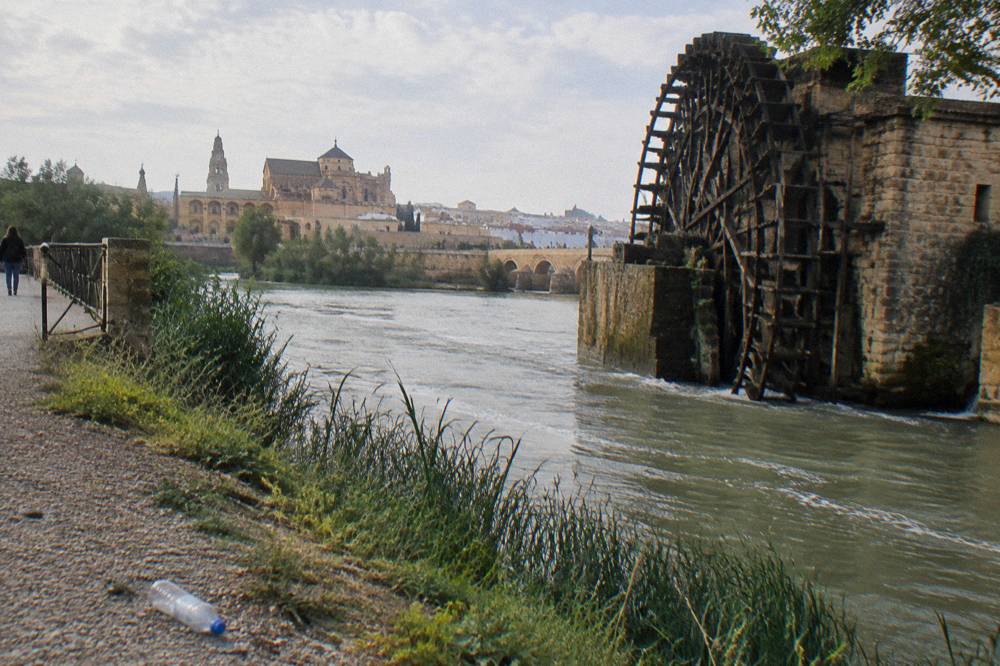
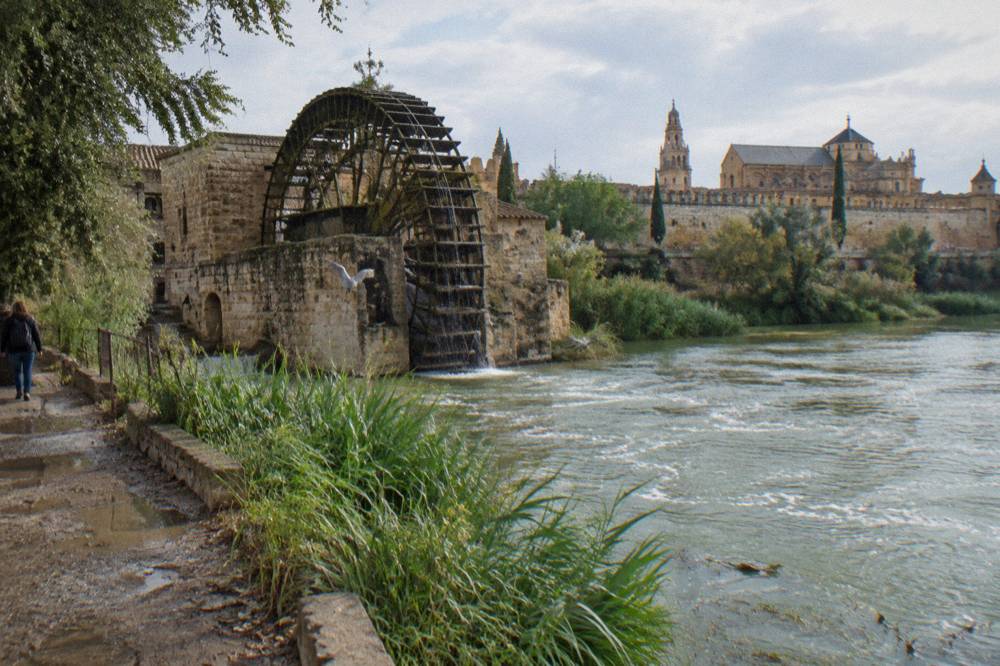
On the river itself, the Molino de la Albolafia, the old waterwheel on the Guadalquivir, is a free open-space viewpoint recorded on the city's list. It is one of the quietest free items near the bridge precisely because it sits low by the water rather than on the crossing, and it costs nothing to stand at. The Paseo de la Ribera and the wider Guadalquivir riverbanks complete the set: the data files them as free public space, 24 hours, running along the water on either side. One of the free walks starts in this part of the city: English Heritage Free Tour, 1H30.
Put together, the free layer around the crossing is bigger than most visitors assume. People budget for this corner of the city as if it were a monument zone, when in fact the only thing you can pay for, short of walking away up the hill, is one tower interior. Everything else, gate, arch, square, wheel, banks and bridge, sits in the same free regime.
If you want the surroundings explained rather than just walked, free touring covers this end of town well. The World Heritage free walking tour, the English hidden gems walk and the small-group English tour are all GuruWalk listings you can reserve for nothing and pay by tip.
What Costs Money At The Calahorra Tower?
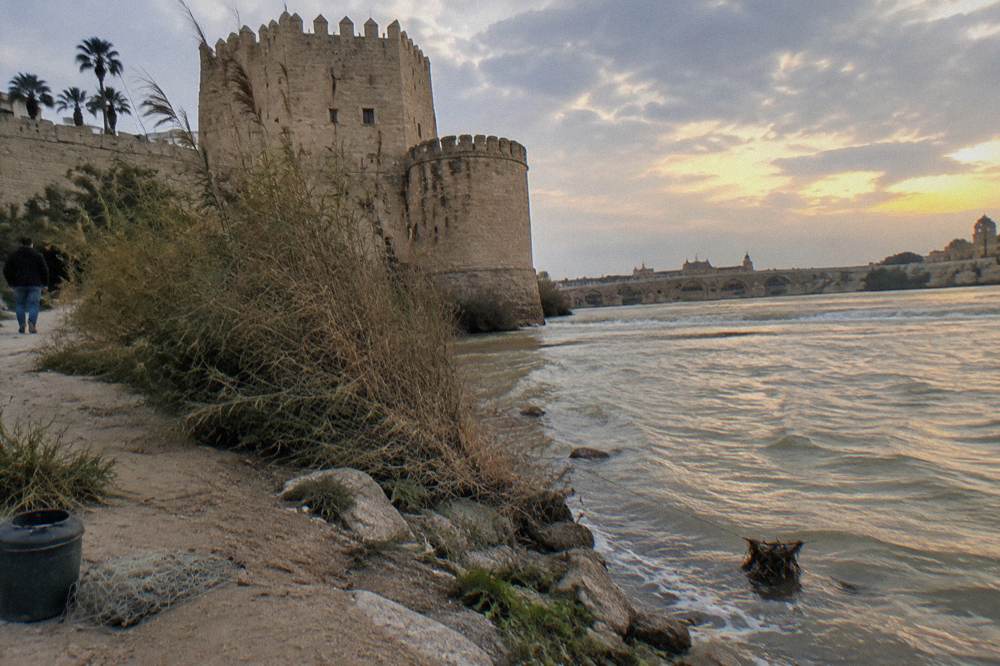
The Torre de la Calahorra charges EUR 4.50 to go inside, where it operates as the Museo Vivo de Al-Andalus. That single ticket is the only paid item in the entire bridge-and-viewpoint cluster: the outside of the tower, the mirador next to it and the bridge approach are all free public space, so the fee buys the interior museum only. A free walk meets close to this area, English Heritage Free Tour, 1H30.

The tower itself is a paid attraction, housing the Museo Vivo de Al-Andalus, with entry at EUR 4.50. The contrast with its surroundings is the whole point of this guide's title: you can spend a full hour at the bridge's south end, walk up to the mirador, photograph the tower from every angle, and never once be asked for money. The moment you want the inside, the ticket appears.
It helps to see the paid-versus-free split as a table, because the same logic repeats across Cordoba's riverfront:
| Item at the bridge | Status | Cost |
|---|---|---|
| Roman Bridge crossing | Free public space | Nothing |
| Mirador de la Calahorra | Free public space | Nothing |
| Puerta del Puente and Triunfo de San Rafael | Free public space | Nothing |
| Molino de la Albolafia viewpoint | Free public space | Nothing |
| Paseo de la Ribera and riverbanks | Free public space | Nothing |
| Torre de la Calahorra interior (Museo Vivo de Al-Andalus) | Paid museum | EUR 4.50 |
This is the same free-place, paid-part pattern the site documents elsewhere in the city. The Mezquita-Catedral is the headline example: its free slot runs Monday to Saturday from 8:30 to 9:30 for individual visitors only, no groups, and the bell tower at EUR 4, the night visit at EUR 25 and the Fernandine route at EUR 6 are separate tickets the slot does not cover, as the Mezquita-Catedral guide sets out. Here the pattern is simpler, because there is only one paid piece and it is optional.
Should you pay it? Here is the factual half: it is a museum, it costs EUR 4.50, and the exterior and viewpoint are free. Whether the interior justifies the ticket is a judgement this site's data does not rate, and no review pool for the museum appears in the research. Decide at the tower: the free layer outside is not going anywhere either way.
When Can You Walk The Roman Bridge And Riverbank?
Any time at all: the Roman Bridge, the Mirador de la Calahorra and the Guadalquivir riverbanks are recorded as open public space with 24-hour access, so there is no opening hour, no closing day, no last entry and no season. The only schedule that exists in this corner of the city belongs to the paid tower interior, not to any of the free ground.
That absence of a timetable is rarer in Cordoba than it first sounds. The municipal museums shut on Mondays and open their free window only on non-holiday Thursdays. The Sinagoga runs 9:00 to 15:00, Tuesday to Sunday. The patios open to visitors only during the May festival. Against all of that, the bridge and riverbank sit outside every calendar: the fact file lists them as free public space, full stop. More of these guides are collected on Free Things To Do In Cordoba. A free walk meets close to this area, English Heritage Free Tour, 1H30.
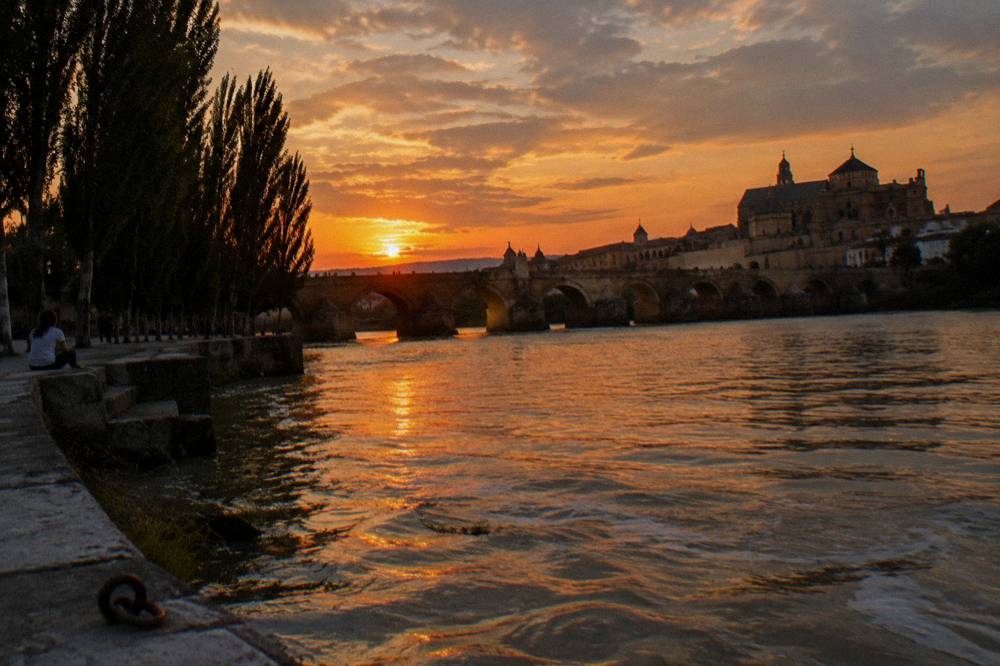
The practical consequence is that the bridge works as filler in any plan. If the Mezquita free slot at 8:30 to 9:30 is your morning anchor, the crossing is free to add before or after; if the municipal Thursday window at 18:00 to 20:15 in winter is your evening anchor, the riverbank costs nothing to fold around it. The site's Cordoba in one day guide builds exactly this kind of free-slot scaffolding, and the bridge slots into any gap because it has no gap of its own.
One caveat the data does support: night walking here on a guided basis is Spanish-language only. The night walks on this site's roster, including the Free Night Tour of Cordoba meeting at Puerta del Puente, Plaza del Triunfo, run in Spanish, and the site's policy is to never promise an English night walk. Walking the lit bridge on your own is a different matter entirely: it is public space, and the free regime does not change with the hour.
How Do You Combine The Roman Bridge With Other Free Sights?
The bridge links directly into a chain of free public space: cross to the south bank for the Mirador de la Calahorra, return past the Puerta del Puente and Triunfo de San Rafael into Plaza del Triunfo, and continue into the Judería's free lanes and the Calleja de las Flores, all recorded as free. Every link in that chain is open public space, and the only interruption would be a deliberate detour into a paid interior. One of the free walks starts in this part of the city: English Heritage Free Tour, 1H30.
The natural free circuit keeps to public ground the whole way. Start on the bridge itself, spend time at the south-bank mirador looking back at the skyline, recross to the Puerta del Puente, and from there the old town opens up: the Judería's streets and alleys and the Calleja de las Flores are free open space in the fact file, as the Judería and Calleja de las Flores guide details. None of it needs a ticket, a booking or a time slot.
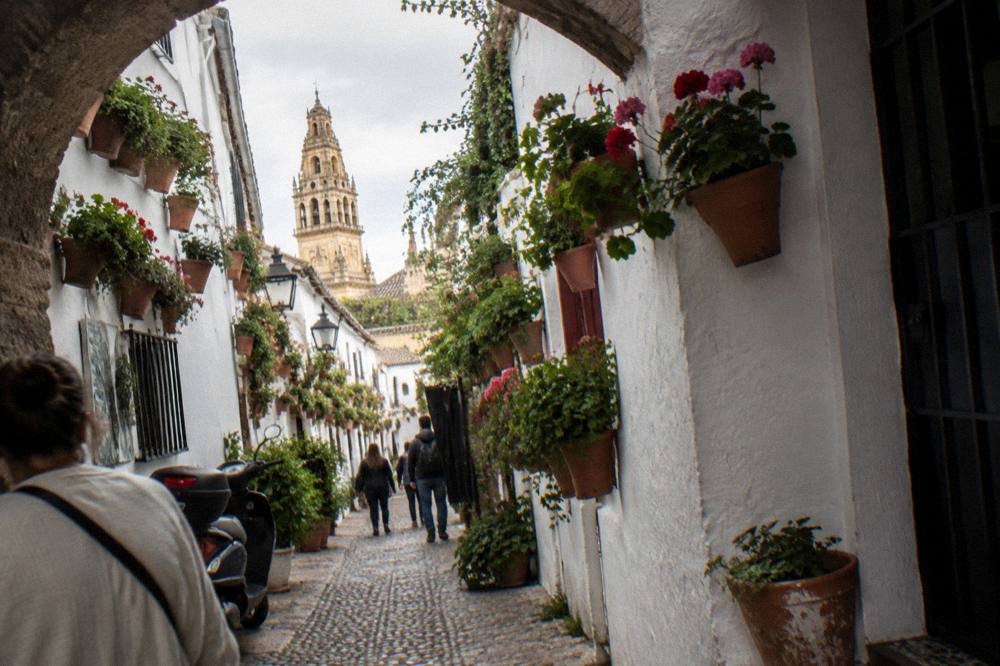
Conditionality creeps in only when you add interiors. The Alcázar de los Reyes Cristianos sits close to this end of town and has a free Thursday window, winter 18:00 to 20:15, summer 12:00 to 14:15, for everyone until capacity, as the Alcázar guide explains; outside those windows it charges a small fee, and this site prints no figure because the tariff is contested. The patios of the San Basilio streets near the river are free to admire as streets, but the private patios inside open without appointment only during the Festival de los Patios, 3 to 16 May 2027, per the patios festival guide.
A compact way to see the free chain at a glance:
| Sight on the chain | Free status | Any condition |
|---|---|---|
| Roman Bridge | Free public space | None |
| Mirador de la Calahorra | Free public space | None |
| Puerta del Puente and Plaza del Triunfo | Free public space | None |
| Judería lanes and Calleja de las Flores | Free public space | None |
| San Basilio patio streets | Free public space (streets) | Private patios open only in the May festival |
| Alcázar de los Reyes Cristianos | Conditional | Free Thursday window, everyone, until capacity |
| Palacio de Viana patios | Paid | EUR 8.50, no free slot found |
The other combination worth naming is the Mezquita-Catedral free slot itself, because the bridge is the closest free counterpart to it. If you enter in the 8:30 to 9:30 window, individual visitors only, no groups, you can be on the bridge and at the mirador for the rest of the morning at zero cost, with the bell tower's EUR 4 and the night visit's EUR 25 both firmly optional extras, exactly as the site's what time is the Mezquita free article lays out.
Which Free Walking Tours Meet Near The Roman Bridge?
The English Heritage Free Tour, 1H30, meets at Plaza del Triunfo, Mezquita-Catedral, which is the bridge's north end, and the Free Night Tour of Cordoba meets at Puerta del Puente, Plaza del Triunfo itself; both are GuruWalk listings, pay what you want, with the heritage walk rated 4.63 out of 5 from 630 reviews and the night tour 4.74 out of 5 from 27 reviews, in Spanish only.
The meeting points come from this site's walk roster, and the roster is careful about what it does and does not claim: no Cordoba walk has a verified route beyond its meeting point and neighbourhood, so this guide names where each one starts and stops there. The English Heritage Free Tour, 1H30, guided by Enrique, runs in English, lasts 1 hour 30 minutes and starts at Plaza del Triunfo, Mezquita-Catedral, squarely at the bridge's doorstep. It is listed on GuruWalk, rated 4.63 out of 5 from 630 reviews, and reserving a place costs nothing: the guiding is pay what you want.
The busiest option on the roster also starts close by. The Best Of Free Tour, 1H45, run by Andaloo Tours, meets at the Roman Temple, Calle Capitulares, in the same old-town category, and carries the deepest review pool of any walk here: 4.94 out of 5 from 3,732 reviews on its GuruWalk listing, in English and Spanish, 1 hour 45 minutes. It is the walk this site would point most visitors toward for a first-day orientation.
Bilingual and English options round out the roster's meeting-point map. The Heritage Free Tour, 1H30, by WeTour, meets at Plaza de las Tendillas, runs in English and Spanish, and holds 4.77 out of 5 from 752 reviews on GuruWalk. The Historic Center Free Tour, 2 Hours, meets at Puerta del Puente, Plaza del Triunfo, the bridge end itself, and is listed on freetour.com, rated 8.9 out of 10 in the reviews shown on its freetour.com listing, 1,849 of them, in English and Spanish.
How free touring works at all is worth one sentence: you reserve a spot for nothing, the guide leads the walk, and at the end you tip what you think it was worth, the model the site's how do free walking tours work in Cordoba piece unpacks. This site is independent, not owned by GuruWalk or freetour.com, and operates no walk; it earns a referral commission when a booking is made through its links.
Mistakes That Trip People Up At The Roman Bridge And The Calahorra
The recurring mistakes are assuming the tower is free because the viewpoint is, expecting a timetable for the bridge, treating the river circuit as a monument with a ticket, and mixing up the Calahorra's EUR 4.50 with the Mezquita bell tower's EUR 4. Each error is easy to make because the free and paid layers sit physically on top of each other at this end of the city. A free walk meets in this neighbourhood: English Heritage Free Tour, 1H30.
The first mistake is the tower assumption. Visitors hear that the Calahorra side is free, which the mirador is, then arrive expecting to climb the tower for nothing. The interior is the Museo Vivo de Al-Andalus at EUR 4.50; only the ground around it is public. The second is inventing a schedule. People ask when the bridge opens and closes, and the answer is that it does neither: it is 24-hour public space, and no closing day applies to it.
The third mistake is conflating towers. The Torre de la Calahorra at the bridge's south end costs EUR 4.50; the Mezquita-Catedral's bell tower is a separate EUR 4 ticket on the north side, covered by nothing, including the Mezquita's own free slot, as the is the Mezquita bell tower free article states. Two towers, two tickets, one river between them.
The fourth is planning a night walk in English. The night walks on the roster here are Spanish-language listings; no English night walk is offered, and promising one would be false. The fifth is expecting patio access off the San Basilio streets: the streets are free public space, the private courtyards are not, and they open without appointment only during the May festival. Avoid those and the bridge cluster behaves exactly as advertised: a wide free layer with one clearly priced interior at the far end.
Common Questions About The Roman Bridge And The Calahorra
Is the Roman Bridge free to walk?
Yes, completely free. The bridge is recorded as open public space across the Guadalquivir, with no ticket, no gate and 24-hour access. The only paid element anywhere at the crossing is the Torre de la Calahorra museum on the south bank, at EUR 4.50, and you never need it to walk or photograph the bridge itself.
Is the Calahorra viewpoint free?
Yes. The Mirador de la Calahorra, the raised south-bank viewpoint at the bridge's far end, is free public space with no hours and no entry rule. It sits beside the Torre de la Calahorra, whose interior museum charges EUR 4.50, but standing at the mirador and looking back at the Mezquita-Catedral skyline costs nothing at any time.
How much does the Calahorra tower cost?
The Torre de la Calahorra operates inside as the Museo Vivo de Al-Andalus and charges EUR 4.50. That ticket covers the interior only. The tower's exterior, the surrounding ground and the mirador next to it are free public space, so the fee is entirely optional.
When is the Roman Bridge open?
Always. The bridge, the Mirador de la Calahorra and the Guadalquivir riverbanks are 24-hour open public space with no closing days. This differs from nearly every indoor sight in Cordoba, which is why the bridge works as free filler around the Mezquita's 8:30 to 9:30 slot or the museums' Thursday window.
Is the Roman Bridge the same as the Mezquita bell tower ticket?
No. The Torre de la Calahorra at the bridge's south end costs EUR 4.50. The Mezquita-Catedral bell tower on the north side is a separate EUR 4 ticket, not covered by the Mezquita's free early slot or by anything at the bridge. Two different towers, two different operators, two tickets.
Do free walking tours meet at the Roman Bridge?
Yes, several meet at its doorstep. The English Heritage Free Tour, 1H30, rated 4.63 out of 5 from 630 reviews, and the Historic Center Free Tour, 2 Hours, rated 8.9 out of 10 across 1,849 reviews on its freetour.com listing, both start at Plaza del Triunfo or Puerta del Puente, the bridge's north end. All are pay what you want.