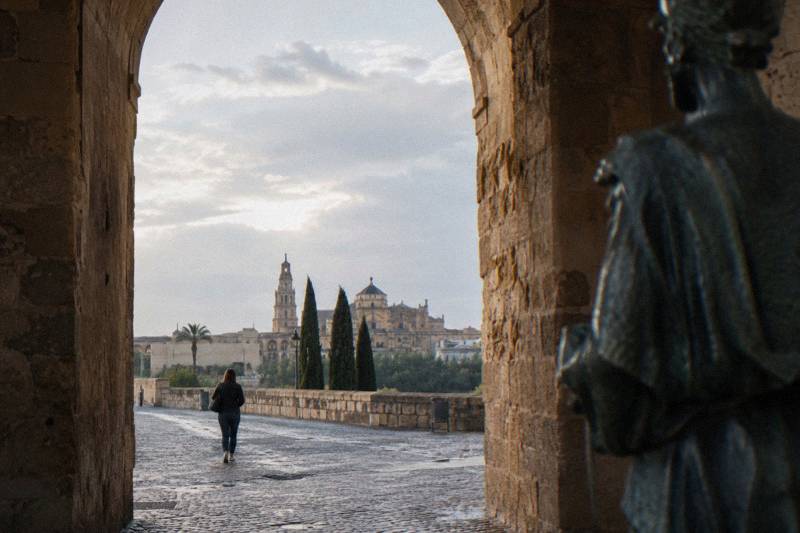
The Roman Temple And The Roman Mausoleum: Free From The Street
Cordoba's Roman Temple stands in the open air on Calle Capitulares, its columns free to walk up to at any hour, and the smaller Roman Mausoleum a short stroll away is equally free from the outside. Here is exactly what that free access covers, what does not fall inside it, and how the meeting-point scene at the temple works.
Short answer
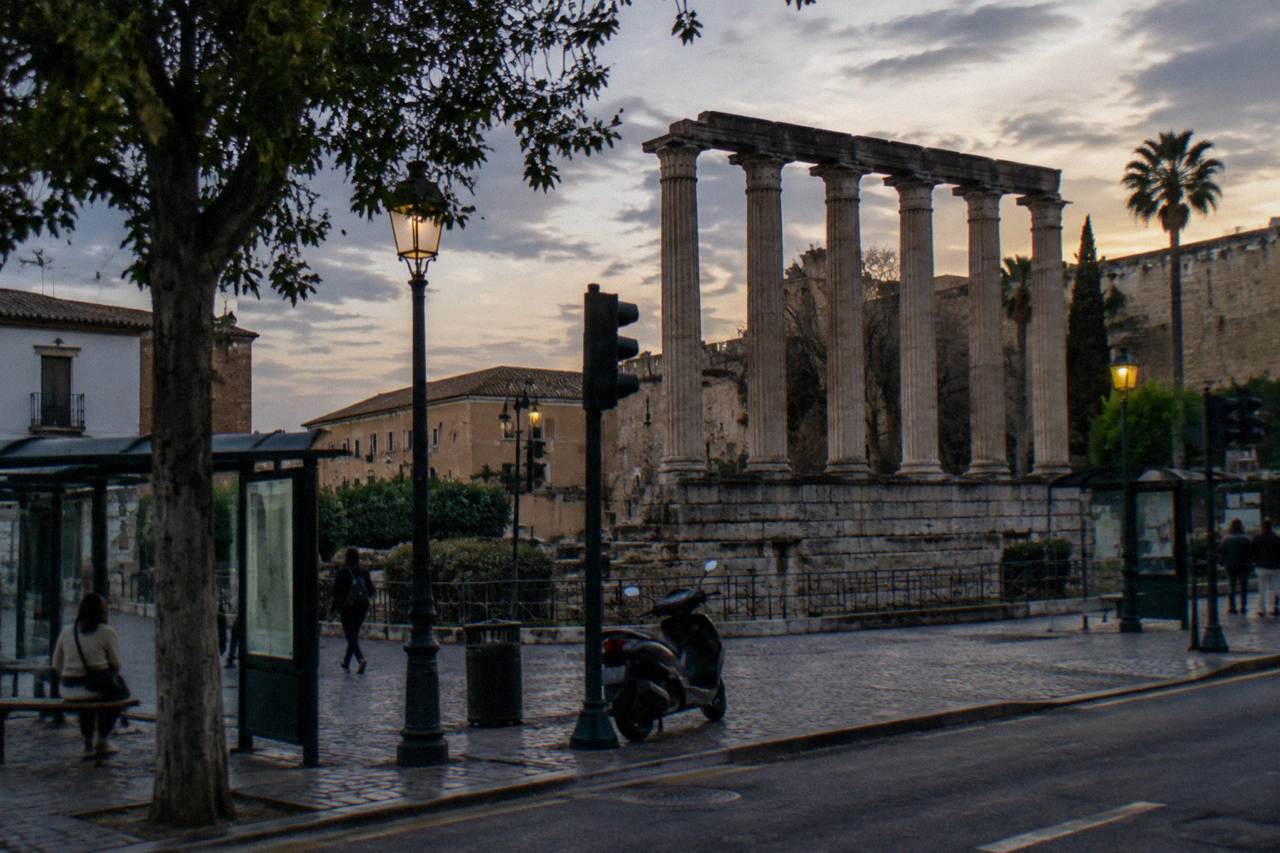
Yes, both are free to see from the street. The Roman Temple's columns on Calle Capitulares stand in public space with no fence, ticket or hours, and the Roman Mausoleum at Puerta de Gallegos is likewise free from the outside. The only paid element is the temple's interior, which is shown on occasional guided visits rather than open entry. Several GuruWalk free tours use the temple as their meeting point.
Part of the Free Things To Do In Cordoba guides.
Quick Facts
| Question | Answer |
|---|---|
| Is the Roman Temple free? | Yes, the exterior stands in public space, free at any hour |
| Is the Roman Mausoleum free? | Yes, free to see from the outside at Puerta de Gallegos |
| Is the temple interior open? | No, only occasional guided visits, times not confirmed |
| What is nearby and free? | Plaza de las Tendillas, Plaza de la Corredera, the Judería streets |
| What costs money nearby? | Mezquita-Catedral outside its 8:30 to 9:30 free slot (EUR 15), municipal museums outside the Thursday window |
| Nearest free walk platform | GuruWalk, with walks meeting at the Roman Temple, Calle Capitulares |
Are The Roman Temple And Mausoleum Free To See?
Yes, both are free to see from the street, with no fence, ticket desk, or opening hours around their exteriors, so the temple's columns on Calle Capitulares can be approached at any time of day or night and the Roman Mausoleum beside Puerta de Gallegos is equally free in the open air. The only exception is the temple's interior, which opens on occasional guided visits rather than walk-in entry. A free walk meets in this neighbourhood: Best Of Free Tour, 1H45.
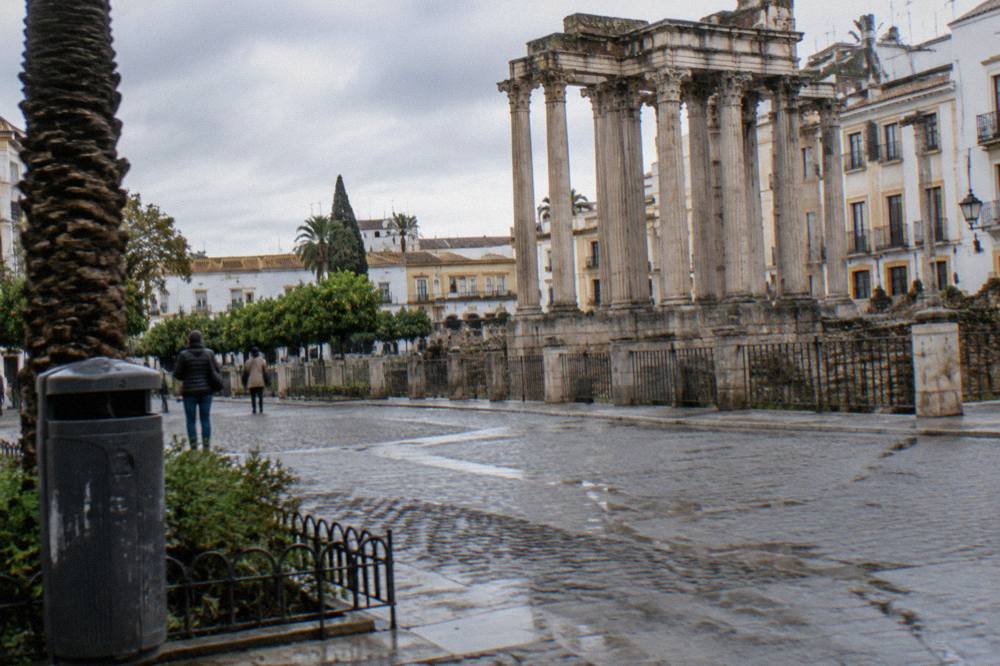
The Roman Temple is one of Cordoba's more surprising sights, precisely because of where it sits. The columns rise directly out of a normal city street in the heart of the old town, with traffic, shop fronts and apartment buildings around them. There is no gate to pass through and no ticket to buy to stand in front of the remains. That makes it different from almost every other major monument in the city: the Mezquita-Catedral charges EUR 15 outside its early free slot, the Torre de la Calahorra charges EUR 4.50 inside, while the temple asks nothing at all for the view that most visitors actually come away with.
The mausoleum is a smaller and quieter affair. It sits at Puerta de Gallegos, near the western edge of the historic centre, and like the temple it costs nothing to look at from the street. It is a Roman burial structure, and the exterior is what there is to see; there is no advertised free interior visit of any kind. Visitors pairing the two should think of them as free street sights, in the same family as the Puerta de Almodóvar walls or the Torre de la Malmuerta, rather than as museums.
One distinction matters here and runs through this whole site. "Free from the street" is a real and generous kind of free, but it is not the same as free entry. The temple's interior is a separate question, covered below: occasional guided visits have been announced, but their times are not confirmed on any official page, so no schedule is given here. The exterior, by contrast, is unconditionally free public space, and that claim is solid.
For anyone building a zero-spend day around these two monuments, the surrounding neighbourhood does most of the work. The temple sits between Plaza de las Tendillas and the city hall area, both free public squares, and the mausoleum sits within easy reach of the Judería lanes and the riverside. The free things to do in Cordoba overview lays out how those pieces combine into a full day, and this guide handles the Roman pair in detail.
What Is Free Around The Roman Temple?
Quite a lot, since the temple sits in one of the densest clusters of free sights in the city. Plaza de las Tendillas, the main commercial square, lies a couple of blocks away, while Plaza de la Corredera, Plaza del Potro with its fountain, the Judería lanes, the Calleja de las Flores, and the riverside Guadalquivir walk, open around the clock, charge no entry in any form.
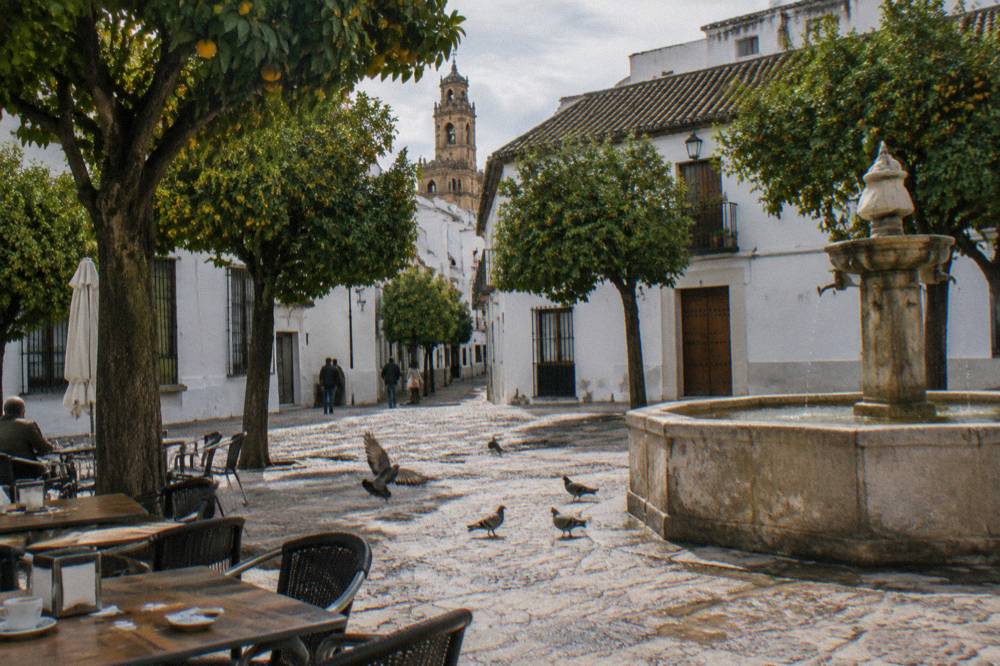
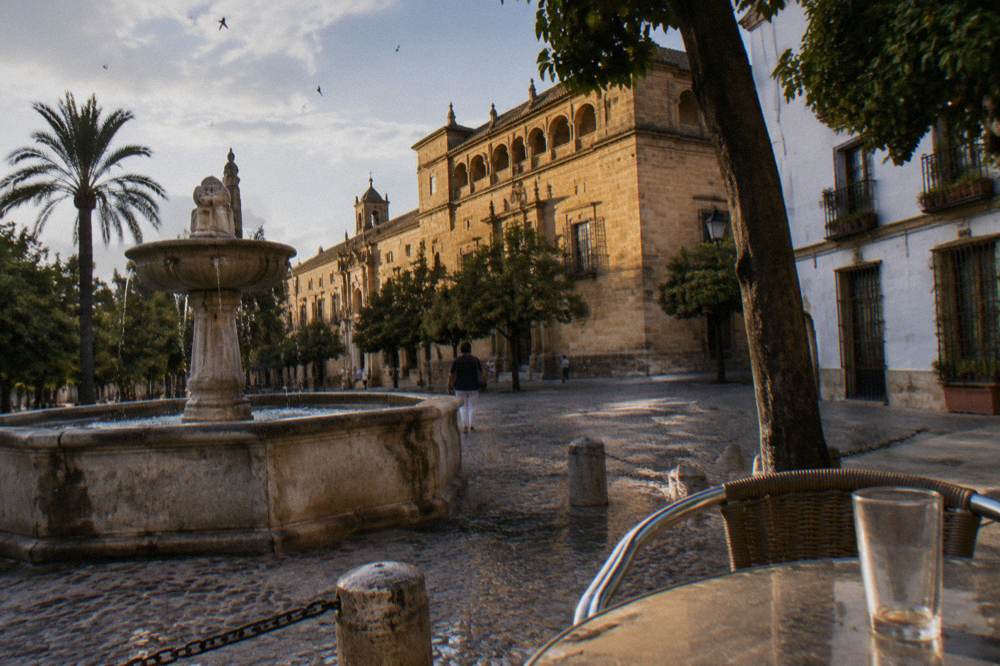
Start with Plaza de las Tendillas, because it is the natural anchor for any visit to the temple. The square is the city's everyday centre, and it also happens to be the meeting point for a cluster of free walking tours, which makes it a useful landmark to learn early. From the temple it is a short level walk, and the square itself, with its clock, its café tables and its constant flow of locals, is exactly the kind of sight that costs nothing and rewards time. A free walk meets in this neighbourhood: Heritage Free Tour, 1H30.
From there, the free list spreads outward. Plaza de la Corredera, the sweeping rectangular square with wooden balconies all round, is public space, and the market hall beside it, Mercado de la Corredera, is free to enter and browse. Plaza del Potro, smaller and quieter, holds its fountain and the Posada del Potro. The murallas and the Puerta de Almodóvar gate are free to see from the street at any hour, and the walk through them connects toward the Judería. If you want the full picture of those squares and markets, the guide to free plazas and markets in Cordoba goes through each one.
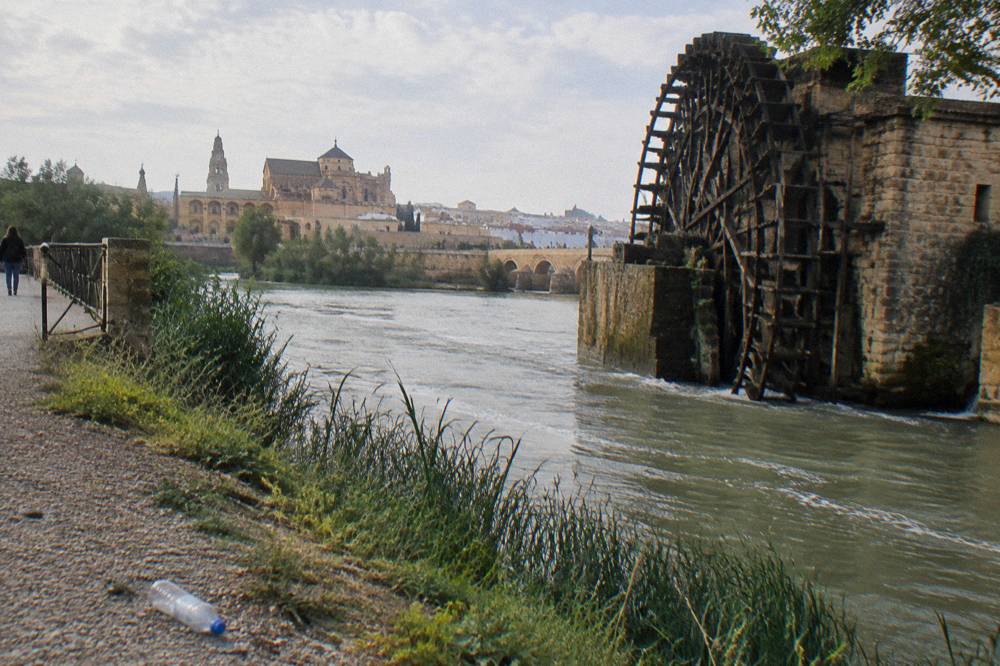
South of all this the Guadalquivir opens up the riverside. The Paseo de la Ribera and the riverbanks are free public space, the Molino de la Albolafia can be seen from the bank, and the Puente Romano plus the Mirador de la Calahorra on the south bank cost nothing, with the Roman Bridge and Calahorra viewpoint guide covering that whole stretch. The one thing to keep straight is that the Torre de la Calahorra at the bridge's southern end is paid inside at EUR 4.50, even though the bridge and the viewpoint are free. Free place, paid part, always two facts.
A useful way to hold the neighbourhood in your head is a simple split between what stands in open public space and what sits behind a desk. Everything in the table below is either free outright or carries a stated condition; nothing in it is guesswork.
| Sight near the temple | Cost | Condition |
|---|---|---|
| Roman Temple, Calle Capitulares | Free | Public space, any hour |
| Roman Mausoleum, Puerta de Gallegos | Free to see | Public space, exterior |
| Plaza de las Tendillas | Free | Public square |
| Plaza de la Corredera and its market hall | Free | Public space; browsing is free |
| Judería streets and Calleja de las Flores | Free | Public lanes |
| Puente Romano and riverbank | Free | Public space, 24 hours |
| Torre de la Calahorra | EUR 4.50 | Paid inside; bridge itself free |
| Mezquita-Catedral | Free 8:30 to 9:30 Mon to Sat | Individual visitors only, no groups; EUR 15 otherwise |
The temple's position in the middle of all this is what makes it such a common meeting point. Guides can gather a group on open street space with no fee, no booking and no capacity limit, and the columns are an unmissable landmark for anyone arriving for the first time. That practical fact, more than anything Roman, explains why so many of the city's free tours begin exactly here, a point this guide returns to further down.
What Costs Money Or Needs A Visit Slot At The Roman Temple?
Seeing the Roman Temple itself costs nothing from the outside, but its interior opens only on occasional guided visits with no printable confirmed times, since the official notice is a single dated announcement rather than a standing schedule. Nearby paid attractions include the Mezquita-Catedral at EUR 15 outside its early free slot, the bell tower at EUR 4, and the municipal museums, free only in their Thursday window.

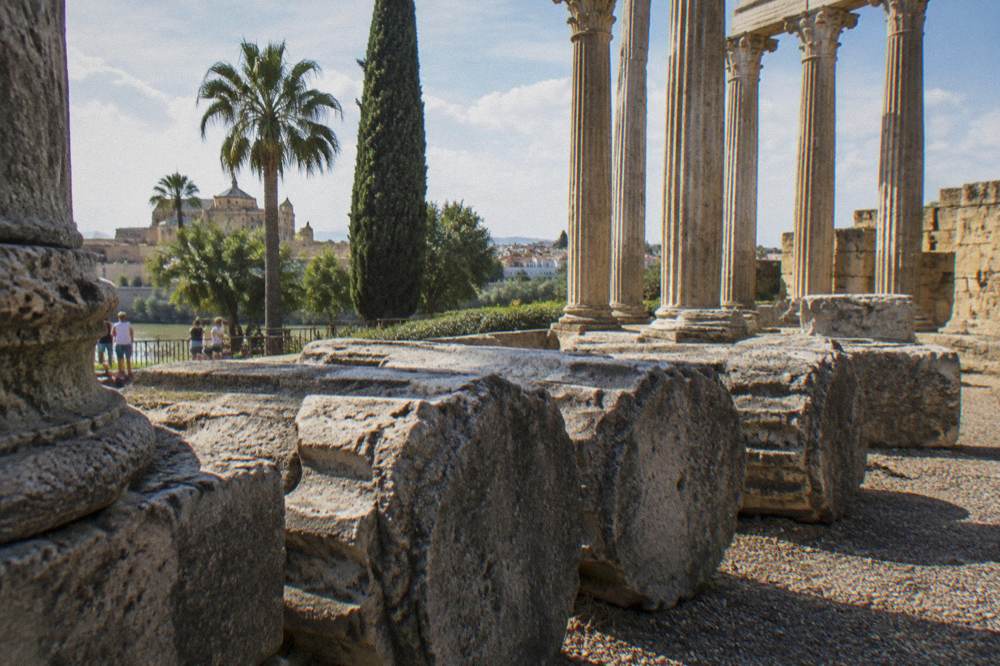
Take the temple interior first, because it is the item people most often get wrong. The columns and the platform are visible from the street for free, and that is the experience almost every visitor has. Interior guided visits have been announced, but the announcement rests on a December 2025 notice, and no timetable has been confirmed on an official page. So this guide states the situation plainly: there is no confirmed walk-in interior access, and no times, prices or booking details are claimed here. If an interior visit matters to you, the city's official tourism channels are the place to ask.
The Mezquita-Catedral is the big paid item in the neighbourhood and deserves precision. Its free slot runs Monday to Saturday from 8:30 to 9:30, with access stopping at 9:20, for individual visitors only, with no groups and none on days of extraordinary celebration. Outside that slot, general admission is EUR 15. The bell tower is a separate EUR 4 ticket, the night visit El Alma de Cordoba is EUR 25, and the Fernandine churches route is EUR 6, none of them covered by the free slot. Whether the Capilla Mayor and Coro are open during the free hour is not settled, so no claim is made here. From 1 January 2027 the Cabildo also starts optional official guided visits at an increase over the normal ticket, with no price published yet.
The municipal museums follow their own regime, which this site keeps strictly separate from the Mezquita. The Alcázar de los Reyes Cristianos, the Baños del Alcázar Califal, the Museo Julio Romero de Torres, the Museo Taurino and the Centro Flamenco Fosforito are free for everyone on non-holiday Thursdays during the last two hours of public access: 18:00 to 20:15 in winter, 12:00 to 14:15 in summer, until capacity. They also open free on 28 February, 8 September, 27 September, 17 December and the Noche del Patrimonio, with 18 May added for two of them. Outside those windows they charge a fee, and for the Alcázar specifically the fee is contested between sources, so this site prints no figure for it.
One more paid item sits close enough to matter. The Torre de la Calahorra at the south end of the Roman Bridge charges EUR 4.50 inside, and the Palacio de Viana charges EUR 8.50 for its patios, with no free slot found for either. The patios of San Basilio are free only during the Festival de los Patios, which runs 3 to 16 May 2027 with no appointment needed, and the Cordoba Patios Festival guide covers that window in full. None of these bear on the temple itself, but a day routed badly can turn a free morning into forty euros of tickets quickly.
The honest summary is that the Roman pair are among the cheapest headline sights in the city, and the spending decisions all sit elsewhere. Decide in advance whether the Mezquita's paid ticket, the Thursday museum window or the 8:30 free slot forms your plan, and let the temple and mausoleum sit inside whichever day you build.
When Can You See The Roman Temple And Mausoleum?
Whenever you like, because both exteriors stand in public space with no hours, no gates and no days off. There is no closing day, no Monday closure, no holiday exclusion, because there is nothing to close. The only timing decisions around them come from what you pair them with: the Mezquita free slot at 8:30 in the morning, the municipal Thursday window in the evening, and the festival calendar for the patios in May.
That last point is worth spelling out, because visitors trained on Spanish museum schedules often assume every monument shuts on Mondays. The temple and the mausoleum are not monuments with staff or doors in that sense; they are street-level remains, and street-level remains do not close. The city's paid sites around them do observe closure days, with the municipal museums shut on Mondays plus 1 January and 25 December, and the Mezquita observing its own calendar, but none of that touches the two Roman exteriors.
What timing changes is the company, not the access. The temple's street doubles as a gathering point for free walking tours, so at various hours of the day you will find groups forming there, and outside those moments the columns stand in ordinary city calm. Quiet hours and busy hours are not published for this spot; the only timing that is firm is the meeting point, which the next-but-one section sets out.
The seasonal calendar matters mainly for the wider day. Semana Santa runs 21 to 28 March 2027, Cruces de Mayo from 28 April to 2 May, the Festival de los Patios 3 to 16 May, the Feria de Nuestra Señora de la Salud 22 to 29 May, and the Noche Blanca del Flamenco on 19 June 2027, all of them free to watch in public space, and the Cruces de Mayo and Feria guide covers the spring cluster. The city's own festival calendar is published on cordoba.es, which is the source for those dates.
| What you want to see | When it works | Notes |
|---|---|---|
| Roman Temple exterior | Any hour, any day | Public space |
| Roman Mausoleum exterior | Any hour, any day | Public space |
| Mezquita free slot | Mon to Sat 8:30 to 9:30 | Individuals only, no groups, access stops 9:20 |
| Municipal museums free | Non-holiday Thursdays, last two hours | Winter 18:00 to 20:15, summer 12:00 to 14:15, until capacity |
| Patios free entry | 3 to 16 May 2027 | No appointment; 2027 hours not published |
| Festival street events | Per the 2027 calendar | Free to watch in public space |
Build the day around the fixed windows and let the Roman pair fill the gaps. The 8:30 Mezquita slot anchors the earliest plan; a Thursday evening anchors the museum plan; and on a day with neither, the temple, the mausoleum, the squares and the riverside make a complete free itinerary with no clock pressure at all.
How Do You Combine The Roman Temple With Other Free Sights?
On foot, and in two easy loops. Head one way from the Roman temple for Plaza de las Tendillas, Plaza de la Corredera and the city hall quarter; head the other for the Judería, the Calleja de las Flores and the riverside, adding the mausoleum at Puerta de Gallegos on the same westward drift toward the Puente Romano. Every stop is free public space and none needs transport.
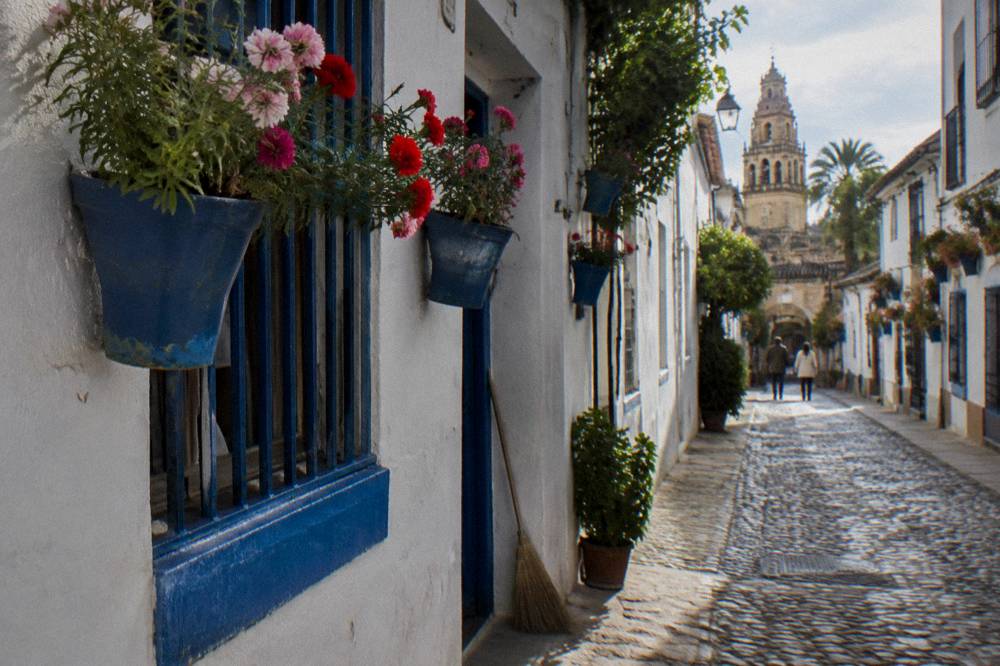
A route shape that works well keeps to streets that are free public space. Begin at the Roman Temple, Calle Capitulares, and take in the columns from the street. Drift to Plaza de las Tendillas for the square itself, then north to Plaza de la Corredera and Plaza del Potro. From there the murallas and the Puerta de Almodóvar lead south into the Judería, whose lanes and the Calleja de las Flores are free public space, and the drift ends at the Mezquita-Catedral's surroundings and the Puente Romano beyond, with the mausoleum at Puerta de Gallegos sitting near that western edge. Every step of that shape is free ground; the only money decisions are the Mezquita ticket and any tower interior.
No walking times are given here because none are confirmed, and distances between stops are not guessed. Each stop is free to visit, and that is the substance of the combination: a full day of sightseeing in which the only possible ticket is one you choose to buy. If you want the same logic applied to the whole city rather than this cluster, the Cordoba on a budget guide and the Cordoba in one day guide assemble it at city scale.
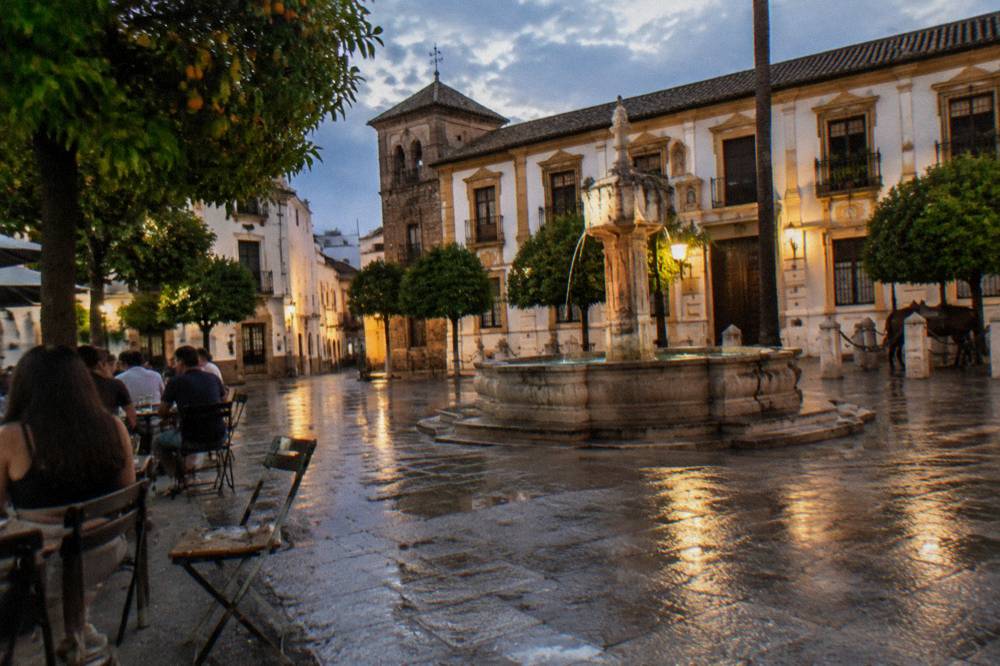
Timing the combination around the free windows is where the plan gets clever. On a Thursday, the museum window in the evening means the daytime hours belong to the street sights, and the Roman pair slot anywhere in the daylight stretch. On a weekday morning, the 8:30 Mezquita slot can open the day, with the temple and the squares filling the hours after it comfortably. On a festival day in May, the patios join the route as a free layer, since festival entry needs no appointment, though the 2027 hours are not yet published.
The mausoleum is the one item people tend to miss, and the fix is simply to place it at the western end of the walk rather than treating it as a separate trip. Seen from the street at Puerta de Gallegos, it rounds off a route that has already taken in the temple, the squares, the walls and the river. Two Roman remains, one walk, no tickets, and the whole thing threaded through public space from end to end.
Which Free Walking Tours Meet At The Roman Temple?
The free tours on GuruWalk that list the Roman Temple on Calle Capitulares as their meeting point include the Best Of Free Tour by Andaloo Tours, a 1 hour 45 minute walk in English and Spanish rated 4.94 from 3,732 reviews, plus tours by WeTour, Córdoba A Pie and Eventour. All operate on a pay what you want basis, each led by an independent local guide. This site operates no walk and is not owned by GuruWalk or freetour.com; it earns a referral commission when you book through its links. A free walk meets close to this area, English Hidden Gems Free Tour.
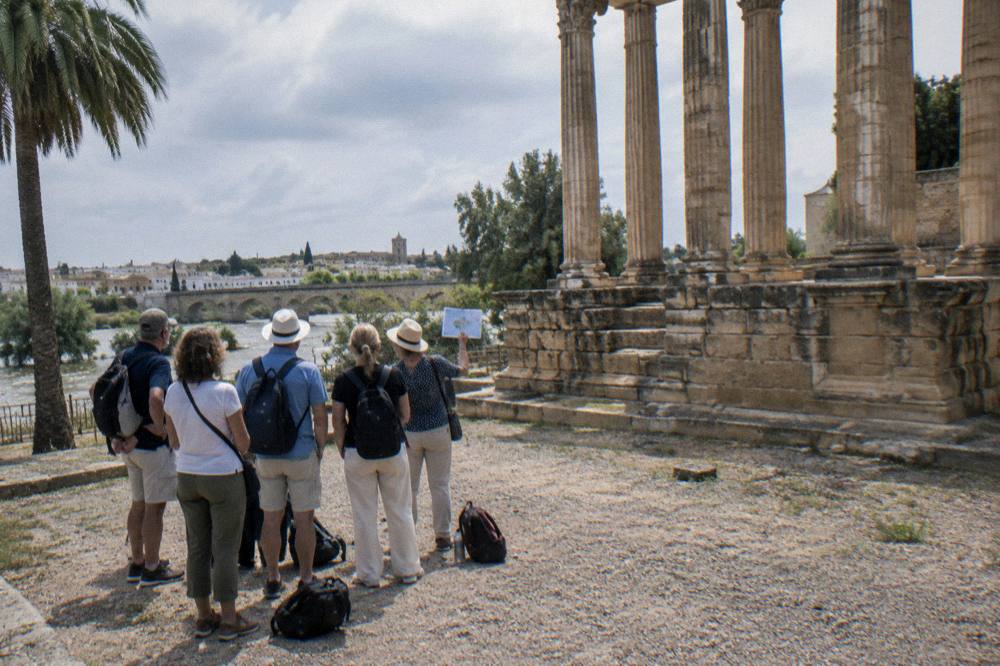
The Best Of Free Tour is the walk this site features, and the reason is straightforward: it has the largest review pool and the highest rating on the roster, 4.94 out of 5 across 3,732 reviews on GuruWalk, with Andaloo Tours as the operator, a 1 hour 45 minute duration and both English and Spanish on offer. It meets at the Roman Temple, Calle Capitulares, which makes it the natural companion to this guide's subject: you stand at the columns, the guide arrives, and the pay-what-you-want walk begins from exactly the place this page is about. The Mezquita and old town walk page has the details.
The Heritage Free Tour by WeTour also meets at the temple's neighbourhood anchor points, in its case Plaza de las Tendillas, a 1 hour 30 minute walk in English and Spanish rated 4.77 out of 5 from 752 reviews on GuruWalk. It shares the old town category and the pay-what-you-want model. For a walk gathered at the square rather than the columns themselves, it is the closest thing to a same-family alternative, and the meeting point is written exactly as the roster gives it.
Enrique's English Heritage Free Tour runs 1 hour 30 minutes in English only, rated 4.63 out of 5 from 630 reviews on GuruWalk, and meets at Plaza del Triunfo beside the Mezquita-Catedral rather than at the temple. Rounding out the meeting-point picture, Jose Manuel's 2 Hour Small-Group English Tour gathers at the Statue of Averroes, Puerta de Almodovar, and is rated 4.88 out of 5 from 354 reviews. The point is not that these walks are interchangeable; it is that a visitor standing at the Roman Temple is standing in the middle of the free tour scene's gathering ground, with English and Spanish options radiating out from the surrounding squares.
How the model works is worth one paragraph, because it explains why these meeting points are so open. Free walking tours on GuruWalk are pay what you want: you reserve a spot, the guide walks you through the city, and you hand over what you think the walk deserved at the end. There is no fixed price, and no money figure appears against any walk on this site, because free, pay what you want is the price. The blog post on how free walking tours work in Cordoba unpacks the mechanics, including tipping norms, and the piece on patios.cordoba.es festival entry is separate again.
One limit to state plainly, because this site holds to it: no Cordoba walk has a verified route beyond its meeting point and neighbourhood. So this guide does not claim that any named walk covers, passes or includes the temple, the mausoleum or any other landmark. What it states is meeting points, operators, languages, durations and ratings, all from the roster, and the fact that the temple's street is a gathering place follows from those meeting points alone.
Mistakes That Trip People Up At The Roman Temple
The most common mistakes are expecting an interior that is not reliably open, paying for sightlines that are free from the street, and confusing the temple's non-closure with the closure days of the museums around it. People also assume patios are open year-round, expect free Mezquita entry outside the 8:30 to 9:30 slot, and believe night walks run in English. Each mistake is avoidable with one clear fact. One of the free walks starts in this part of the city: World Heritage Free Tour, 1H30.
The first mistake is treating the temple as a visitable building. It is not; the exterior is the sight, and interior guided visits rest on an unconfirmed notice, so no times are promised here. The second is paying to see what is free: the columns cost nothing from Calle Capitulares, and the mausoleum nothing from Puerta de Gallegos, so any product selling "entry" to them deserves scrutiny. The third is assuming Monday closure applies; public space does not close, while the municipal museums around it do shut Mondays.
The Mezquita trap deserves its own line. Its free slot is Monday to Saturday 8:30 to 9:30, individuals only and no groups, and outside it admission is EUR 15; the bell tower at EUR 4 is never part of the free slot. The patios trap follows: private patios open freely only during the Festival de los Patios, 3 to 16 May 2027, and never assume year-round access. And the language trap: the night walks on the roster, including the Free Night Tour Of Cordoba and Córdoba Luminosa, run in Spanish only, so no English night walk is promised here. The guide to free walking tours in Cordoba covers language availability walk by walk, and this site, Free Things To Do In Cordoba, keeps every one of those distinctions in the open.
Common Questions About The Roman Temple And Mausoleum
Are the Roman Temple and Mausoleum free to see?
Yes, both are free from the street. The temple's columns on Calle Capitulares stand in public space with no hours or tickets, and the mausoleum at Puerta de Gallegos is likewise free to see from the outside. Only the temple's interior is conditional, shown on occasional guided visits with no confirmed timetable.
When is the Roman Temple open?
The exterior is accessible at any hour of any day, because it is public space with nothing to close. There is no Monday closure and no holiday exclusion for the columns themselves. The interior is a separate matter, with no confirmed visit times on an official page, so no schedule is printed.
Can you go inside the Roman Temple?
Not on ordinary walk-in entry. Interior guided visits have been announced, but the notice dates from December 2025 and no current visit times are confirmed, so check the official page before going. The exterior view from Calle Capitulares is the free experience, and it needs no booking at all.
Is the Roman Mausoleum free?
Yes, free to see from the street at Puerta de Gallegos, at any hour, as public space. No interior visit of any kind is advertised, free or paid. Treat it as a street sight to pair with the temple and the riverside rather than a destination with doors.
Which free tours meet at the Roman Temple?
Several GuruWalk walks list the Roman Temple, Calle Capitulares as their meeting point, including the Best Of Free Tour by Andaloo Tours, rated 4.94 out of 5 from 3,732 reviews, along with walks by WeTour, Córdoba A Pie and Eventour. All are pay what you want and run by independent local guides. Meeting points are written exactly as the guides' own listings give them.
How much does it cost to see the Roman Temple?
Nothing. The exterior is free public space with no ticket, no fee and no tipping point, since you can visit without a guide. Money only enters the picture if you add paid sights nearby, such as the Mezquita-Catedral at EUR 15 outside its free slot, or join a pay-what-you-want walking tour, where the amount is entirely your choice.