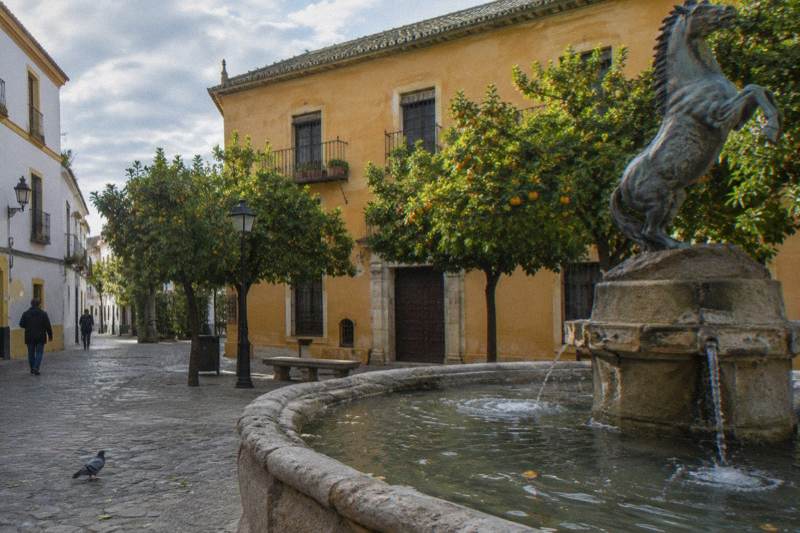
What Time Is The Mezquita Free?
The Mezquita-Catedral free hour explained: the exact Monday to Saturday 8:30 to 9:30 slot, who it excludes, what still costs money, and the free walks that meet nearby.
In Short
The Mezquita-Catedral is free for individual visitors from 8:30 to 9:30, Monday to Saturday, with last access at 9:20. The slot excludes groups and does not run on days of extraordinary celebration. Outside that hour, general admission is EUR 15, and the bell tower, the night visit and the Fernandine route are separate tickets the free hour does not cover.
This question sits inside the Mezquita-Catedral visitor guide.
Quick Facts
| Question | Answer |
|---|---|
| What time is the Mezquita free? | Monday to Saturday, 8:30 to 9:30, last access 9:20 |
| Who can use the free slot? | Individual visitors only, no groups |
| When does the slot not run? | Days of extraordinary celebration, and Sundays |
| General admission outside the slot | EUR 15 |
| Bell tower, night visit, Fernandine route | EUR 4, EUR 25 and EUR 6, separate tickets |
| Free all day for | People born or resident in the Diocese of Cordoba, children under 10, and other listed categories |
What Time Is The Mezquita Free?
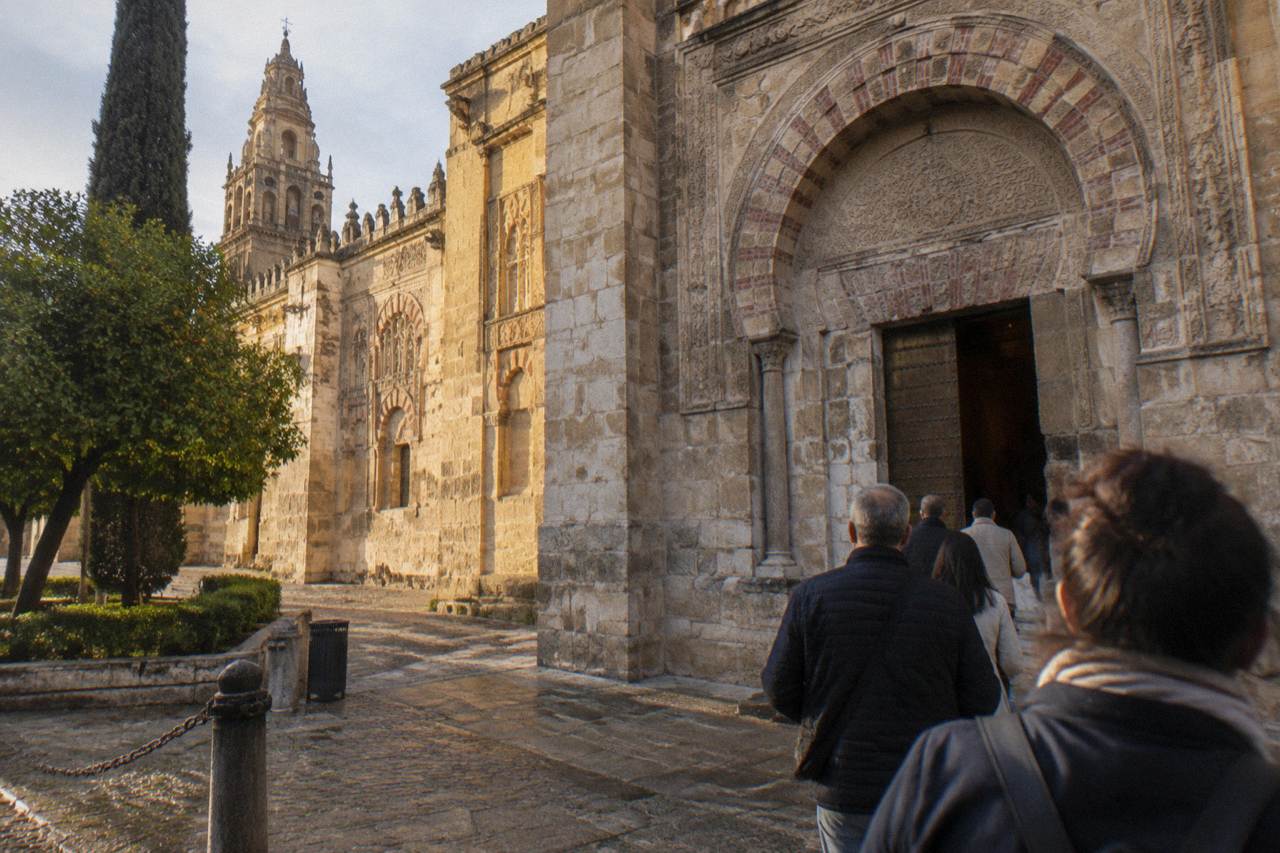
The free visit runs Monday to Saturday from 8:30 to 9:30, and access stops at 9:20, so the practical deadline for walking in is ten minutes before the slot ends. It is a 60-minute window, not an open-ended free visit, and it is limited to individual visitors: groups are excluded. On days of extraordinary celebration the Cabildo suspends it, and Sunday is not part of the scheme at all.
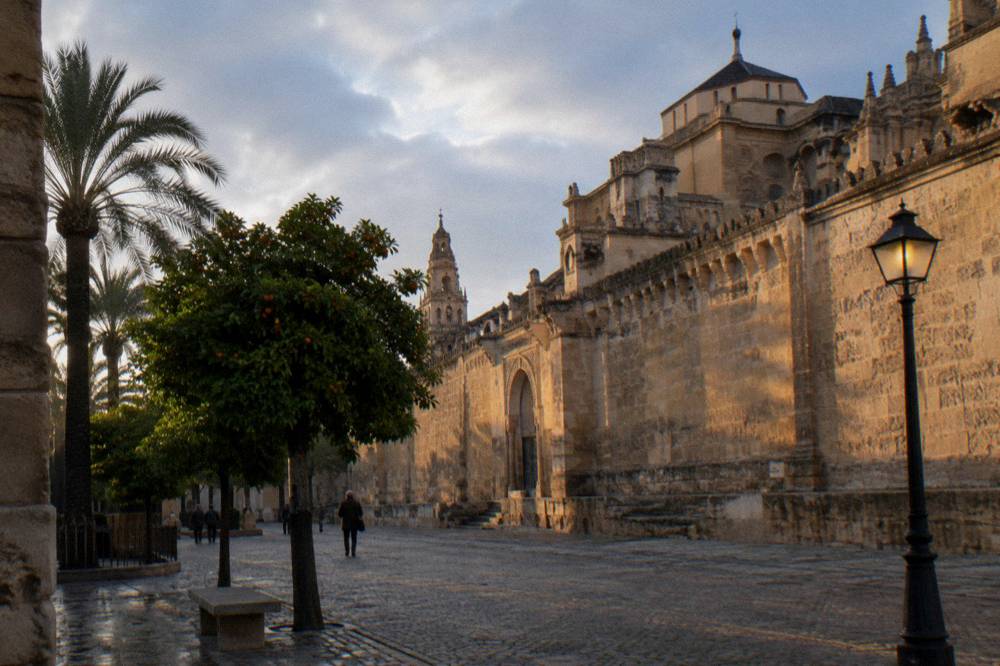
That hour is the single most misunderstood free offer in Cordoba. The Cabildo's own ticket page calls it a "free visit," which many readers reasonably shorten to "the Mezquita is free." It is not. It is a one-hour early-morning slot on six days of the week, aimed at individual visitors, and it sits inside a building that charges EUR 15 for general admission the rest of the day. Anyone arriving at 11:00 expecting the free entry will be standing at a ticket desk. One of the free walks starts in this part of the city: English Heritage Free Tour, 1H30.
The 9:20 cutoff matters more than most visitors expect. The slot is 60 minutes long, and access stops ten minutes before it closes, so a 9:15 arrival buys roughly five minutes inside. Anyone who wants the free visit on its own terms needs to be at the door in the first half of the hour, not sprinting for the 9:20 deadline. The Cabildo states the window plainly on its ticket page, alongside the general admission price and the separate bell tower and night visit tickets.
The day structure is equally specific. Monday through Saturday the slot exists, in principle. Sunday does not appear in it, which is a separate trap from the extraordinary-celebration clause: feast days and special services can switch the free hour off on a weekday too, and the Cabildo says hours can change for special events, so the safe habit is to check the Cabildo's own schedule for the specific date before setting an alarm. Our companion piece on Sunday free entry at the Mezquita unpacks that day separately.
There is a second, permanent kind of free at this building, and it is easy to conflate with the hour. People born or resident in the Diocese of Cordoba, children under 10, holders of the Andalucia Junta 65 card, people with over 64 percent disability plus a companion, and ICOMOS members enter free all day, outside the slot entirely. That is a status rule, not a timing rule. A UK or US visitor cannot get there early enough to qualify for it; a diocese resident does not need the 8:30 slot at all. The full breakdown of who does not pay, and why, is in our guide to who gets in free at the Mezquita.
One more thing the free hour does not do: it does not change in 2026. The Cabildo's ticket page, checked through November 2026, still shows the same 8:30 to 9:30 window, the same EUR 15 general ticket and the same separate prices for the tower and the night visit. What does change is 1 January 2027, when the Cabildo starts optional official guided visits sold at an increase over the normal ticket, with the price still unpublished, and every guide accredited by the Junta de Andalucia becomes able to show the interior. None of that touches the free hour itself, but it reshapes the guiding landscape around the building, which matters if you are pairing a free walk with a visit.
For visitors building a morning around the slot, the shape of the day writes itself. Arrive inside the first half of the free hour, spend the 60 minutes in the building, and walk out into the Juderia or down to the Roman Bridge with the rest of the morning free. The alternative is paying EUR 15 and going at any hour, which is a legitimate choice for anyone who will not be awake at 8:30 on holiday. What is not a choice is the middle ground people search for: a free afternoon visit, a free Sunday visit, or a free group visit. None of those exists.
What Does The Free Part Include?
The free slot includes entry to the Mezquita-Catedral's interior for individual visitors during the 8:30 to 9:30 window, and nothing else on the ticket menu. The bell tower at EUR 4, the night visit El Alma de Cordoba at EUR 25 and the Fernandine churches route at EUR 6 are separate tickets, and the free slot covers none of them. Whether the Capilla Mayor and Coro are open during the slot is not stated by the Cabildo.
The core of what you get is the building itself: the forest of arches, the hypostyle hall, the space the cathedral occupies inside it, all of it inside a 60-minute early-morning visit. For most people that is the whole point, and it is a genuinely generous offer, a EUR 15 ticket effectively free for anyone willing to be at the door at 8:30. The hall is the draw, and the slot delivers it.
What the Cabildo's page does not settle is how much of the liturgical furniture is available in that hour. The page is silent on whether the Capilla Mayor and the Coro, the choir and main chapel of the cathedral, are open or screened during the free visit. That silence is a reason not to promise them. If the choir stalls are the reason you are going, the honest position is that the Cabildo does not say, and the general EUR 15 ticket is the only version of the visit that is fully described.
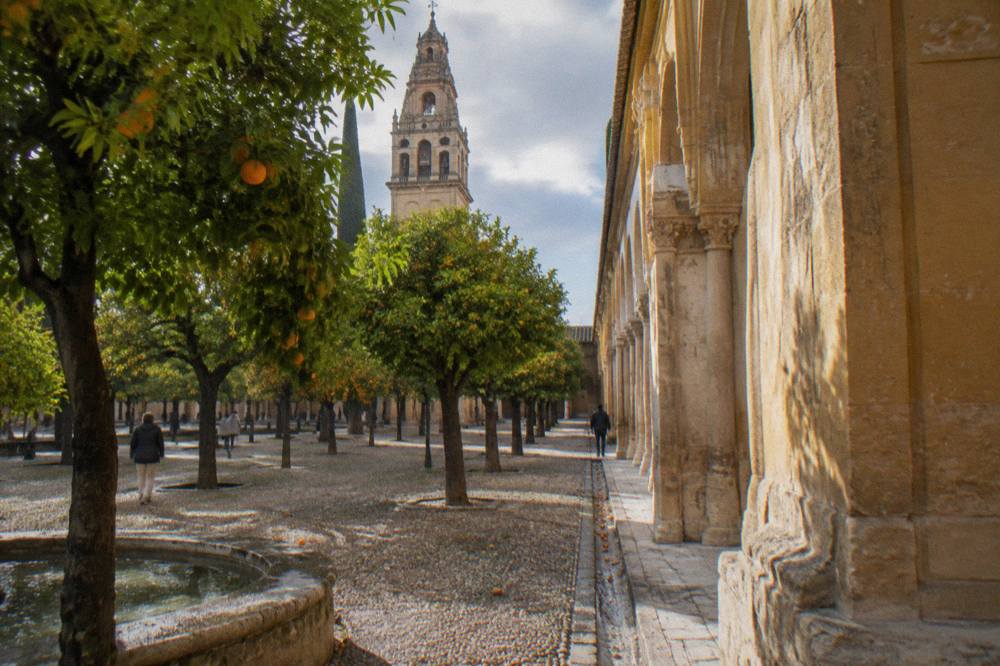
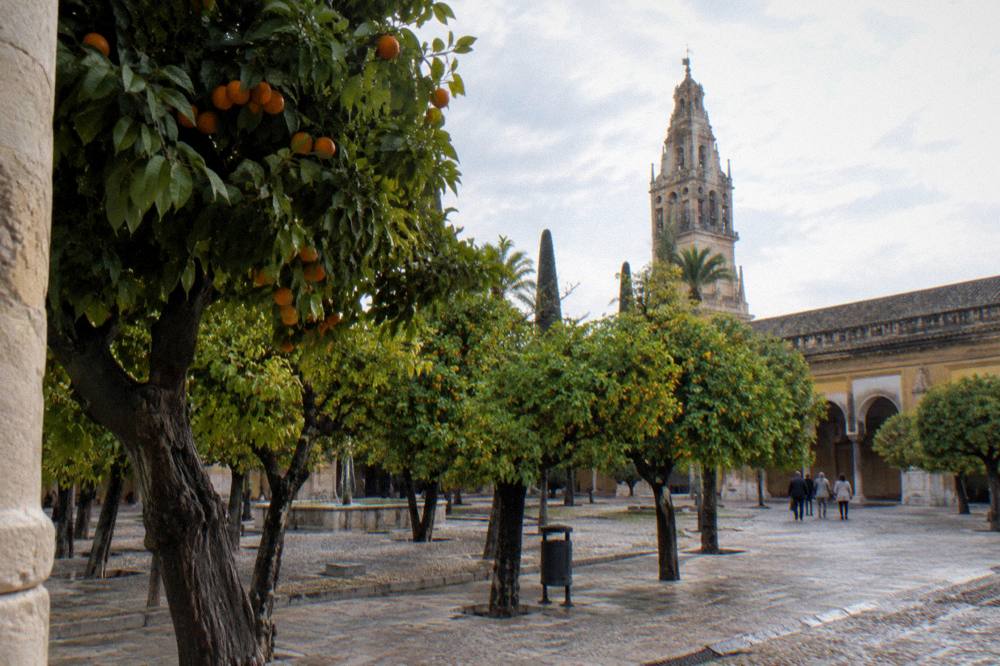
The orange tree courtyard, the Patio de los Naranjos, is a similar silence. Whether it can be entered without a ticket at all, free visit or otherwise, is not stated on the Cabildo's ticket, rules or building pages, so no confident sentence can be written here either way. What is certain is the boundary of the free slot itself: it is one ticket-free window into the interior, and everything else the site sells is sold separately.
| Ticket | Price | Covered by the 8:30 to 9:30 free slot? |
|---|---|---|
| General admission | EUR 15 | The free slot replaces it, inside the window only |
| Bell tower (torre-campanario) | EUR 4 | No, separate ticket |
| Night visit El Alma de Cordoba | EUR 25 | No, separate ticket |
| Fernandine churches route | EUR 6 | No, separate ticket |
| Official guided visit (from 1 Jan 2027) | Not yet published | No, sold at an increase over the normal ticket |
The 2027 change deserves its own sentence of caution. From 1 January 2027, official guided visits begin, sold on the Cabildo web and at the San Eulogio desk, and from the same date every guide accredited by the Junta de Andalucia may show the interior. That is a change to who may guide inside, not to the free hour, and no price for the guided visit has been published, so no figure appears here. What a free-walking-tour guide may or may not do inside the Mezquita from that date is covered in detail in our piece on whether free tour guides can enter the Mezquita.
Until then, the practical reading of the free slot is simple. It is the interior, in the morning, for individuals, for one hour. If that is the visit you wanted, the slot delivers it in full. If any part of your plan involves the tower, the night show, the Fernandine route or a guide inside the building, budget separately for each, because the free hour is not a master key to the site.
What Do You Still Have To Pay For?
Outside the free slot, general admission is EUR 15, and three separate paid tickets exist regardless of the slot: the bell tower at EUR 4, the night visit El Alma de Cordoba at EUR 25, and the Fernandine route at EUR 6. From 1 January 2027 an optional official guided visit is added, priced above the normal ticket, with no figure published. The bell tower, the night visit and the Fernandine route are never covered by the free hour.
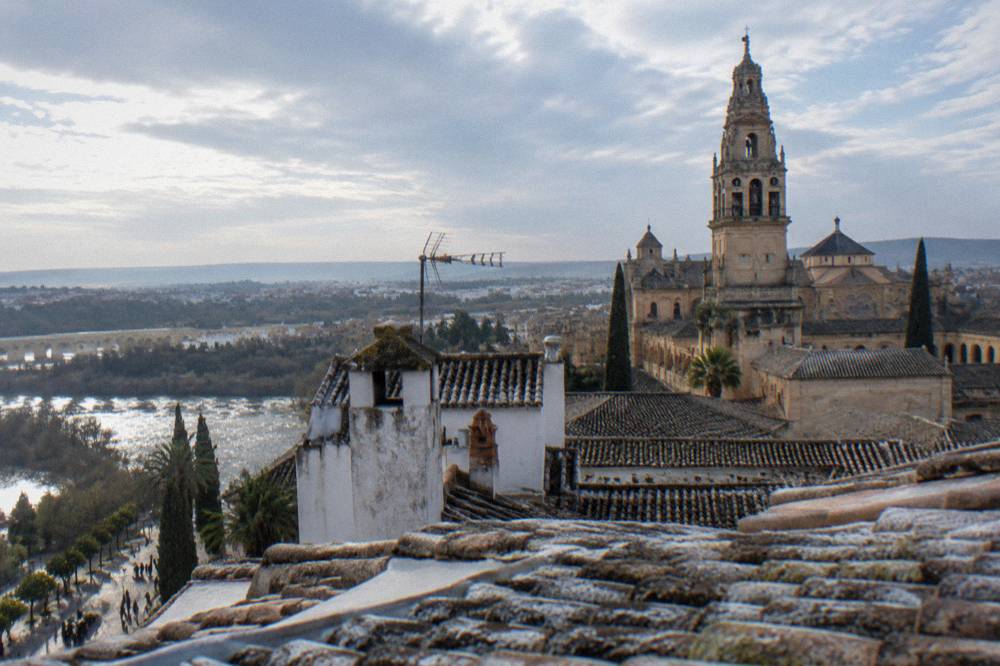
The bell tower is the most common add-on, and the one people most often assume comes with entry. It does not. At EUR 4, bought separately, it climbs above the crossing and is its own ticket whether you arrived in the free hour or paid EUR 15 at noon. Anyone planning both should treat them as two purchases at two desks, not one combined visit.
The night visit, El Alma de Cordoba, is the most expensive single experience on the site at EUR 25, running at 20:00, and it is a different product entirely from a daytime visit: a staged evening show through the building, not a quiet after-hours wander. It has no relationship to the free slot, neither replacing it nor discounting it. The Fernandine route, at EUR 6, is the third separate ticket, covering the route of the Fernandine churches; the individual walk-in entry rules for those churches are not verified, so the route ticket is the only fact to plan on.
The general admission ticket is the baseline everything else is measured against. EUR 15, sample hours on a mid-November day running 10:00 to 18:00 with last entry 30 minutes earlier, and hours that the Cabildo says can shift for special events. That ticket is what the 8:30 to 9:30 slot replaces, for individuals, on ordinary Monday-to-Saturday mornings. Every other price on the site sits outside that substitution.
A short planning note on combining costs. A visitor who takes the free slot, then decides to add the tower, has spent EUR 4 for a full morning. A visitor who skips the slot, buys general admission and adds the tower has spent EUR 19. Neither is wrong, but the difference is the entire point of knowing the timing rule before you travel. The only genuinely bad plan is the one built on the belief that the free hour covers the whole site, because it never has.
When Is The Free Option Available?
The free slot is available Monday to Saturday, from 8:30 to 9:30, with access stopping at 9:20. It is not available on Sundays, and it does not run on days of extraordinary celebration. It is for individual visitors only; groups of any kind are excluded from the window. Outside those days, the all-day free categories, diocese residents, under-10s and the other listed groups, apply at any opening hour.
The Monday-to-Saturday frame is the headline, but the extraordinary-celebration clause is the fine print that quietly deletes the offer on specific dates. When the Cabildo marks a day for a special liturgical celebration, the free visit is suspended, and the only way to know is the Cabildo's own schedule for that date. A visitor in Holy Week, for example, should assume nothing about early access without checking. Semana Santa in Cordoba runs 21 to 28 March 2027, and the city's rhythm that week makes verification essential rather than optional. Other pages covering the same trip are gathered on Free Things To Do In Cordoba.
Sunday needs its own sentence because it fails twice over. The free slot does not include Sunday in the first place, and the separate question of Sunday free museum entry elsewhere in Cordoba belongs to the municipal and Junta regimes, not to the Cabildo. This site's municipal museums, the Alcazar de los Reyes Cristianos among them, run their free Thursday window and their roster of free feast days, but those schemes have no bearing on the Mezquita, and the Mezquita's slot has no bearing on them. Three separate free regimes, never merged.
The all-day free categories run on a different clock entirely. A person born or resident in the Diocese of Cordoba does not need 8:30 to 9:30; the free entry applies across opening hours. The same holds for children under 10, Andalucia Junta 65 card holders, visitors with over 64 percent disability plus a companion, and ICOMOS members. These are identity categories, verified at entry, not time windows. For UK, US and other non-EU readers without one of those statuses, the slot is the only free route into the building.
Seasonality, for once, is not a factor. The Cabildo's page shows the same 8:30 to 9:30 slot across the year, with no summer or winter variant, unlike the municipal museums whose Thursday window shifts between 18:00 to 20:15 in winter and 12:00 to 14:15 in summer. The Mezquita's offer is one fixed hour on six days, all year, minus celebration days. That consistency is the one part of this rule that is easy to remember.
Where Does The Free Visit Start?
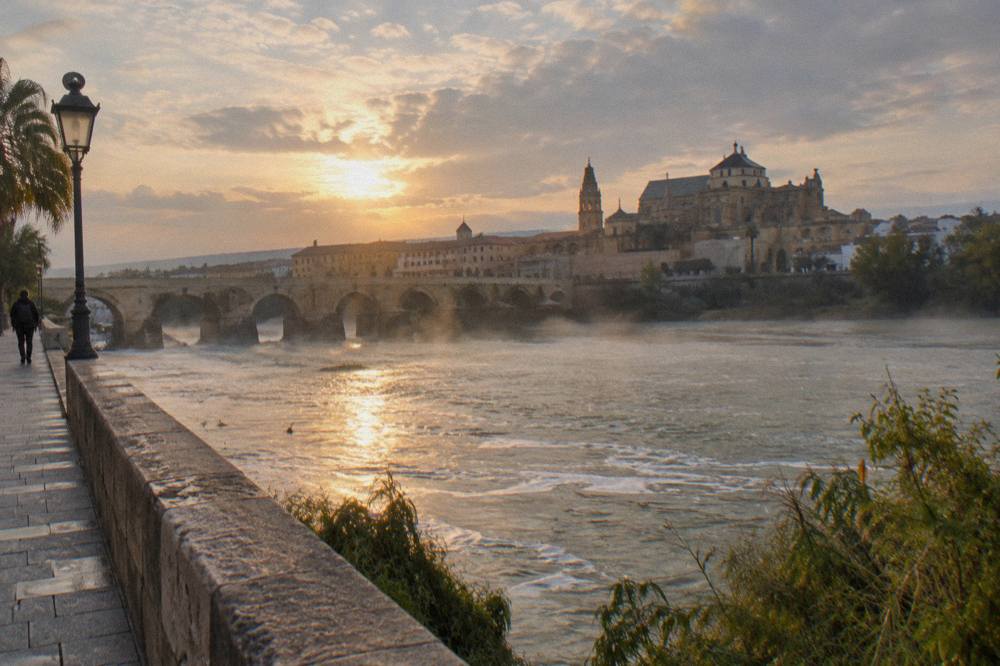
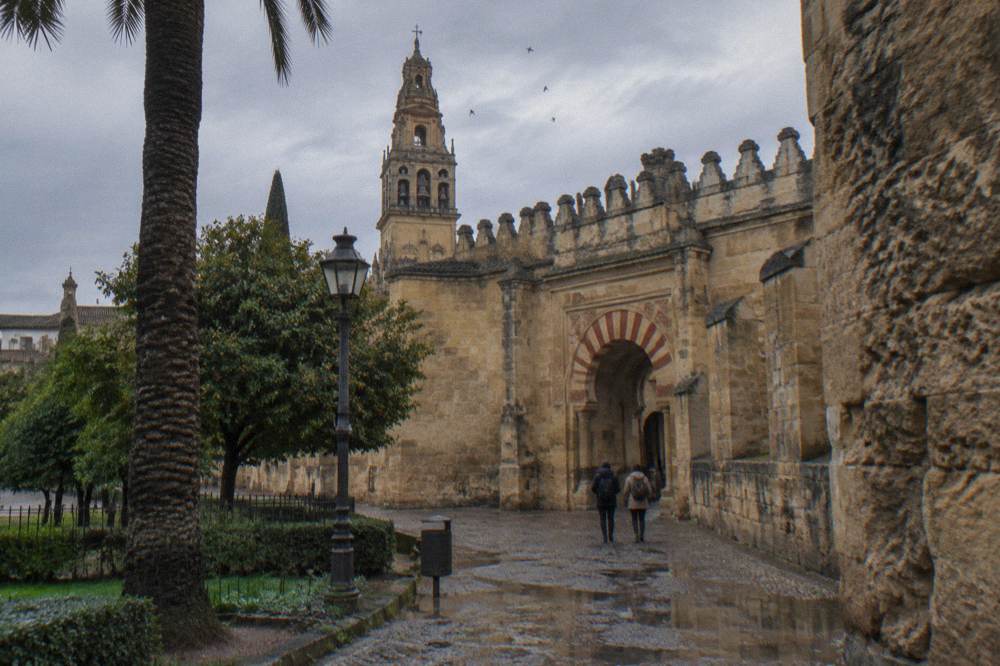
The free visit starts at the Mezquita-Catedral's own entrance, inside the 8:30 to 9:30 window, on the building's north side facing the Juderia. The surrounding public spaces, the Puerta del Puente and Triunfo de San Rafael, the Plaza del Triunfo and the Roman Bridge, are free public space at any hour, so the walk to the door costs nothing regardless of what happens inside.
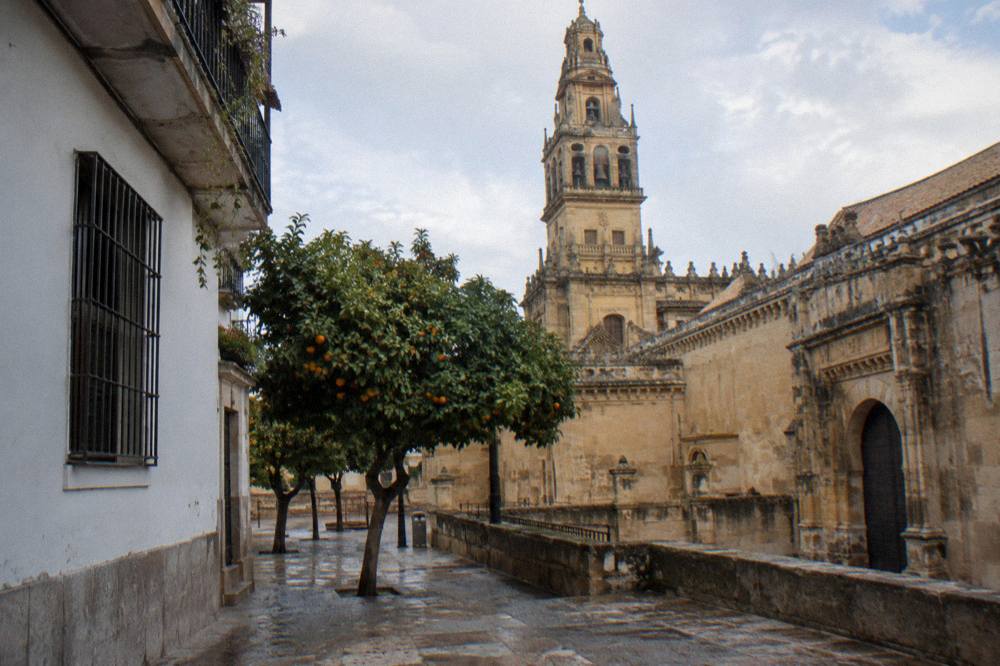
The approach most visitors take is through the Puerta del Puente at Plaza del Triunfo, an open public space that is free around the clock, where the triumphal monument to San Rafael stands. From there the building wraps north and east into the Juderia, whose streets and alleys, the Calleja de las Flores included, are public space too. The geography is generous: the entire frame around the Mezquita is free to walk, and only the interior carries a ticket outside the slot.
Whether the Patio de los Naranjos can be entered without any ticket is not stated by the Cabildo, so this page does not claim it. The name appears on every visitor's list, but the entry rule is simply not published on the pages that govern tickets, and an unpublishd rule is not a plan. The interior slot and the exterior public spaces are the two facts to build a morning on.
The river side completes the free frame. The Roman Bridge and the riverbank are public space, open around the clock, while the Torre de la Calahorra at the south end is paid inside at EUR 4.50, so the crossing and the viewpoints are free and the museum inside the tower is not. The Roman Bridge and Calahorra viewpoint guide covers that split in full, but the short version for morning planning is: walk the bridge after the free hour and you have spent nothing all morning.
For a morning built on the slot, the sequence is: be at the entrance inside the first half of the hour, use the 60 minutes inside, exit into the Juderia or toward Plaza del Triunfo, and spend the rest of the morning in public space that never charges. It is the closest thing Cordoba has to a free grand tour, and it hangs entirely on being awake early enough to claim it.
Which Free Walking Tours Meet Nearby?
Several pay-what-you-want walks meet within a few streets of the Mezquita-Catedral, all listed on GuruWalk except where noted, and none of them includes interior entry to the Mezquita. The English Heritage Free Tour, 1H30, meets at Plaza del Triunfo, by the Mezquita-Catedral; the Best Of Free Tour, 1H45, meets at the Roman Temple, Calle Capitulares; the Historic Center Free Tour is listed on freetour.com and meets at Puerta del Puente, Plaza del Triunfo.
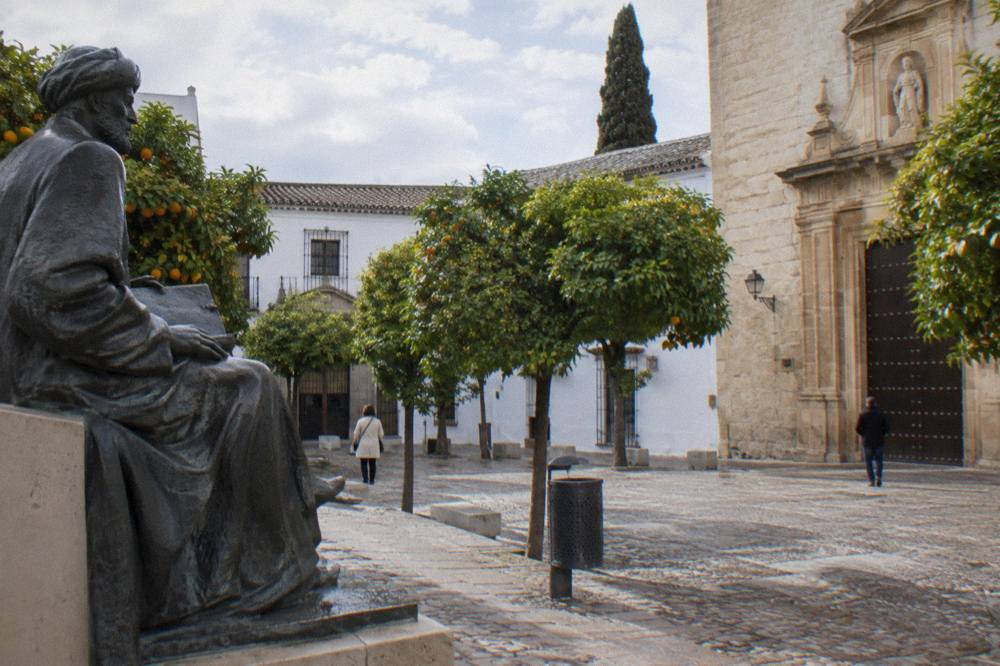
Start with the closest. The English Heritage Free Tour, 1H30, guided by Enrique, meets at Plaza del Triunfo at the Mezquita-Catedral itself, runs in English, lasts 1 hour 30 minutes, and carries a 4.63 rating from 630 reviews on its GuruWalk listing. The English Heritage Free Tour is a natural pairing with the free hour: take the slot at 8:30, be back in the square, and let a local guide frame the old town afterwards. The site's own overview of Cordoba's free walking tours lays out the full roster of 26 walks for comparison.
The biggest walk on the roster also meets nearby. The Best Of Free Tour, 1H45, run by Andaloo Tours, meets at the Roman Temple, Calle Capitulares, a short walk north of the Mezquita district, runs in English and Spanish, and holds a 4.94 rating from 3,732 reviews on GuruWalk, the largest review pool on this site's roster. With numbers like that, the rating carries real weight: this is the walk most English-speaking visitors end up on, and its meeting point places the Roman Temple exterior, itself free public space, at the start of the walk.
Other meeting points cluster around the same quarter. The Heritage Free Tour, 1H30, run by WeTour, meets at Plaza de las Tendillas with a 4.77 rating from 752 reviews on GuruWalk; the 2 Hour Small-Group English Tour, guided by Jose Manuel, meets at the Statue of Averroes by Puerta de Almodovar; the Jewish Quarter Tour in English meets at Puerta de Almodovar itself. The Historic Center Free Tour, 2 hours, is the one nearby walk listed on freetour.com rather than GuruWalk, meeting at Puerta del Puente, Plaza del Triunfo, with an 8.9 rating out of 10 across 1,849 reviews on its freetour.com listing, a different scale that is never converted to five stars here.
Two boundaries keep this honest. First, no walk on this roster has a verified route beyond its meeting point and neighbourhood, so no promise is made that any named walk covers or enters a particular landmark. Second, and more sharply for this article: never assume a free walk includes the Mezquita interior. Until the end of 2026 the interior was restricted for guided groups, and from 1 January 2027 the new regime allows Junta-accredited guides inside, but what any individual free-tour guide does inside is not something a listing's meeting point can tell you. Take the free slot on your own ticket, and let the walk do the streets.
A note on language and hours: the night walks on the roster, including the 2 Hour Night Tour and Enrique's Luminosa night tour, run in Spanish only, so there is no English night walk to pair with the Mezquita's paid 20:00 evening visit. If English is your language, the walks that fit the free-hour morning are the English-language listings above, all on GuruWalk except where a freetour.com listing is named, and all pay-what-you-want with no price attached to the walk itself.
Mistakes That Trip People Up At The Mezquita Free Hour
The recurring mistakes are believing the free hour is a free building, believing Sunday is included, believing groups can use it, and believing a free walking tour covers the interior. Each fails against the Cabildo's own rules: the slot is 60 minutes on six mornings for individuals, the tower and night visit are separate tickets, and no walk's listing grants interior entry.
The Sunday mistake is the most common. Visitors read "free visit Monday to Saturday," register "free," and arrive on the one day the scheme excludes. Sunday offers no free slot at the Mezquita at any hour; the all-day free categories still apply, but a standard UK or US visitor on a Sunday is buying a EUR 15 ticket or coming back tomorrow at 8:30.
The group mistake catches organised travellers. The slot is for individual visitors only, no groups, so a family of six walking in together as private individuals is fine, but a booked tour group arriving for the free hour is not. The group exclusion is stated alongside the slot on the Cabildo's page, and it is the reason free walking tours never promise the interior: even where a guide may enter from 2027, the free hour itself keeps its no-groups rule.
The "free building" mistake is the expensive one. Arriving at 11:00 on the assumption that the morning article you read said "free" costs EUR 15 per person, and adding the bell tower on top costs EUR 4 more. The free hour is a timed window, not a policy about the building. The last-access time, 9:20, is part of the same trap: a 9:18 arrival is technically inside the window and practically worthless.
The festival and celebration mistake is quieter. Days of extraordinary celebration switch the slot off, and the Cabildo's hours shift for special events, so a visit planned during Semana Santa or a major feast needs a schedule check the day before. The habit that protects every plan in this article is a single one: check the Cabildo's own schedule for your date, then set the alarm.
Common Questions About The Mezquita Free Hour
What Time Is The Mezquita Free?
The Mezquita-Catedral is free for individual visitors from 8:30 to 9:30, Monday to Saturday, with access stopping at 9:20. The slot does not run on Sundays or on days of extraordinary celebration, and groups are excluded. Outside the window, general admission is EUR 15.
Is the Mezquita free on Sundays?
No. The free visit runs Monday to Saturday only; Sunday is not part of the scheme. The all-day free categories, such as people born or resident in the Diocese of Cordoba and children under 10, still apply on Sundays, but a standard visitor pays general admission of EUR 15.
Does the free hour include the bell tower?
No. The bell tower is a separate ticket at EUR 4 and is never covered by the free slot. The night visit El Alma de Cordoba, EUR 25, and the Fernandine route, EUR 6, are also separate tickets that the free window does not touch.
Can a group use the 8:30 free slot?
No. The Cabildo limits the free visit to individual visitors, with groups excluded. A family travelling privately counts as individuals; an organised or booked tour group does not. Booked groups use the standard ticket arrangements outside the free window.
Do free walking tours enter the Mezquita for free?
No walk on this site's roster promises interior entry to the Mezquita. From 1 January 2027, guides accredited by the Junta de Andalucia may show the interior under the new official regime, but no free walk's pay-what-you-want listing includes an interior ticket, and the free hour itself excludes groups.
What if I arrive at 9:15 for the free visit?
Access stops at 9:20, so a 9:15 arrival leaves about five minutes inside a 60-minute slot. To use the free hour properly, arrive inside the first half, between 8:30 and 9:00. After 9:30 the only entry is the general admission ticket at EUR 15.